Filed under Rethink Society | Art History · 06 · Observation
The Renaissance and Perspective When Seeing Became a Method
Renaissance innovations changed European art while demonstrating the power—and limits—of treating vision as a system that can be studied.
- Share “The Renaissance and Perspective — When Seeing Became a Method” on X
- Share “The Renaissance and Perspective — When Seeing Became a Method” on Facebook
- Share “The Renaissance and Perspective — When Seeing Became a Method” on LinkedIn
- Share “The Renaissance and Perspective — When Seeing Became a Method” on WhatsApp
- Share “The Renaissance and Perspective — When Seeing Became a Method” on Telegram
- Share “The Renaissance and Perspective — When Seeing Became a Method” on Reddit
- Share “The Renaissance and Perspective — When Seeing Became a Method” on Email
Europe, especially Italian city-states · 14th–16th centuries, with earlier and parallel developments elsewhere
The Renaissance is often described as a rebirth of knowledge. That description captures the period's intense engagement with classical texts and new forms of learning, but it can also create a misleading story in which Europe suddenly invents curiosity after a 'dark age'. Human creativity, mathematics, medicine and artistic sophistication existed across many earlier and contemporary cultures. A more accurate approach is to ask what changed in particular European contexts and why those changes later became globally influential.
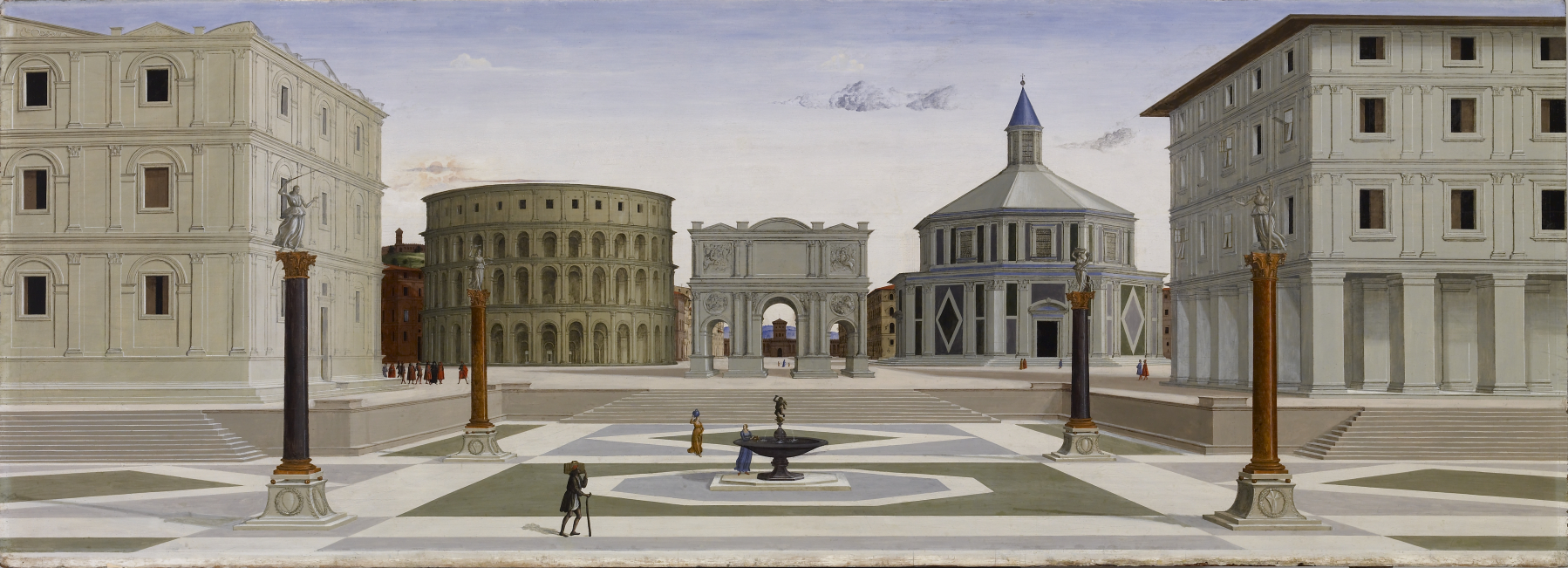
One important development was the systematic use and theorisation of linear perspective in painting and architecture. Perspective allowed artists to construct convincing spatial relationships on a flat surface through converging lines and proportional systems. It did not make art automatically more truthful; it made one particular model of visual space more consistent and persuasive.
That distinction matters. Perspective is a technique, not reality itself. Human vision is more complex than a single fixed viewpoint, and many artistic traditions deliberately organise space in other ways. Nevertheless, the Renaissance development of perspective had enormous influence because it connected artistic practice with geometry, architecture and observation.
The period also produced enduring examples of artists crossing disciplinary boundaries. Leonardo da Vinci's studies of anatomy, movement, water and machines are frequently cited as evidence of a culture in which artistic and investigative practices could overlap. Yet even the celebrated image of the isolated genius should be handled carefully. Renaissance workshops were collaborative environments supported by patrons, craftspeople and networks of knowledge.
Art helped humanity here by treating seeing as something that could be examined. How does light create form? How does distance alter appearance? How does the body move? These questions encouraged artists to observe rather than merely repeat inherited formulas. Observation did not replace imagination; the two became collaborators.
The social consequences were not automatically democratic. Renaissance art was deeply connected to wealth, religion and political power. Patrons commissioned works to express devotion, prestige and authority. Beautiful images could therefore preserve inequality as well as expand knowledge. Rethink Society should resist the idea that artistic innovation is always morally progressive.
Still, the legacy is substantial. Modern visual culture—from photography to digital 3D environments—continues to use systems related to perspective and spatial modelling. The Renaissance helped normalise the idea that an image could be constructed through study and method.
Perhaps its deepest lesson is not 'Europe invented realism'. It is more useful: human beings can learn to see differently by asking how seeing works. That principle belongs to no single civilisation. It is a transferable intellectual practice. The Renaissance became historically significant because it institutionalised particular relationships between art, observation and knowledge that later generations amplified.
For Rethink Society, the contemporary question is whether we have become too confident in the images that appear realistic. A perfectly constructed perspective can still tell a misleading story. Accuracy of appearance is not the same as accuracy of meaning. The responsibility to seek truth therefore begins after the image convinces us that it looks true.
What We Know
The article's factual foundation is limited to the documented historical and institutional evidence identified in the source notes below. Claims of motive, universal meaning or direct causal impact are treated cautiously unless supported by evidence.
What Remains Open to Interpretation
Artistic meaning is often plural. Where original makers did not leave unambiguous explanations, this collection does not present modern interpretation as fact. Scholarly disagreement and uncertainty are part of the historical record, not editorial weaknesses.
Social Rethink
If an image looks realistic, why are we so ready to assume it is truthful?
Why It Matters Now
This historical development remains relevant because contemporary society still debates who controls memory, whose stories are preserved, what counts as truth, how cultures influence one another and whether technology changes the meaning of human creativity. The historical case does not automatically provide a modern answer; it gives us better questions.
The Question We Leave Behind
If an image looks realistic, why are we so ready to assume it is truthful?