Filed under Rethink Society | Art History · 02 · Mortality
Ancient Egyptian Art The Human Refusal to Let Death Have the Final Word
Egyptian artists transformed images, text and ritual into one of history's most enduring conversations about mortality.
- Share “Ancient Egyptian Art — The Human Refusal to Let Death Have the Final Word” on X
- Share “Ancient Egyptian Art — The Human Refusal to Let Death Have the Final Word” on Facebook
- Share “Ancient Egyptian Art — The Human Refusal to Let Death Have the Final Word” on LinkedIn
- Share “Ancient Egyptian Art — The Human Refusal to Let Death Have the Final Word” on WhatsApp
- Share “Ancient Egyptian Art — The Human Refusal to Let Death Have the Final Word” on Telegram
- Share “Ancient Egyptian Art — The Human Refusal to Let Death Have the Final Word” on Reddit
- Share “Ancient Egyptian Art — The Human Refusal to Let Death Have the Final Word” on Email
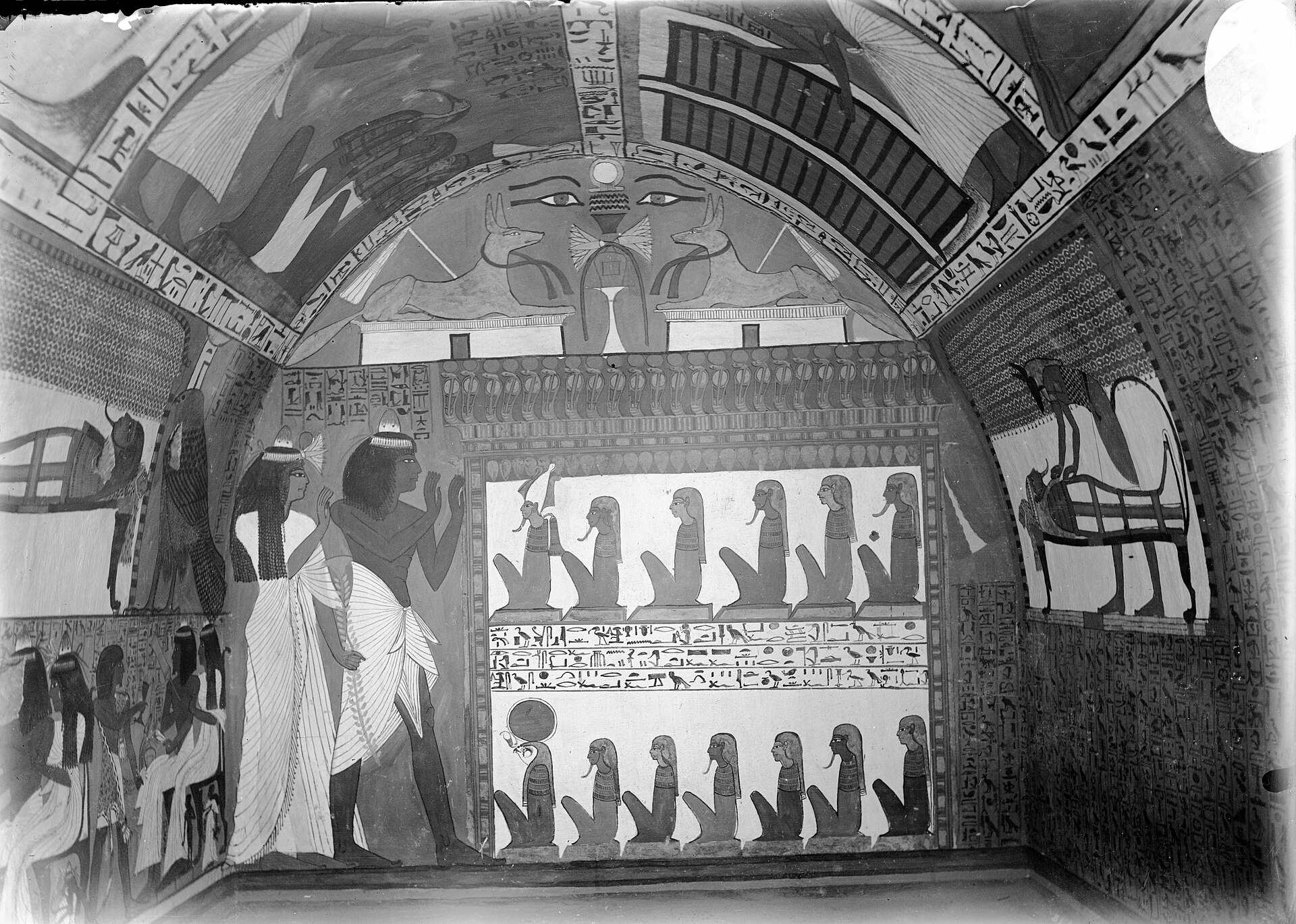
Nile Valley • Ancient Egypt · c. 3000 BCE onwards, with major artistic traditions developing across more than three millennia
Few artistic traditions are more immediately associated with the desire to overcome death than ancient Egyptian art. Tomb paintings, statues, reliefs, amulets and papyri can appear to modern viewers as a unified visual world, but they were created across an exceptionally long history and served different religious, political and social purposes. What connects many of them is a sustained concern with continuity: preserving identity, maintaining relationships between worlds and giving order to a universe in which death was not necessarily imagined as simple disappearance.
The evidence is unusually rich because ancient Egyptians combined images and writing. A painted or carved scene could be accompanied by names and texts, allowing scholars to reconstruct aspects of belief with more confidence than is possible for many prehistoric traditions. Yet even here, certainty has limits. Egyptian religion changed over time and practices varied by period and status. We should not treat one tomb image as the complete explanation of what every Egyptian believed.
The Met's Amduat papyrus for Gautsoshen, dated to approximately 1000–945 BCE, provides one documented example of art and text working together around the journey through the netherworld. The object depicts the Duat and contains explanatory writing about the deceased's passage. Such works demonstrate that visual culture could participate in ritual knowledge rather than merely illustrate it.
Egyptian art also helped preserve a civilisation's memory. Names, titles, genealogies and images of daily activities survived in monuments and objects long after the people represented had died. This does not mean art preserved everyone equally. Monumental art often reflects elite resources and state or religious institutions. The archaeological record therefore preserves some lives more visibly than others. Memory has always been shaped by power.
Still, the Egyptian achievement remains transformative because it made mortality a central cultural subject rather than an unspeakable interruption. Images gave form to questions no living person could answer with certainty. What happens after death? Can identity continue? How should a life be remembered? Art did not solve those questions. It made them visible and shareable.
The tradition also reminds us that representation can carry responsibilities. To depict a person, name them and place them within a sacred or social order was to make a claim about who they were and where they belonged. Modern portraiture, memorials and digital profiles continue this practice in new forms. We still use images to resist disappearance.
Ancient Egyptian art therefore helps humanity in two ways. Historically, it provides a remarkable record through which archaeologists and historians reconstruct institutions, technologies and beliefs. Existentially, it demonstrates that the desire to be remembered is not a modern vanity. It is a recurring human response to finitude. The people who commissioned and made these works could not know that their images would eventually be viewed by strangers thousands of years later. Yet their art succeeded in one undeniable sense: it ensured that the questions they cared about are still alive.
What We Know
The article's factual foundation is limited to the documented historical and institutional evidence identified in the source notes below. Claims of motive, universal meaning or direct causal impact are treated cautiously unless supported by evidence.
What Remains Open to Interpretation
Artistic meaning is often plural. Where original makers did not leave unambiguous explanations, this collection does not present modern interpretation as fact. Scholarly disagreement and uncertainty are part of the historical record, not editorial weaknesses.
Social Rethink
If memory is one form of survival, who gets remembered—and who decides?
Why It Matters Now
This historical development remains relevant because contemporary society still debates who controls memory, whose stories are preserved, what counts as truth, how cultures influence one another and whether technology changes the meaning of human creativity. The historical case does not automatically provide a modern answer; it gives us better questions.
The Question We Leave Behind
If memory is one form of survival, who gets remembered—and who decides?