Filed under Rethink Society | Cultural Revolutions · 05 · Information
The Printing Revolution: When Knowledge Escaped the Elite
Before social media, there was another information revolution. Printing changed who could publish, learn and influence society.
- Share “The Printing Revolution: When Knowledge Escaped the Elite” on X
- Share “The Printing Revolution: When Knowledge Escaped the Elite” on Facebook
- Share “The Printing Revolution: When Knowledge Escaped the Elite” on LinkedIn
- Share “The Printing Revolution: When Knowledge Escaped the Elite” on WhatsApp
- Share “The Printing Revolution: When Knowledge Escaped the Elite” on Telegram
- Share “The Printing Revolution: When Knowledge Escaped the Elite” on Reddit
- Share “The Printing Revolution: When Knowledge Escaped the Elite” on Email
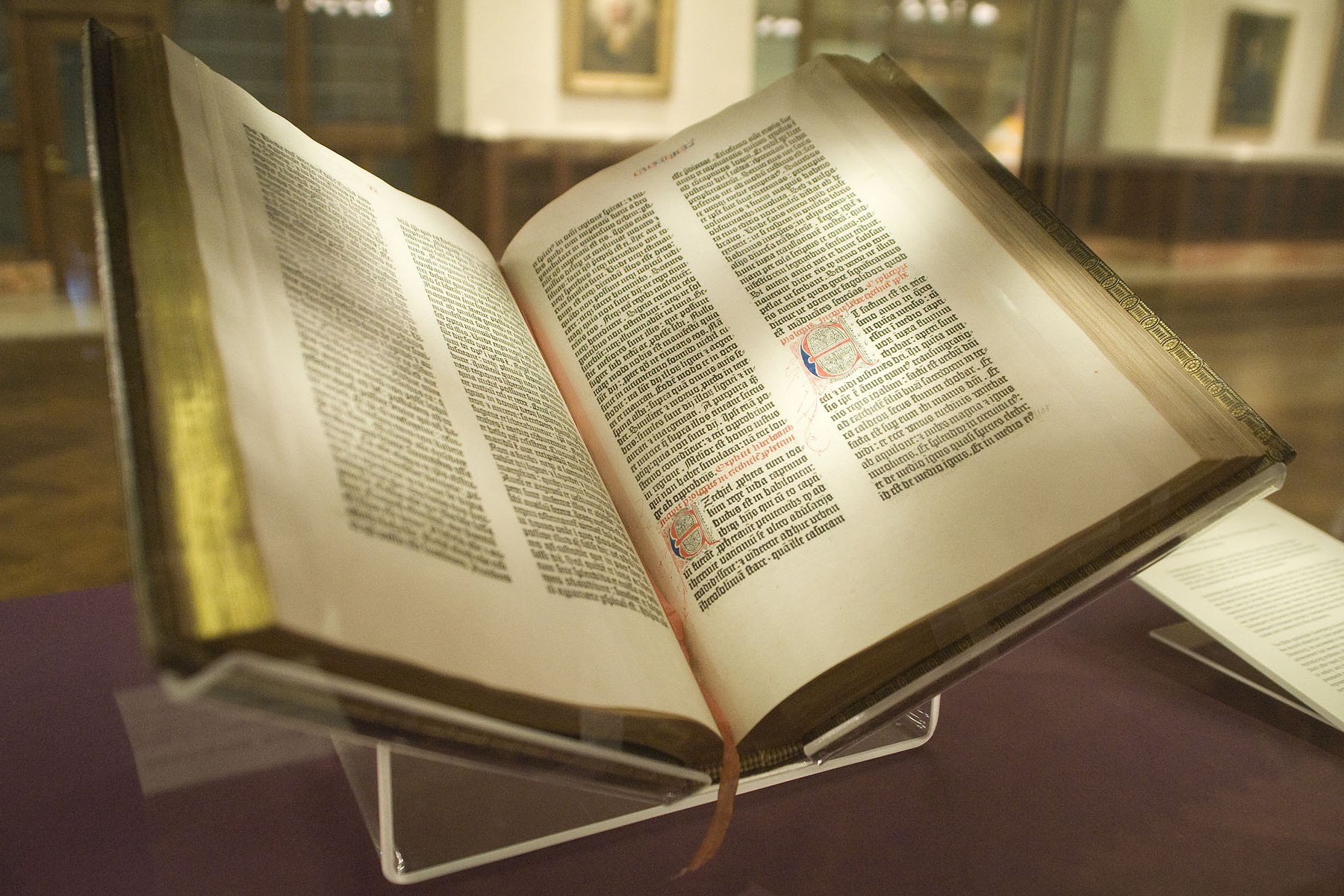
The printing revolution is often reduced to one name: Johannes Gutenberg. His contribution to European movable-type printing was transformative, but the wider history is more complex. Printing technologies existed in East Asia centuries earlier. Woodblock printing developed in China, and movable type was used in Korea. By the time Gutenberg's press transformed European book production in the fifteenth century, humanity already had a long history of reproducing texts through technological methods.
What changed in Europe was the combination of movable metal type, presses, inks and commercial networks that made large-scale reproduction increasingly practical. Books remained expensive at first, and literacy remained unequal, but the economics of knowledge began to shift. A text no longer had to be copied by hand every time someone wanted another version. Ideas could travel farther and survive in more copies.
The consequences reached religion. Printed Bibles and theological arguments contributed to the Reformation and to fierce conflicts over interpretation and authority. Martin Luther's writings spread rapidly because printing networks could reproduce them across territories. But print did not automatically create religious freedom. Competing institutions also used print to defend doctrine, attack opponents and control information.
Print changed science as well. Scholars could compare observations through shared books and diagrams. Errors could be reproduced, but so could corrections. Maps, illustrations and technical manuals circulated more widely. A scientific community could increasingly develop through publications that connected people who would never meet. Knowledge became more networked.
The revolution also created new problems that sound surprisingly modern. Cheap print could spread rumours, propaganda and sensationalism. Authorities worried about dangerous books. Censorship developed alongside publishing. Readers had to learn that the existence of a printed text did not guarantee its truth. The same technology that expanded knowledge also expanded misinformation.
The printing revolution therefore changed who could participate in public culture. Literacy became increasingly valuable. Newspapers helped create political publics. Pamphlets allowed movements to mobilise. Eventually, mass publishing contributed to modern ideas of public opinion. Governments and institutions could no longer assume that information would remain contained within small elite circles.
Yet access remained uneven. Colonisation and economic inequality shaped who owned presses, who could publish and whose languages were treated as worthy of print. The history of print is also a history of voices excluded from formal publication. Oral traditions, minority languages and marginalised writers continued to struggle for recognition.
The closest modern comparison is the internet, but the analogy should not be simplistic. The scale and speed of digital communication are unprecedented. Still, the underlying social questions are similar. When information becomes easier to produce, how do people judge credibility? When gatekeepers lose control, who replaces them? When everyone can publish, how does society distinguish evidence from manipulation?
Social Rethink
The most important lesson of printing may be that access to information and the ability to evaluate information are different forms of power. A society can achieve universal connectivity and still remain vulnerable to ignorance if critical literacy does not grow alongside technology.
Print also changed authorship. Writers could become public figures. Readers could form communities around texts. Ideas gained lives beyond their creators. This helped create modern intellectual culture, but it also encouraged celebrity, ideological branding and commercial competition. Our contemporary information economy did not appear from nowhere; it has deep roots in earlier media revolutions.
When knowledge escaped the exclusive control of handwritten institutions, society changed permanently. The result was not universal enlightenment. It was something more complicated: more voices, more arguments, more opportunity and more confusion. That is why the printing revolution remains such a useful mirror.
The question is no longer whether information should circulate. It already does. The question is whether humanity can build the ethical and intellectual institutions necessary to live with abundance. Gutenberg's world discovered that technology could multiply ideas faster than authorities could control them. Our world is discovering that the same principle applies at digital speed.