Filed under Rethink Society | Cultural Revolutions · 06 · Freedom
The Enlightenment: When Society Began Questioning Authority
The Enlightenment asked whether inherited authority deserved obedience. That question still shapes democracy today.
- Share “The Enlightenment: When Society Began Questioning Authority” on X
- Share “The Enlightenment: When Society Began Questioning Authority” on Facebook
- Share “The Enlightenment: When Society Began Questioning Authority” on LinkedIn
- Share “The Enlightenment: When Society Began Questioning Authority” on WhatsApp
- Share “The Enlightenment: When Society Began Questioning Authority” on Telegram
- Share “The Enlightenment: When Society Began Questioning Authority” on Reddit
- Share “The Enlightenment: When Society Began Questioning Authority” on Email
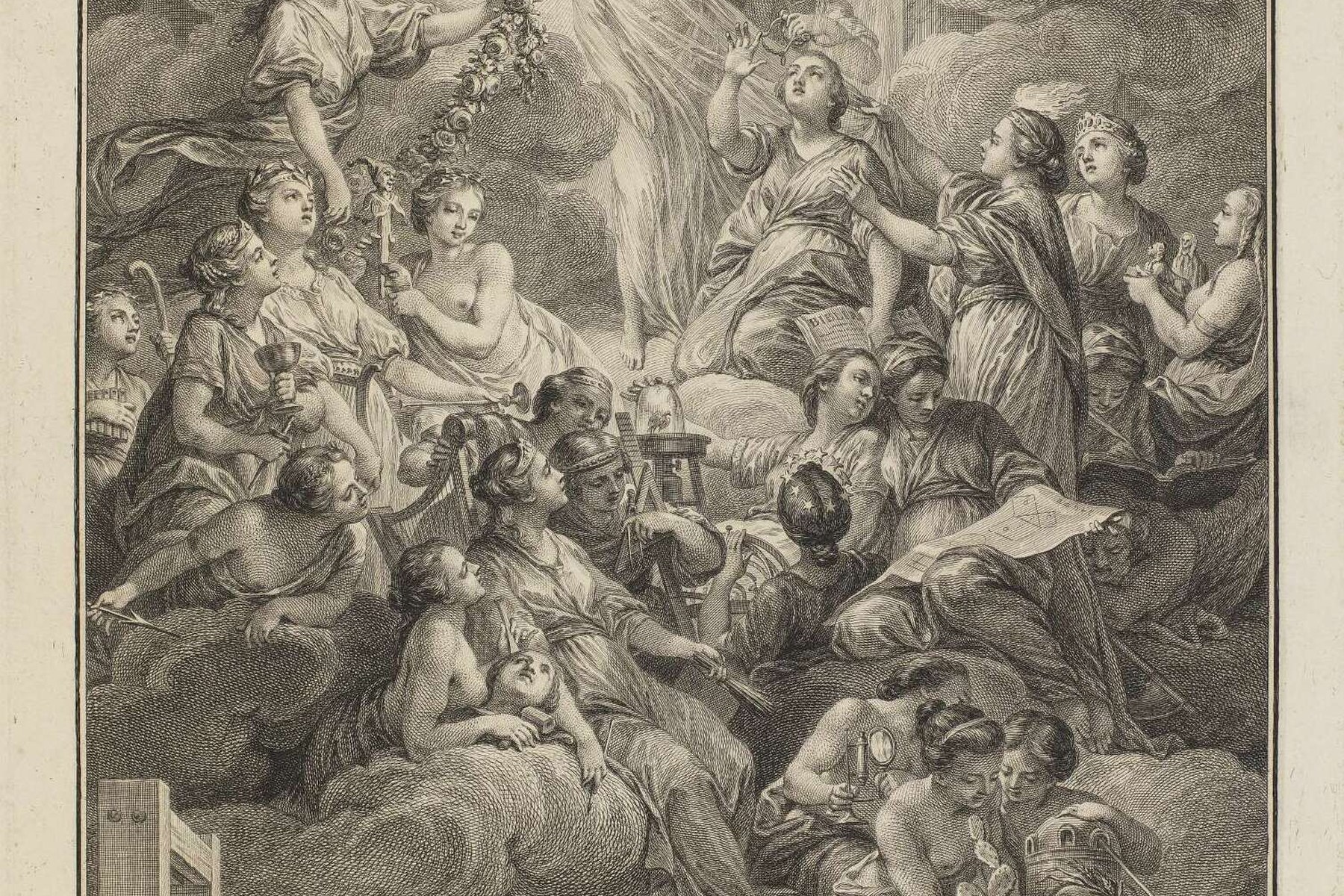
The Enlightenment was not a single meeting, manifesto or philosophy. It was a broad intellectual movement spanning the seventeenth and eighteenth centuries, especially in Europe and the Atlantic world, with major variations between thinkers and countries. Its central themes included reason, evidence, liberty, religious toleration and criticism of arbitrary authority. Yet even this summary requires caution: Enlightenment thinkers disagreed deeply, and many supported or benefited from systems that contradicted their universal claims.
Thinkers such as John Locke, Montesquieu, Voltaire, David Hume, Jean-Jacques Rousseau and others asked whether political authority required justification. Could rulers govern simply because of birth? Should law protect individual rights? Could institutions be redesigned? These questions were not entirely new, but Enlightenment culture gave them new prominence and connected them to expanding print networks, scientific inquiry and political debate.
Reason became an important cultural symbol. The Enlightenment did not invent rational thought, and reason was not exclusive to Europe. Scholars across the Islamic world, Asia, Africa and earlier civilisations had developed sophisticated intellectual traditions. What distinguished the European Enlightenment was a particular combination of scientific confidence, public debate and political critique that later influenced revolutionary movements and modern institutions.
The movement challenged the idea that tradition alone was sufficient justification. An institution could be old and still be wrong. A law could be official and still be unjust. This principle became one of the foundations of modern reform. It encouraged people to imagine society as something constructed by human beings and therefore potentially changeable.
The political consequences were enormous. Enlightenment ideas influenced the American Revolution, the French Revolution and later debates about constitutional government and rights. But the relationship between ideas and events was never straightforward. Revolutions produced violence as well as new institutions. The language of liberty coexisted with slavery and colonialism. Women and many marginalised groups were excluded from political rights even when universal principles were being proclaimed.
This contradiction produced some of the Enlightenment's most important critics and extensions. Mary Wollstonecraft challenged the exclusion of women. Abolitionists exposed the hypocrisy of liberty within slave societies. Later anti-colonial thinkers questioned European claims to universal civilisation. The history of equality is therefore partly the story of excluded people demanding that powerful societies apply their own principles consistently.
Modern democracies still depend on Enlightenment habits: asking for evidence, questioning concentrated power and treating citizens as capable of reasoned judgement. Yet the age also teaches humility about reason. Human beings can use sophisticated arguments to justify prejudice. Expertise can become detached from ordinary people. Rational systems can ignore emotional and cultural realities.
Social Rethink
Questioning authority is not the same as rejecting all authority. A society needs institutions, expertise and law. The Enlightenment challenge is to make authority accountable. Who has power? How did they get it? What evidence supports their decisions? What mechanisms allow citizens to challenge abuse?
This question is especially urgent in the digital age. Governments are not the only powerful institutions anymore. Technology companies, platforms and algorithmic systems can shape information and behaviour on a massive scale. Enlightenment principles must therefore be updated. Transparency, accountability and rights now apply to technological power as well as political power.
The Enlightenment made society rethink itself because it introduced a radical possibility: the world people inherited was not necessarily the world they had to accept. That idea remains dangerous to every system that claims permanence.
But history also reminds us that declaring universal values is easier than practising them. The unfinished work of the Enlightenment is not to repeat its language uncritically. It is to test whether freedom, equality and reason genuinely extend to everyone. Perhaps the most Enlightenment-like question we can ask today is also the most uncomfortable: where are we still accepting authority simply because we have become used to it?