Filed under Ideas · Ideas
Bicycle Thieves When Ordinary Life Became Worth Filming
Postwar Italian neorealism challenged the idea that cinema needed glamour, spectacle or extraordinary heroes. Ordinary people could carry an entire film.
- Share “Bicycle Thieves: When Ordinary Life Became Worth Filming” on X
- Share “Bicycle Thieves: When Ordinary Life Became Worth Filming” on Facebook
- Share “Bicycle Thieves: When Ordinary Life Became Worth Filming” on LinkedIn
- Share “Bicycle Thieves: When Ordinary Life Became Worth Filming” on WhatsApp
- Share “Bicycle Thieves: When Ordinary Life Became Worth Filming” on Telegram
- Share “Bicycle Thieves: When Ordinary Life Became Worth Filming” on Reddit
- Share “Bicycle Thieves: When Ordinary Life Became Worth Filming” on Email
THE OLD NORMAL
Popular cinema often relied on stars, constructed sets, dramatic plots and polished entertainment. Everyday hardship was not necessarily treated as the centre of cinematic attention.
THE QUESTION
What if the most important stories were not about extraordinary people, but about ordinary people trying to survive ordinary crises?
THE BREAKTHROUGH
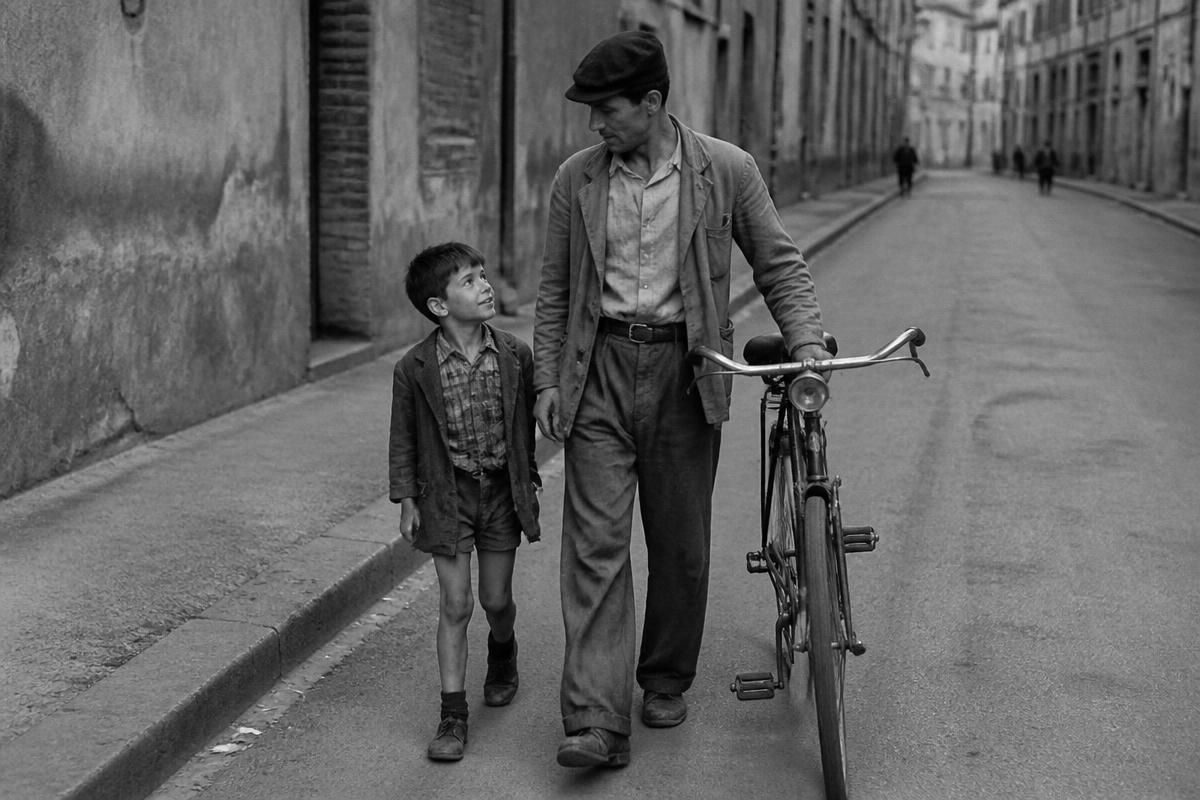
Italian neorealism emerged in the aftermath of the Second World War. Vittorio De Sica’s Bicycle Thieves (1948) became one of its defining works, portraying economic hardship through the experience of an ordinary father searching for his stolen bicycle.
THE CHANGE
Real locations, everyday environments and non-glamorous characters could become central cinematic material. The boundary between social observation and dramatic storytelling became more porous.
THE NEW NORMAL
A major tradition of world cinema began treating working-class life, poverty and social reality as worthy of serious artistic attention.
WHAT WE STILL MISUNDERSTAND
Neorealism was not simply ‘real life filmed exactly as it happens’. It involved artistic choices about framing, performance, editing and narrative. Its realism was constructed — but constructed to feel close to lived experience.
THE MODERN CONNECTION
Documentary hybrids, social dramas and independent films continue to use cinema to make ordinary experiences visible.
THE RETHINK
A society does not have to be spectacular to be worth seeing.