Filed under Stories · Social Rethinks
Solidarity When a Workers' Movement Changed a Country
A trade union born from strikes became a mass social movement and a crucial force in Poland's transition away from communist rule.
- Share “Solidarity: When a Workers' Movement Changed a Country” on X
- Share “Solidarity: When a Workers' Movement Changed a Country” on Facebook
- Share “Solidarity: When a Workers' Movement Changed a Country” on LinkedIn
- Share “Solidarity: When a Workers' Movement Changed a Country” on WhatsApp
- Share “Solidarity: When a Workers' Movement Changed a Country” on Telegram
- Share “Solidarity: When a Workers' Movement Changed a Country” on Reddit
- Share “Solidarity: When a Workers' Movement Changed a Country” on Email
THE OLD NORMAL
In communist Poland, independent political organisation was severely constrained. Workers had grievances, but the state controlled major institutions and could use force to suppress opposition.
THE QUESTION
Could a labour dispute become something larger than a workplace conflict?
THE ACTION
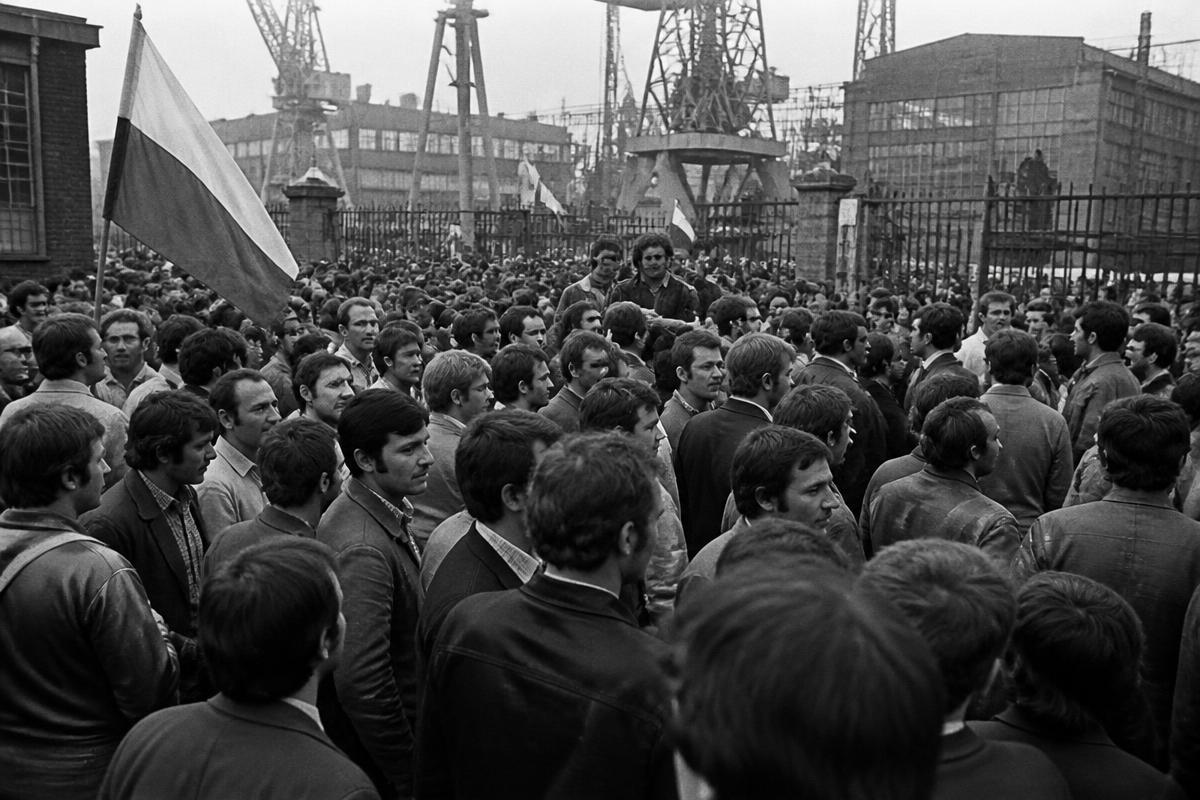
In August 1980, strikes at the Gdańsk shipyard and elsewhere produced a movement that became Solidarity, an independent trade union. It quickly attracted millions of members and connected economic demands with broader questions about rights and representation.
THE BREAKTHROUGH
Martial law in 1981 pushed Solidarity underground, but the movement survived. According to the U.S. Office of the Historian, it was sustained in part by support from Western labour organisations and Polish émigré groups. Negotiations reopened officially in February 1989.
THE CHANGE
The Round Table Talks produced agreements for partially free parliamentary elections, a freely elected Senate and recognition of Solidarity as a political party. The June 1989 elections produced a decisive political breakthrough.
THE NEW NORMAL
Poland entered a period of democratic transformation, and the events became part of the wider collapse of communist governments across Eastern Europe.
WHAT WE STILL MISUNDERSTAND
Solidarity was not simply an anti-communist political party. It was rooted in labour organising and civil society and contained different political visions.
THE MODERN CONNECTION
The story remains relevant wherever workplace organising becomes a platform for wider questions about political participation and institutional accountability.
THE RETHINK
Solidarity changed the assumption that a workers' movement had to remain a workers' movement.
Organised people can begin with one demand and discover that they are capable of challenging an entire political structure.