Filed under Stories · Social Rethinks
People Power When Millions Stood in the Way of a Dictatorship
The 1986 Philippine uprising showed how mass civilian mobilisation could help remove an entrenched authoritarian leader.
- Share “People Power: When Millions Stood in the Way of a Dictatorship” on X
- Share “People Power: When Millions Stood in the Way of a Dictatorship” on Facebook
- Share “People Power: When Millions Stood in the Way of a Dictatorship” on LinkedIn
- Share “People Power: When Millions Stood in the Way of a Dictatorship” on WhatsApp
- Share “People Power: When Millions Stood in the Way of a Dictatorship” on Telegram
- Share “People Power: When Millions Stood in the Way of a Dictatorship” on Reddit
- Share “People Power: When Millions Stood in the Way of a Dictatorship” on Email
THE OLD NORMAL
The Marcos regime had governed the Philippines for years under authoritarian conditions. Opposition could be constrained, elections contested and political power concentrated.
THE QUESTION
What can ordinary citizens do when formal institutions are unable or unwilling to remove an authoritarian government?
THE ACTION
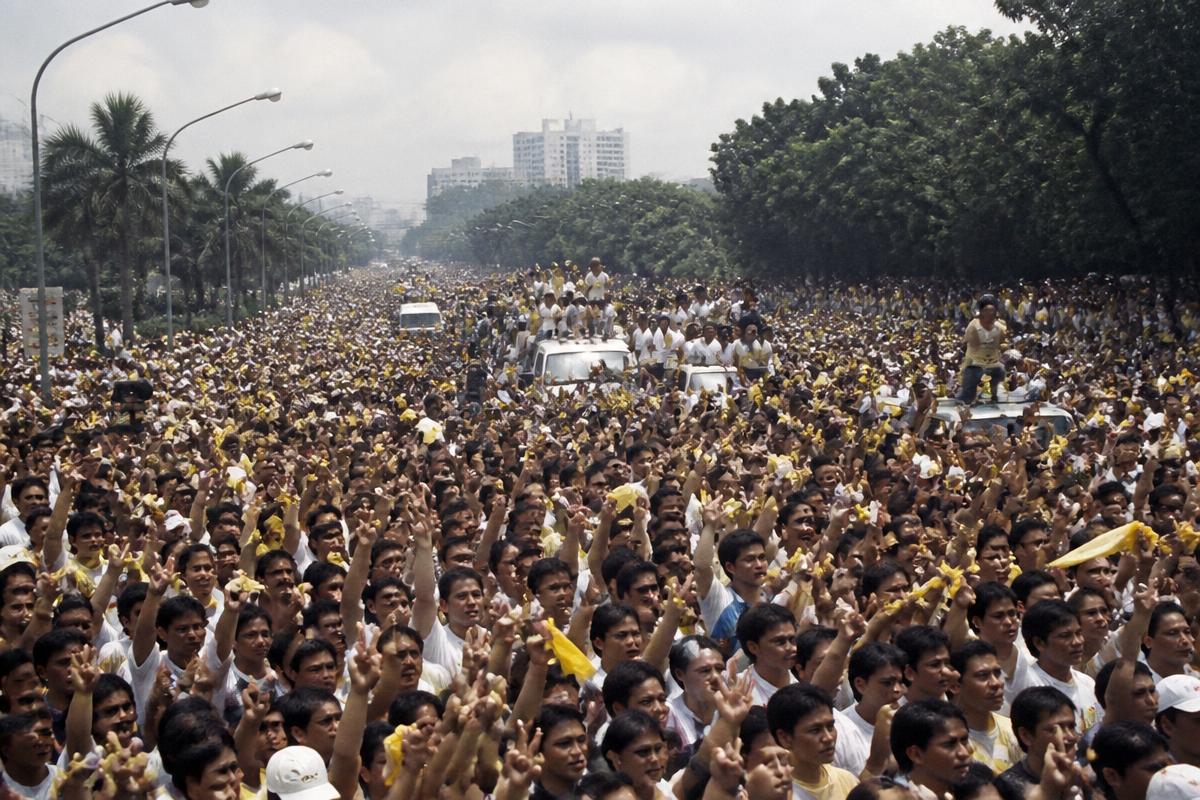
Following a disputed election and a military split, millions of civilians gathered along Epifanio de los Santos Avenue in Manila. Religious leaders, political opponents, workers, families and ordinary citizens formed a massive civilian presence.
THE BREAKTHROUGH
The scale and largely peaceful character of the mobilisation helped create a political crisis the regime could not easily contain. Ferdinand Marcos left the country, and Corazon Aquino assumed the presidency.
THE CHANGE
The movement became a powerful global image of civilian mobilisation. It demonstrated that people without conventional weapons could nevertheless alter the political balance when participation became enormous.
THE NEW NORMAL
The Philippines returned to democratic institutions, although its subsequent political history remained complex and contested.
WHAT WE STILL MISUNDERSTAND
People Power was not a spontaneous miracle. It was preceded by years of opposition, political organising, repression, elections and institutional fractures.
THE MODERN CONNECTION
Mass mobilisation remains powerful when political systems are under pressure. But its success depends heavily on elite defections, institutional conditions, public participation and the ability to sustain legitimacy.
THE RETHINK
The revolution changed the image of political power.
Sometimes the decisive force is not an army moving forward, but millions of civilians refusing to move aside.