Filed under Stories · Social Rethinks
The U.S. Civil Rights Movement When Protest Became Law
Grassroots organising, legal challenges, boycotts and mass protest helped transform racial equality from a moral demand into enforceable federal law.
- Share “The U.S. Civil Rights Movement: When Protest Became Law” on X
- Share “The U.S. Civil Rights Movement: When Protest Became Law” on Facebook
- Share “The U.S. Civil Rights Movement: When Protest Became Law” on LinkedIn
- Share “The U.S. Civil Rights Movement: When Protest Became Law” on WhatsApp
- Share “The U.S. Civil Rights Movement: When Protest Became Law” on Telegram
- Share “The U.S. Civil Rights Movement: When Protest Became Law” on Reddit
- Share “The U.S. Civil Rights Movement: When Protest Became Law” on Email
THE OLD NORMAL
For much of American history, racial segregation and discrimination were embedded in law, custom and institutions. In the South, Black Americans faced barriers to voting, segregated public facilities, unequal education and violence.
THE QUESTION
What happens when people who are denied equal rights organise not only to protest injustice, but to make the government enforce equality?
THE ACTION
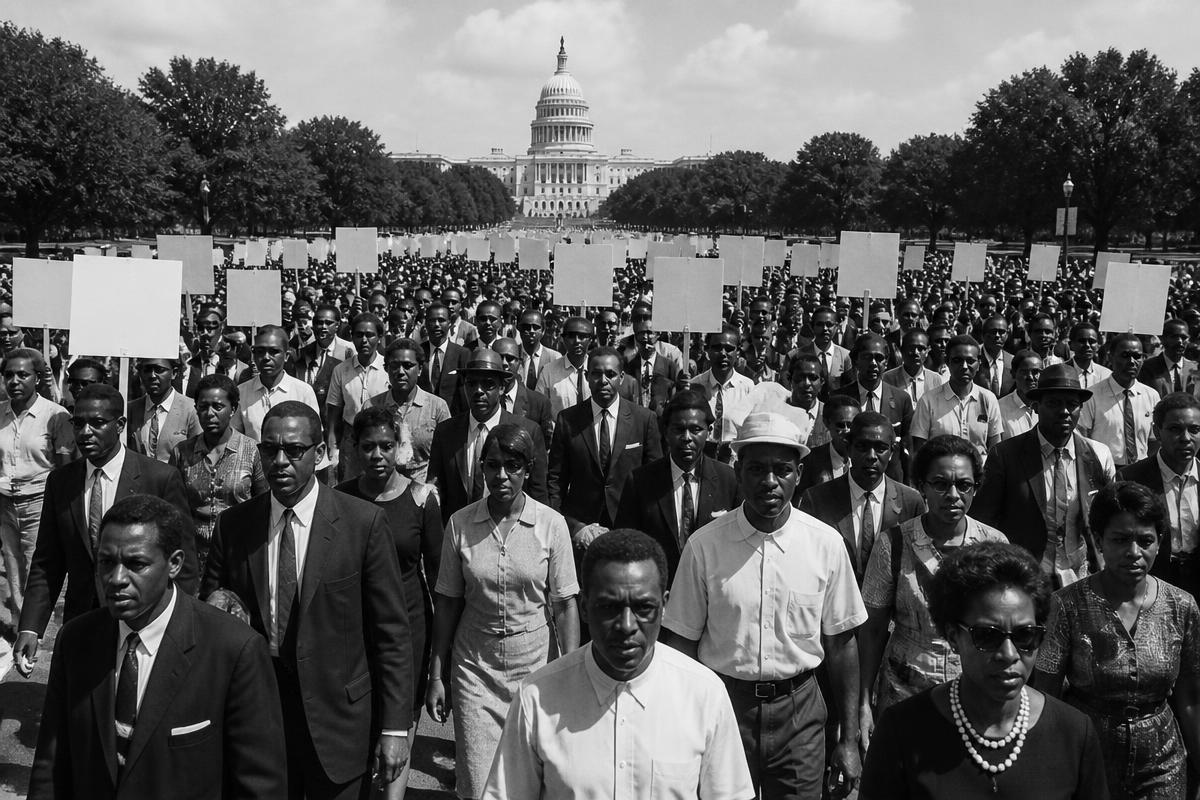
The movement used a remarkably broad toolkit: litigation, boycotts, voter-registration drives, sit-ins, freedom rides, marches, community organising, church networks and strategic media work. The Montgomery Bus Boycott and campaigns in Birmingham and Selma demonstrated how local action could become national politics.
THE BREAKTHROUGH
The Civil Rights Act of 1964 prohibited discrimination in public accommodations and employment and strengthened federal enforcement. The Voting Rights Act of 1965 outlawed discriminatory voting practices including literacy tests and created stronger federal mechanisms for protecting voting rights. The National Archives documents how peaceful demonstrations and the violence inflicted on protesters helped generate national pressure for legislation.
THE CHANGE
The movement changed the legal baseline. Equality was no longer only an argument activists made; federal law could now be used to challenge discrimination.
THE NEW NORMAL
The United States did not become a racially equal society in 1965. Discrimination and inequality persisted, and later generations continued organising around voting, housing, education, policing and economic opportunity.
WHAT WE STILL MISUNDERSTAND
The movement is often reduced to a few famous speeches and leaders. Its success depended on local organisers, students, domestic workers, lawyers, clergy, journalists, families and people whose names never became famous.
THE MODERN CONNECTION
Modern movements continue to combine protest with litigation, legislation, elections, media and community organising. The civil-rights experience shows that protest is often most durable when it connects public pressure to institutional change.
THE RETHINK
The great shift was from asking whether equality was morally desirable to demanding that government enforce it.
Activism did not simply change minds. It helped change the law.