Filed under Ideas · Social Rethinks
The Lens That Changed What History Was About
Before Marx, poverty and privilege were mostly explained as personal fate. His class analysis proposed something different — that economic structure, not virtue or luck, shapes almost everything else in society.
- Share “The Lens That Changed What History Was About” on X
- Share “The Lens That Changed What History Was About” on Facebook
- Share “The Lens That Changed What History Was About” on LinkedIn
- Share “The Lens That Changed What History Was About” on WhatsApp
- Share “The Lens That Changed What History Was About” on Telegram
- Share “The Lens That Changed What History Was About” on Reddit
- Share “The Lens That Changed What History Was About” on Email
OPENING
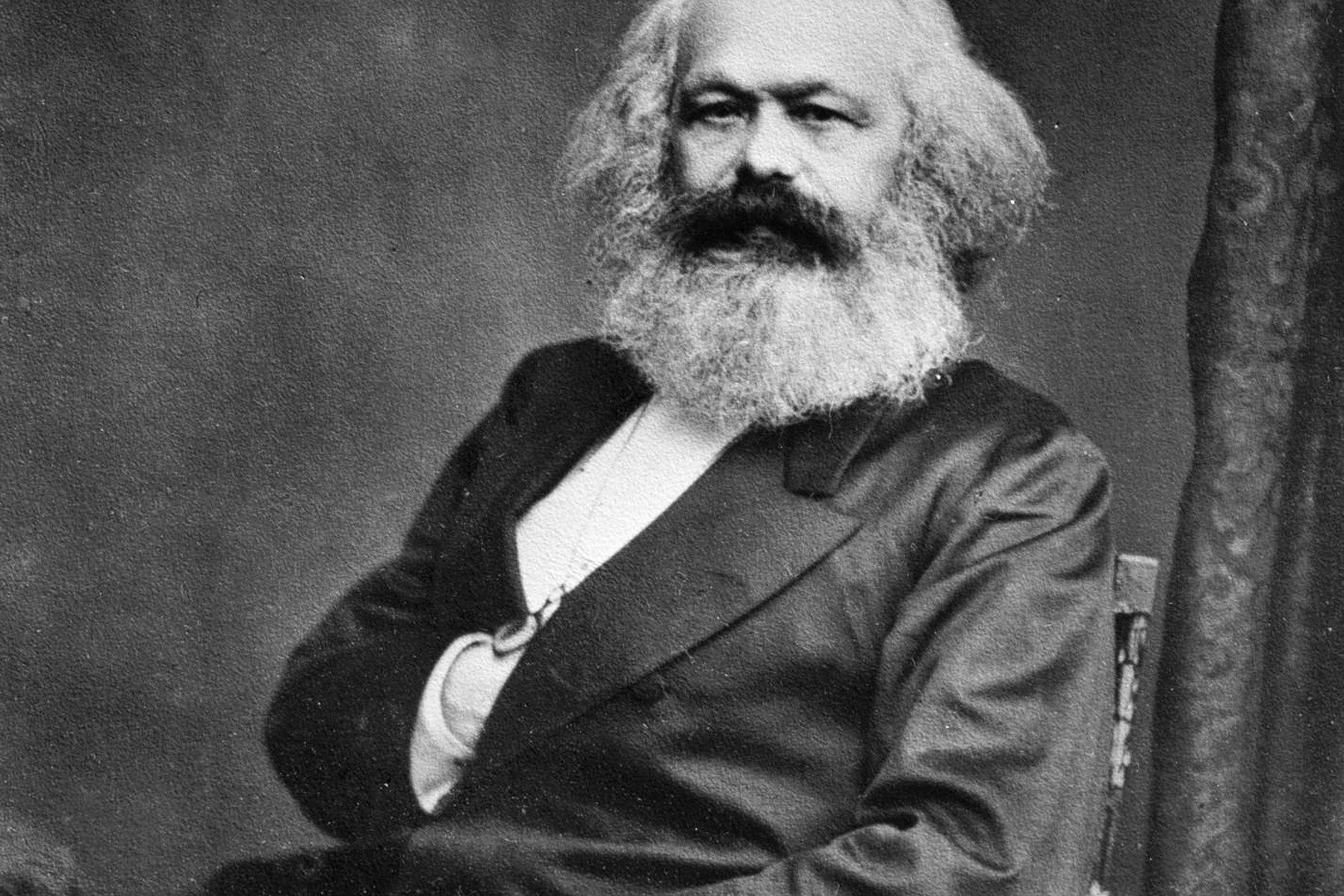
Karl Marx did not invent inequality, and he was far from the first person to notice it. What he offered instead was a new way of explaining it — one that reframed economic hierarchy not as the accumulated result of individual talent, luck, or moral failing, but as the predictable output of a structural relationship between those who own productive resources and those who sell their labor to survive. Whether or not one accepts his political conclusions, this analytical shift — reading history and society primarily through economic structure and class conflict — became one of the most widely used interpretive tools of the modern era.
HISTORICAL CONTEXT
In the mid-19th century, the rapid industrialization of Europe produced enormous new wealth alongside brutal working conditions: child labor, sixteen-hour shifts, unsafe factories, and overcrowded urban slums. The dominant economic thinking of the era, shaped by classical liberal economics, largely treated market outcomes — including poverty — as the natural result of individual effort operating within free exchange. Social hardship was widely understood through a lens of personal circumstance or moral character rather than as evidence of a structural imbalance built into the economic system itself.
THE TURNING POINT
Karl Marx, working closely with Friedrich Engels, argued in works including The Communist Manifesto (1848) and Das Kapital (1867) that a society's economic base — specifically, who owns the means of production and who must sell their labor to survive — shapes its politics, laws, culture, and conflicts far more than commonly assumed. Marx described history as a sequence of struggles between classes with opposing economic interests, and predicted that industrial capitalism's internal contradictions would eventually produce a working-class movement capable of transforming the system itself.
Engels's own firsthand documentation of industrial conditions in The Condition of the Working Class in England (1845) provided empirical grounding for the broader theoretical claim: that suffering under industrial capitalism was not incidental but structural, built into how the system distributed the value that labor produced.
THE LONGER LEGACY
Marx's class-based framework directly influenced labor movements across Europe and beyond, contributing to the rise of trade unions, socialist and social-democratic political parties, and eventually the modern welfare state, which introduced protections — minimum wages, limits on working hours, social insurance — explicitly intended to soften the class conflicts Marx described. In the 20th century, Marxist theory also became the ideological foundation for revolutionary movements and governments, most consequentially in Russia following the 1917 Revolution and later in China, Cuba, and elsewhere, with outcomes that varied dramatically in their fidelity to Marx's original theory and in their human cost. Independent of its political applications, class analysis became a foundational method within academic sociology, economics, and history, used by scholars who reject Marxism's political program but still find the structural, economic lens analytically useful.
WHAT WE STILL MISUNDERSTAND
Marx is frequently credited or blamed for every 20th-century government that invoked his name, but the regimes that governed in Marx's name — particularly the Soviet Union under Stalin and Maoist China — diverged sharply from his own writings in both method and outcome, and conflating his theoretical work with their specific historical records oversimplifies both. It's also inaccurate to treat Marx as the singular origin of concern for workers' conditions; he built on, and sharpened, a broader 19th-century tradition of social criticism that included utopian socialists and labor reformers who preceded him. Finally, "Marxism" is not a single fixed doctrine — it has been interpreted, revised, and applied in sharply different, sometimes contradictory ways by different movements and thinkers since Marx's death in 1883.
THE MODERN CONNECTION
Contemporary debates over wealth inequality, labor rights, the gig economy, and the concentration of capital in an increasingly automated and globalized economy continue to draw — often implicitly — on the analytical habit Marx popularized: asking who owns the resources that generate value, and who merely sells their labor within a system they don't control. Economists and policymakers across the political spectrum, whether or not they identify with Marx's politics, regularly use class-based economic analysis as one lens among several for understanding modern inequality.
The Social Rethink
Before Marx's class analysis took hold, economic hardship was widely read as a story about individuals — their choices, their character, their luck. Afterward, it became possible, and for many people necessary, to read the same hardship as a story about structure — about who controls resources and who doesn't, and what that concentration predictably produces regardless of individual virtue. That reframing, independent of any specific political program built on top of it, permanently expanded the range of explanations a society is willing to consider for its own inequality.
If economic structure shapes outcomes as powerfully as class analysis suggests, how much of what we currently attribute to individual merit or failure is actually a story about the system surrounding the individual?