Filed under Ideas · Social Rethinks
The Experiment That Never Quite Ended
Democracy began as a strange, limited experiment in one ancient city. Centuries later, it became the standard every government feels compelled to claim — even the ones that clearly aren't.
- Share “The Experiment That Never Quite Ended” on X
- Share “The Experiment That Never Quite Ended” on Facebook
- Share “The Experiment That Never Quite Ended” on LinkedIn
- Share “The Experiment That Never Quite Ended” on WhatsApp
- Share “The Experiment That Never Quite Ended” on Telegram
- Share “The Experiment That Never Quite Ended” on Reddit
- Share “The Experiment That Never Quite Ended” on Email
OPENING
Very few ideas have been simultaneously as celebrated and as incompletely realized as democracy. It began in a single ancient city as a striking departure from monarchy and oligarchy, nearly vanished from serious political practice for almost two thousand years, and returned to reshape the modern world so thoroughly that even authoritarian states now stage elections to borrow its legitimacy. The story of democracy and freedom as governing ideals is not a straight line from ancient Athens to the present — it's a repeated argument about who gets to be included in "the people" who supposedly govern.
HISTORICAL CONTEXT
Before democratic ideals took hold, the default assumption across most of the world's political history was that legitimate authority concentrated naturally at the top — in monarchs, emperors, or hereditary aristocracies — and that ordinary people's role was to be governed well, not to govern themselves. Even where limited representative or consultative bodies existed, they typically represented narrow classes of property-owning men, not a general population. The idea that political legitimacy should flow upward from the collective will of ordinary citizens, rather than downward from a ruling class, was the exception rather than the rule for most of recorded history.
THE TURNING POINT
Athenian democracy, established in the 5th century BCE, allowed free adult male citizens to vote directly on laws and policy — a radical departure from surrounding monarchies, though one that explicitly excluded women, enslaved people, and foreigners, and applied only to a single city-state rather than a nation. It did not directly produce the modern democratic world; Athens's experiment declined, and most subsequent European political history returned to monarchy and aristocracy for close to two millennia.
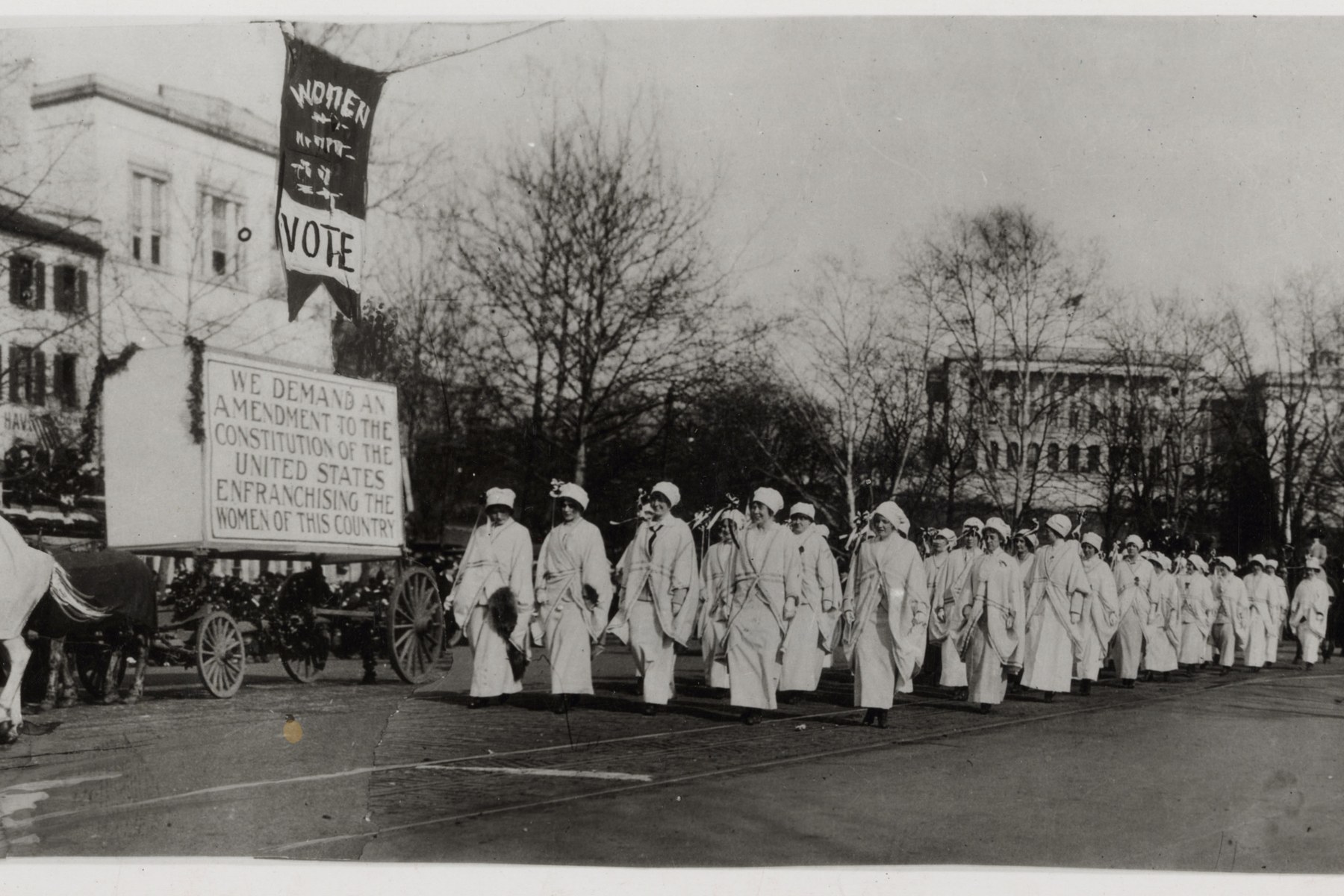
The Enlightenment revived the ideal in a different form, feeding directly into the American Revolution's founding claim that government derives its authority from the consent of the governed and the French Revolution's insistence on popular sovereignty against inherited rule. The 19th and 20th centuries then became a long, uneven expansion of who counted as part of "the people" a democracy was meant to represent: property qualifications for voting were gradually lifted, women's suffrage movements succeeded across most of the world by the mid-20th century, and decolonization movements after World War II established dozens of new nations explicitly organized around the principle of self-governance and individual liberty.
THE LONGER LEGACY
Democratic and liberal ideals became the dominant, if unevenly applied, framework of 20th-century international politics. The end of European colonial empires, the fall of numerous 20th-century dictatorships, and post-Cold War political transitions across Eastern Europe, Latin America, and parts of Asia and Africa were frequently framed — by the people driving them — as movements toward democratic self-governance and individual freedom. At the same time, the 20th century also produced some of history's most brutal authoritarian regimes, several of which explicitly rejected liberal democracy as a Western imposition rather than a universal good — a tension the ideal has never fully resolved.
WHAT WE STILL MISUNDERSTAND
Democracy is often described as though it emerged as a single continuous tradition from Athens to the present; in reality, direct democratic practice nearly disappeared for most of the intervening centuries, and modern representative democracy is a distinct and later invention, not a straightforward continuation of the Athenian model. It's also inaccurate to treat democratic expansion as a smooth, inevitable progression — suffrage, civil rights, and self-governance were each won through sustained struggle, frequently against violent resistance, rather than granted as a natural consequence of the idea's existence. And the mere presence of elections does not, by itself, indicate a functioning democracy, a distinction that remains contested in international politics today.
THE MODERN CONNECTION
Contemporary debates over voting rights, the health of democratic institutions, the durability of the rule of law, and the global rise and retreat of authoritarian governance are all direct continuations of the same argument democratic and Enlightenment thinkers first raised: who gets to govern, and by what right. The fact that even non-democratic states now routinely claim democratic legitimacy — through staged elections or appeals to "the will of the people" — is itself evidence of how completely the ideal has come to define what counts as acceptable political authority, even when the practice falls far short of it.
The Social Rethink
Democracy's deepest rethink was not the invention of voting, but the more radical claim underneath it: that ordinary people, collectively, are capable of governing themselves and are entitled to try. That claim has been resisted, narrowed, expanded, betrayed, and fought for across twenty-five centuries, and it remains genuinely unfinished — which is precisely why it continues to be worth fighting over.
If the history of democracy is really a long argument over who counts as "the people," who is still waiting to be fully included in that word today?