Filed under Ideas · Social Rethinks
From Commerce to Conscience
For centuries, slavery was treated as an economic fact of life rather than a moral question. The movement to abolish it forced the world to reclassify a person as something that could never legitimately be owned.
- Share “From Commerce to Conscience” on X
- Share “From Commerce to Conscience” on Facebook
- Share “From Commerce to Conscience” on LinkedIn
- Share “From Commerce to Conscience” on WhatsApp
- Share “From Commerce to Conscience” on Telegram
- Share “From Commerce to Conscience” on Reddit
- Share “From Commerce to Conscience” on Email
OPENING
It is easy, from a distance of centuries, to assume that slavery was always understood as an obvious moral wrong that simply persisted through cruelty or greed. The historical record complicates that comfort. Across empires, continents, and centuries, slavery was widely treated not as a crime requiring justification but as an ordinary — even unremarkable — feature of trade, agriculture, and law. The abolition movement's central achievement was not merely ending a practice. It was successfully arguing that this practice belonged in an entirely different moral category than the one it had occupied for most of human history.
HISTORICAL CONTEXT
By the 18th century, the transatlantic slave trade had forcibly transported millions of enslaved Africans to the Americas, embedded in legal codes, insurance markets, and colonial economies across Europe and its colonies. Enslaved people were classified in law as property, with slavery justified through a combination of economic necessity, racial pseudoscience, and religious rationalization. Critically, the institution was rarely defended as a positive good requiring no argument — because for most of its history, it required none. It was simply how significant portions of the world's agricultural and commercial economy operated.
THE TURNING POINT
The abolitionist movement that emerged in the late 18th century did not begin with a single voice; it was carried forward by formerly enslaved people, religious reformers, and political organizers working across Britain, the United States, the Caribbean, and beyond. Figures such as Olaudah Equiano, whose 1789 autobiography gave firsthand testimony of the horrors of enslavement, and organizers like Thomas Clarkson and William Wilberforce in Britain, built a sustained public and political campaign that combined moral argument, economic pressure, and organized resistance by enslaved people themselves — including uprisings such as the Haitian Revolution (1791–1804), which produced the first nation founded by a successful slave rebellion.
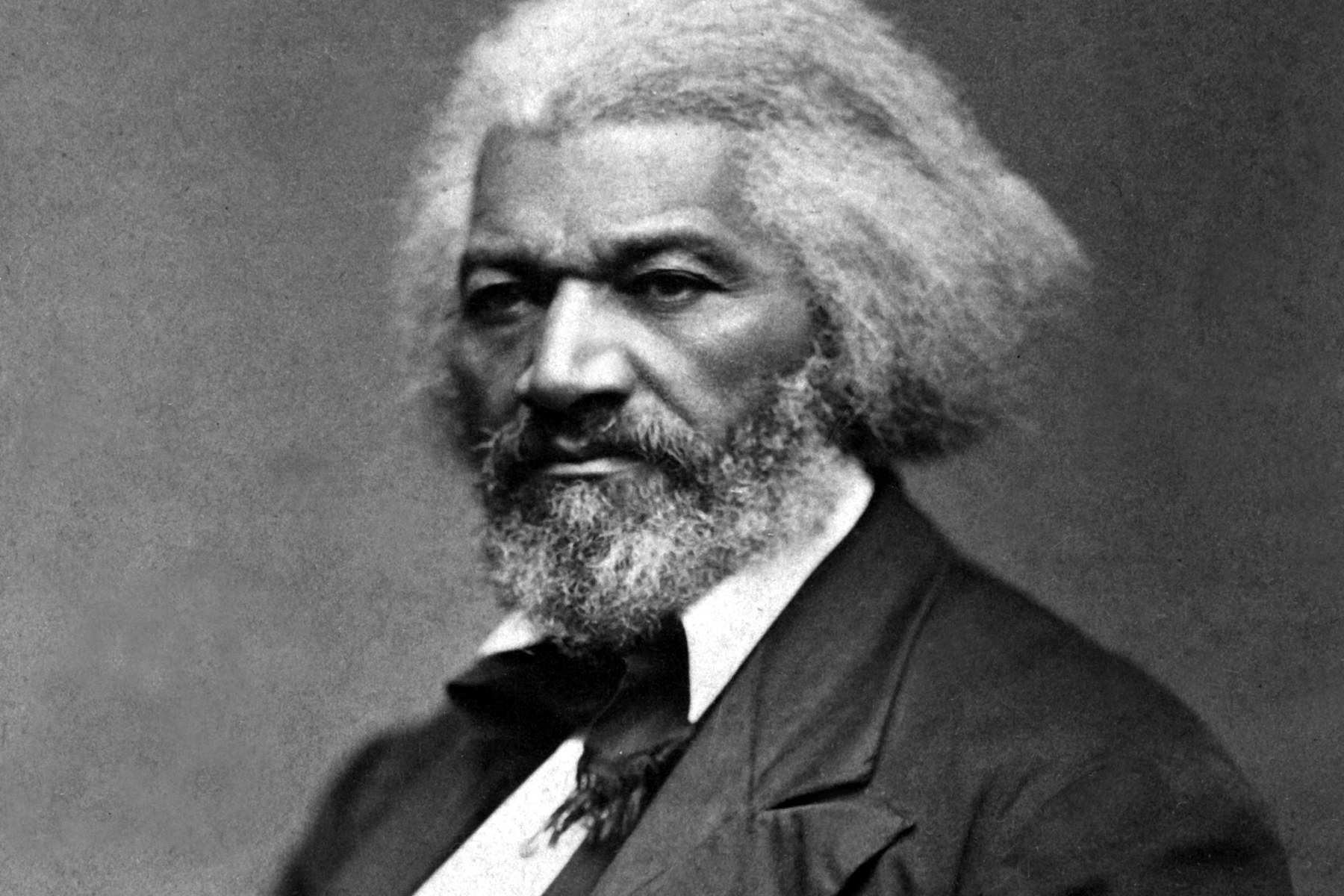
Britain's Slavery Abolition Act of 1833 ended slavery across most of the British Empire, following the earlier abolition of the British slave trade in 1807. In the United States, slavery persisted until the end of the Civil War and the ratification of the Thirteenth Amendment in 1865, following decades of abolitionist organizing by figures including Frederick Douglass and Harriet Tubman, both of whom had themselves escaped enslavement.
THE LONGER LEGACY
Abolition was neither instantaneous nor complete. Formal emancipation frequently gave way to new systems of racial and economic subjugation — sharecropping, convict leasing, and segregation in the United States, and various forms of colonial forced labor elsewhere — that preserved much of slavery's economic function under different names. The moral argument that slavery was categorically wrong nonetheless became internationally entrenched, eventually informing 20th-century human rights instruments that explicitly prohibit slavery and forced labor as violations of fundamental rights.
WHAT WE STILL MISUNDERSTAND
Abolition is sometimes told as a story led primarily by white reformers extending freedom to a passive enslaved population; the historical record shows enslaved people organizing, resisting, and fighting for their own freedom throughout, from daily acts of resistance to full-scale uprisings. It's also inaccurate to treat 1833 or 1865 as the moment slavery "ended" globally — forms of forced and bonded labor persisted afterward in many regions, and modern estimates suggest tens of millions of people remain in conditions international law classifies as modern slavery today. Abolition was a foundational moral and legal victory, not a completed one.
THE MODERN CONNECTION
Contemporary efforts to combat human trafficking and forced labor draw directly on the legal and moral framework abolitionists first established: that no economic, cultural, or legal argument can justify treating a human being as property. The persistence of modern slavery is frequently cited by human rights organizations as evidence that the 19th century's legal victories, while historic, did not resolve the underlying vulnerabilities — poverty, displacement, and lack of legal protection — that make exploitation possible.
The Social Rethink
Before abolition, the question of slavery's morality was, for most of the societies that practiced it, barely a question at all. Afterward, it became impossible to defend slavery on economic grounds without confronting the argument that no efficiency or profit can outweigh a human being's inherent right not to be owned. That reclassification — from commercial fact to moral violation — remains one of history's clearest examples of an entire category of accepted practice becoming unthinkable within a few generations.
If a practice as entrenched and economically embedded as slavery could be reclassified from normal to unthinkable, what does that suggest about other systems we currently treat as simply how the economy has to work?