Filed under Stories · Social Rethinks
Women's Suffrage When Women Became Political Citizens
The long struggle for women's voting rights challenged one of society's most deeply normalised assumptions: that political citizenship was naturally male.
- Share “Women's Suffrage: When Women Became Political Citizens” on X
- Share “Women's Suffrage: When Women Became Political Citizens” on Facebook
- Share “Women's Suffrage: When Women Became Political Citizens” on LinkedIn
- Share “Women's Suffrage: When Women Became Political Citizens” on WhatsApp
- Share “Women's Suffrage: When Women Became Political Citizens” on Telegram
- Share “Women's Suffrage: When Women Became Political Citizens” on Reddit
- Share “Women's Suffrage: When Women Became Political Citizens” on Email
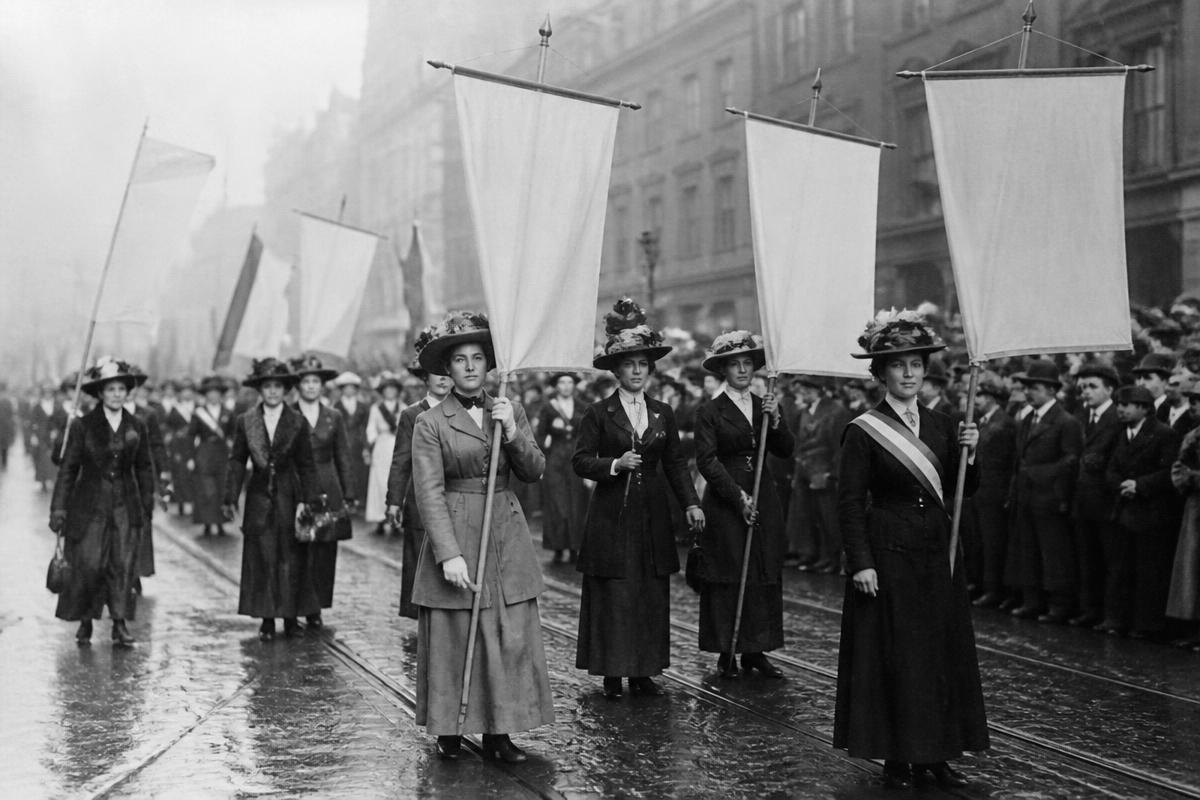
THE OLD NORMAL
In many nineteenth-century societies, political participation was defined as a male activity. Women could influence families, churches, charities and communities, but formal political citizenship was often restricted to men.
THE QUESTION
Why should the right to shape government depend on sex?
THE ACTION
Suffrage activists built movements through petitions, public meetings, newspapers, lobbying, associations and direct political pressure. Their methods differed across countries, but the underlying strategy was similar: turn an apparently natural exclusion into a public political question.
THE BREAKTHROUGH
New Zealand became the first self-governing country to give women the right to vote in parliamentary elections when the Electoral Act was signed on 19 September 1893. Years of organising preceded the victory. In 1893, petitions containing nearly 32,000 signatures—almost a quarter of the adult European female population—were presented to Parliament.
THE CHANGE
The victory demonstrated that an excluded population could create political pressure large enough to change the definition of citizenship.
THE NEW NORMAL
Women's suffrage subsequently expanded across much of the world, although not simultaneously and not always on equal terms. In many places, racial, colonial and class exclusions continued.
WHAT WE STILL MISUNDERSTAND
There was no single global suffrage movement with one strategy. Indigenous women, working-class women and women of colour often faced additional exclusions that mainstream suffrage narratives can obscure.
THE MODERN CONNECTION
Democratic participation still depends on who is able to register, vote, organise and hold office. The suffrage movement reminds us that the boundaries of citizenship are historically constructed—not inevitable.
THE RETHINK
The suffragists changed a basic assumption about democracy.
If government claims to represent society, then society has to decide who counts as part of the political public.