People · Social Rethinks
Rosa Parks: The Woman Who Sat Down and Made a Nation Stand Up
Most people know the story. Rosa Parks was tired. She refused to give up her seat. History changed. But the real story is more powerful than the myth.
- Share “Rosa Parks: The Woman Who Sat Down and Made a Nation Stand Up” on X
- Share “Rosa Parks: The Woman Who Sat Down and Made a Nation Stand Up” on Facebook
- Share “Rosa Parks: The Woman Who Sat Down and Made a Nation Stand Up” on LinkedIn
- Share “Rosa Parks: The Woman Who Sat Down and Made a Nation Stand Up” on WhatsApp
- Share “Rosa Parks: The Woman Who Sat Down and Made a Nation Stand Up” on Telegram
- Share “Rosa Parks: The Woman Who Sat Down and Made a Nation Stand Up” on Reddit
- Share “Rosa Parks: The Woman Who Sat Down and Made a Nation Stand Up” on Email
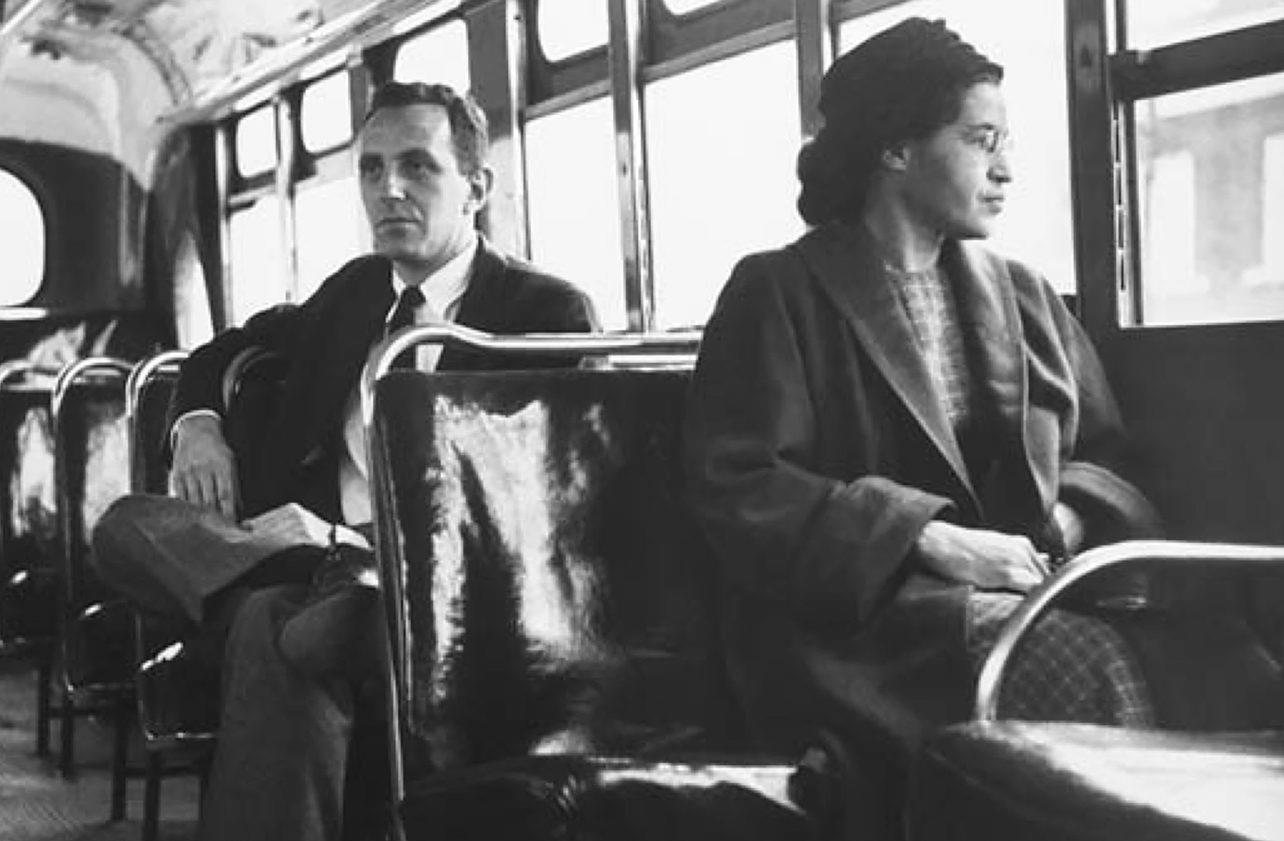
On December 1, 1955, Rosa Parks boarded a bus in Montgomery, Alabama.
She was 42 years old.
She had finished work.
She was going home.
Then the bus driver told her to give up her seat for a white passenger.
Rosa Parks refused.
She was arrested.
The decision took only a moment.
The consequences lasted generations.
Her arrest helped trigger the Montgomery Bus Boycott.
For 381 days, Black residents refused to use the city's buses.
They walked.
They shared cars.
They organised.
They endured threats and harassment.
Eventually, bus segregation was ruled unconstitutional.
Rosa Parks became one of the most recognised figures in the history of the American civil rights movement.
But there is a problem with the story most people know.
It is too simple.
Rosa Parks did not suddenly become brave because she was tired after work.
She had spent years challenging racial injustice.
She was already an activist.
She already understood the law.
She already understood the risks.
And she had already experienced discrimination on Montgomery buses.
Rosa Parks did not accidentally make history.
She had spent much of her life preparing to challenge it.
The world before Rosa Parks
To understand what happened on that bus, we have to understand the world around it.
In the American South, racial segregation was built into everyday life.
Black and white Americans were separated by law.
Different schools.
Different restaurants.
Different public facilities.
Different waiting rooms.
Different sections of buses.
These laws and practices were part of what became known as Jim Crow.
The message was everywhere.
Some people belonged.
Others did not.
And the system was designed to make inequality look normal.
That is one of the most powerful things a society can do.
It can turn injustice into routine.
When something happens every day, people can stop questioning it.
They can begin believing:
That is just how things are.
That is how it has always been.
That is how it will always be.
Rosa Parks refused to accept that.
She had been an activist for years
This is the part many people never learned in school.
Before December 1, 1955, Rosa Parks was already deeply involved in the fight for civil rights.
She had served as secretary of the Montgomery branch of the NAACP for years.
She worked alongside other activists.
She investigated cases of racial violence.
She supported efforts to register Black voters.
She worked for racial equality long before the bus boycott made her famous.
Earlier in 1955, Parks also attended a workshop at the Highlander Folk School in Tennessee, where activists discussed strategies for challenging segregation.
By the time she boarded that bus in December, Rosa Parks was not politically unaware.
She knew exactly what kind of society she was living in.
And she knew resistance could have consequences.
The myth of the tired woman
For years, people were often told that Rosa Parks refused to move because she was physically tired after a long day at work.
The truth is more complicated.
Yes, she had been working.
Yes, she was tired.
But not in the way the myth suggests.
Rosa Parks later explained that she was not tired simply because her feet hurt.
She was tired of giving in.
That distinction changes the entire story.
One version says:
A tired woman accidentally became part of history.
The other says:
A lifelong activist decided she had reached a limit.
The second story is much more powerful.
Because it reminds us that social change is rarely as spontaneous as history makes it appear.
December 1, 1955
That evening, Rosa Parks was travelling home on a Montgomery city bus.
The bus became crowded.
Under Montgomery's segregation system, Black passengers could be required to give up their seats when white passengers needed them.
Parks was sitting in the section behind the seats permanently reserved for white passengers.
The bus driver, James F. Blake, told Parks and other Black passengers to move.
The others complied.
Rosa Parks did not.
She remained seated.
The driver called the police.
Parks was arrested.
Her arrest record still exists.
Her decision was now part of the legal system.
But within days, it would become part of something much bigger.
But Rosa Parks was not the first
This is another important part of the story.
Rosa Parks was not the first Black person to challenge bus segregation in Montgomery.
Before her, others had also refused to give up their seats.
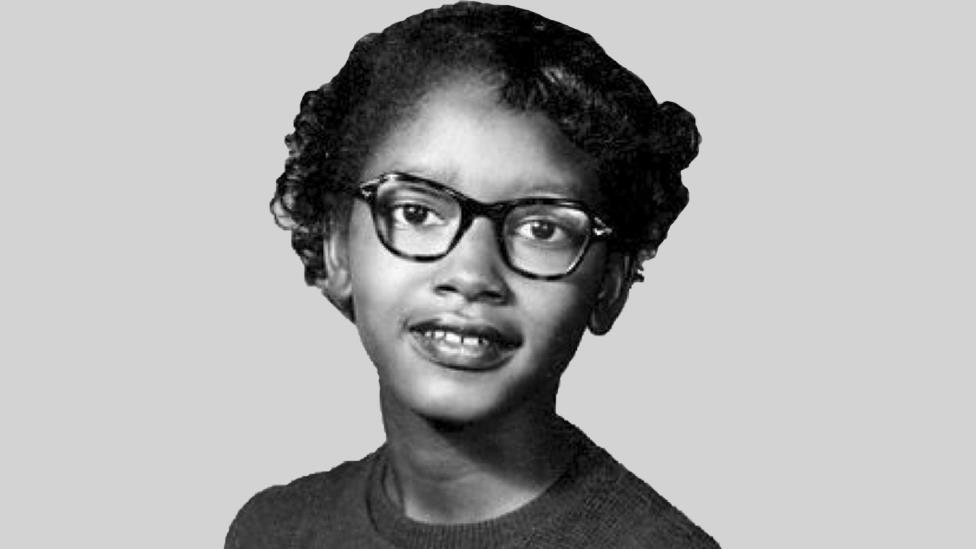
Among them was Claudette Colvin, a 15-year-old student who was arrested in March 1955.
Other Black women, including Aurelia Browder, Susie McDonald and Mary Louise Smith, also challenged bus segregation.
This matters because social change does not usually begin with one person.
It builds.
One act.
Then another.
One voice.
Then another.
One person refuses.
Then someone else refuses.
History often remembers one name.
But movements are built by many people.
Rosa Parks became the most famous symbol of the Montgomery Bus Boycott.
But she was part of something much larger.
She did not stand alone.
She sat at the centre of a movement that had been growing for years.
The boycott begins
Rosa Parks was arrested on a Thursday.
Her trial was scheduled for Monday, December 5.
The Women's Political Council and other local activists moved quickly.
They called for Black residents of Montgomery to stop using the buses.
At first, the boycott was planned for one day.
The result was extraordinary.
The buses were almost empty.
The protest worked.
That evening, thousands of people gathered.
They decided the boycott would continue.
A new organisation was created to coordinate the movement.
It was called the Montgomery Improvement Association.
A young Baptist minister named Martin Luther King Jr. became its president.
The boycott had become a movement.
Then came 381 days
This is where Rosa Parks' story becomes much bigger than one bus.
The Montgomery Bus Boycott lasted 381 days.
Imagine that.
More than a year.
Every morning, people needed to get to work.
Children needed to get to school.
Families needed to travel.
But thousands of people refused to use the buses.
They walked.
Some walked for miles.
People organised carpools.
Black-owned taxi companies helped transport people.
Communities created new ways to move.
The boycott became a test of something powerful.
What happens when ordinary people refuse to cooperate with an unfair system?
The answer was simple.
The system began to feel the pressure.
Montgomery's bus service depended heavily on Black passengers.
Without them, the buses lost money.
But the boycott also brought consequences.
People lost jobs.
People faced intimidation.
Homes and churches were attacked.
Activists were arrested.
The price of change was real.
But the community continued.
For 381 days.
The law finally changed
The boycott was not only a protest.
It was connected to a legal challenge.
A federal case called Browder v. Gayle challenged bus segregation laws in Alabama.
In 1956, the courts ruled that bus segregation violated the U.S. Constitution.
The U.S. Supreme Court upheld the decision.
In December 1956, Montgomery's buses were officially desegregated.
The boycott ended.
But something much larger had begun.
The Montgomery Bus Boycott became one of the defining events of the modern civil rights movement.
It showed that organised, sustained nonviolent action could challenge an entire system.
And it brought Martin Luther King Jr. to national attention.
But Rosa Parks remained at the centre of the story.
One woman had refused to move.
Thousands of people had decided to move with her.
Rosa Parks paid a price
History often makes heroes look untouchable.
But Rosa Parks paid a personal price for becoming famous.
After the boycott began, she and her family faced serious consequences.
She lost her job.
Her husband also faced difficulties at work.
They received threats.
In 1957, Rosa and her husband Raymond moved to Detroit.
But Rosa Parks did not retire from activism.
She continued working for civil rights.
She worked for Congressman John Conyers for many years.
She remained involved in social justice.
She worked with young people.
She continued speaking about equality.
This is another part of her story that deserves more attention.
Rosa Parks did not do one brave thing.
She lived a brave life.
Why Rosa Parks became a symbol
There were many people fighting segregation.
So why did Rosa Parks become such a powerful symbol?
Part of the answer is timing.
The civil rights movement was already growing.
Local organisations were prepared.
Activists knew how to organise.
The Black community in Montgomery was ready to act.
Rosa Parks' arrest created a moment people could rally around.
But there was something else.
Her act was simple.
Anyone could understand it.
You are sitting.
Someone tells you to move because of the colour of your skin.
You say no.
Sometimes the most powerful challenge to an unjust system is refusing to cooperate with it.
That is why the image stayed with people.
Rosa Parks did not need a stage.
She did not need political power.
She did not need millions of followers.
She had one seat.
And she decided it belonged to her.
The old normal
Before Rosa Parks became famous, segregation was presented as normal.
The signs were everywhere.
White.
Colored.
Separate.
The system told people where they could sit.
Where they could eat.
Where they could learn.
Where they could live.
And millions of people were expected to accept it.
The law had turned discrimination into routine.
Then came a simple question
Why?
Why should one person stand because another person wants their seat?
Why should the colour of someone's skin decide where they sit?
Why should an entire society accept this?
These questions may seem obvious today.
But at the time, asking them publicly could come with consequences.
Sometimes the most dangerous question is not complicated.
Sometimes it is simply:
Why should I accept this?
Rosa Parks understood something important
An unfair system does not survive only because powerful people support it.
It can also survive because ordinary people are forced to cooperate with it every day.
Use this door.
Sit here.
Stand there.
Go to this school.
Do not go to that school.
Do not vote.
Do not speak.
Do not challenge.
Systems become powerful when their rules become automatic.
Rosa Parks interrupted that process.
She refused to follow one rule.
Then thousands of people began refusing to cooperate with the system behind it.
Her power was not in sitting down.
Her power was in making obedience a choice.
The Social Rethink
THE OLD NORMAL
Racial segregation was built into everyday life.
People were expected to follow the rules without questioning them.
THE QUESTION
What happens when an unfair rule stops feeling normal?
THE DECISION
Rosa Parks refused to give up her seat.
THE RESPONSE
She was arrested.
THE MOVEMENT
The Black community of Montgomery organised a boycott that lasted 381 days.
THE CHANGE
Bus segregation was ruled unconstitutional.
The boycott became a model for organised civil rights activism.
THE NEW NORMAL
Today, legally enforced racial segregation on public buses in the United States is part of history.
But Rosa Parks' larger question remains.
What unfair rule are we following simply because we are used to it?
Rosa Parks was not trying to become famous
This is perhaps why her story still matters.
She was not trying to build a personal brand.
She was not trying to go viral.
There was no social media.
No television strategy.
No campaign to make her a global icon.
She made a decision.
Other people recognised its importance.
Then they acted.
This is how social change often works.
Someone refuses to accept something.
Others realise they feel the same way.
Then a private decision becomes a public movement.
The real lesson is bigger than the bus
Rosa Parks changed more than public transport.
She changed the way people understood resistance.
Her story showed that you do not always need to be powerful to challenge power.
You do not need to be president.
You do not need to be rich.
You do not need to lead an army.
Sometimes, you simply need to decide:
I will not cooperate with this anymore.
That decision can be quiet.
It can happen in a room.
On a street.
At work.
At school.
Or on a bus.
But quiet does not mean small.
The Rethink
THE OLD NORMAL
This is how things are.
THE QUESTION
But why?
THE DECISION
Rosa Parks refused to follow an unjust rule.
THE RESPONSE
She was arrested.
THE MOVEMENT
A community turned one act into 381 days of organised resistance.
THE CHANGE
The law changed.
The country changed.
The world watched.
THE NEW NORMAL
What once seemed permanent became history.
The question for today
Rosa Parks' story asks us to look at the things we accept without thinking.
Not everything that feels normal is right.
Not everything that has existed for generations deserves to continue.
Not every law is just.
Not every tradition is fair.
Not every social rule deserves obedience.
History changed because people eventually stopped asking:
How have things always been done?
And started asking:
Why are we still doing this?
That is the power of a Social Rethink.
Normal is not the same as right.
One woman. One seat. A movement.
Rosa Parks did not end racism.
She did not create the civil rights movement alone.
She was not the first person to challenge bus segregation.
And her arrest did not instantly change America.
The truth is more complicated.
And much more powerful.
Rosa Parks was part of a community.
Part of a movement.
Part of a long struggle led by thousands of people.
But on December 1, 1955, she made a decision.
She refused to accept something that society had spent generations calling normal.
And when she refused, others were ready to act.
That is how a Social Rethink begins.
Not when one person changes the world alone.
But when one person's decision helps thousands of others realise:
We do not have to accept this anymore.
Rosa Parks did not simply refuse to give up a seat.
She helped millions of people rethink something much bigger.
If a rule is unjust, why should anyone be expected to obey it?