People · Social Rethinks
Alan Turing: The Man Who Helped Build the Future
He helped crack Nazi codes. He shaped modern computing. Then Britain convicted him for being gay.
- Share “Alan Turing: The Man Who Helped Build the Future” on X
- Share “Alan Turing: The Man Who Helped Build the Future” on Facebook
- Share “Alan Turing: The Man Who Helped Build the Future” on LinkedIn
- Share “Alan Turing: The Man Who Helped Build the Future” on WhatsApp
- Share “Alan Turing: The Man Who Helped Build the Future” on Telegram
- Share “Alan Turing: The Man Who Helped Build the Future” on Reddit
- Share “Alan Turing: The Man Who Helped Build the Future” on Email
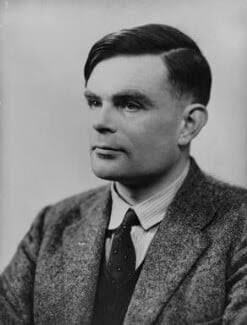
Alan Turing helped create the world we live in.
His ideas helped lay the foundations of modern computer science.
His work during the Second World War helped Britain and its allies read encrypted German messages.
He later asked one of the most important questions of the modern age:
Can a machine think?
Today, that question is at the centre of the debate about artificial intelligence.
But Alan Turing did not live long enough to see the world his ideas helped create.
In 1952, Britain convicted him of "gross indecency" because he had a sexual relationship with another man.
He was given a choice between prison and probation that required hormonal treatment intended to suppress his libido.
He chose the treatment.
Two years later, Turing was dead.
He was 41.
More than half a century later, the British government apologised for the way he was treated.
In 2013, he received a posthumous royal pardon.
His story raises a question that still matters today:
How can a society celebrate someone's contribution while punishing who they are?
Before the computer age
Alan Turing was born in London in 1912.
He studied mathematics at King's College, Cambridge, and later completed his PhD at Princeton University.
But Turing was interested in a question that went beyond mathematics.
He wanted to understand what it meant to calculate.
In 1936, while still a young mathematician, Turing published a groundbreaking paper that described an abstract computing machine.
Today, we call it a Turing machine.
It was not a physical computer.
It was a theoretical idea.
But it helped define what a machine could, in principle, calculate.
That idea became fundamental to computer science.
At the time, however, the modern computer did not yet exist.
There were no laptops.
No smartphones.
No internet.
No artificial intelligence.
Turing was thinking about the future before most people could imagine it.
The war and the codebreakers
When the Second World War began, Turing joined Britain's Government Code and Cypher School.
He was sent to Bletchley Park.
There, thousands of people worked in one of the most important secret operations of the war.
Their job was to break encrypted enemy communications.
Turing became a leading cryptanalyst.
He played a major role in the effort to break messages encrypted by the German Enigma machine, particularly German naval communications.
But this is another part of history that is often oversimplified.
Alan Turing did not break Enigma alone.
He worked alongside mathematicians, linguists, engineers, military staff and other codebreakers.
Among his important colleagues was Gordon Welchman. He also worked closely with Joan Clarke and others in the codebreaking effort.
Together, these teams helped turn secret enemy communications into intelligence that could be used by Allied forces.
The work that remained secret
For years after the war, much of Bletchley Park's work remained classified.
Many of the people involved could not publicly explain what they had done.
That meant Turing's wartime contribution was not widely known during his lifetime.
But his work did not stop when the war ended.
In fact, some of his most influential ideas were still ahead of him.
Can machines think?
In 1950, Alan Turing published a paper that asked a question that still divides scientists and philosophers today:
Can machines think?
Turing proposed an experiment now known as the Turing Test.
The idea was not to solve every question about intelligence.
It was to create a practical way of asking whether a machine's responses could be difficult to distinguish from those of a human.
More than 75 years later, the question has become more relevant than ever.
We now live with:
- Artificial intelligence
- Chatbots
- Voice assistants
- Machine learning
- Algorithms that make decisions
- Computers that can generate text, images and music
The world Turing imagined is no longer science fiction.
It is part of everyday life.
Then the law turned against him
While Turing was helping shape the future of computing, British law still treated sexual relationships between men as criminal.
In 1952, Turing was prosecuted for gross indecency after his relationship with another man became known to the police.
He pleaded guilty.
The court gave him a choice.
Prison.
Or probation with hormonal treatment designed to reduce his libido.
Turing chose probation and underwent the treatment.
His conviction also had professional consequences.
He lost his security clearance and his work for Britain's intelligence services came to an end.
Think about that contradiction.
Britain had trusted Alan Turing with some of its most important secrets during a world war.
It had relied on his intelligence.
It had benefited from his work.
But the same country considered his private relationship with another man a crime.
The problem was not who Alan Turing was.
The problem was what society had decided to make illegal.
A society can be brilliant and cruel at the same time
This may be one of the most uncomfortable lessons in Turing's story.
A society can produce extraordinary science while maintaining unjust laws.
It can build advanced technology while denying people basic dignity.
It can depend on someone's talent while refusing to accept their humanity.
Progress does not always happen everywhere at the same time.
Britain in the mid-20th century was home to some of the world's greatest scientists and engineers.
It was also a country where men could be prosecuted for consensual relationships with other men.
That contradiction was not unique to Britain.
Similar laws existed in many countries.
And in some parts of the world, they still do.
His death
Alan Turing died on June 8, 1954.
He was 41.
The coroner recorded a verdict of suicide after cyanide poisoning.
The circumstances of his death have been discussed and debated by historians, and no suicide note was found.
What is certain is that Turing died only two years after his conviction.
His death ended a life that had already changed mathematics, computing and cryptography.
But his ideas continued to grow.
The future kept moving towards Alan Turing.
The apology came decades later
For many years, Turing's treatment remained a symbol of a wider injustice.
In 2009, British Prime Minister Gordon Brown issued an official apology on behalf of the government.
He described Turing's treatment as horrifying and unfair.
In 2013, Queen Elizabeth II granted Turing a posthumous royal pardon.
His conviction was for conduct that would no longer be treated as a criminal offence.
Later changes in British law provided pardons or mechanisms to address many historical convictions for consensual same-sex activity under laws that had since been repealed. The wider legislation became popularly known as "Turing's Law."
The apology could not change what happened.
A pardon could not give Turing back his life.
But both represented something important.
Society had changed its mind.
The Social Rethink
THE OLD NORMAL
Being gay was treated as a crime.
Many people believed the law was protecting society.
THE CONTRADICTION
Alan Turing was helping create some of the most important technology of the modern world.
But his own society was criminalising his private life.
THE CHANGE
Over time, laws changed.
Public attitudes changed.
LGBTQ+ rights movements challenged the idea that homosexuality should be treated as criminal or shameful.
THE NEW NORMAL
Today, Turing is celebrated as one of the most important figures in the history of computing.
The law used to punish him is now recognised as discriminatory.
But history leaves an uncomfortable question
It is easy to celebrate Alan Turing today.
His face appeared on the Bank of England's £50 note.
Universities and institutions honour his work.
His name is connected to some of the most important ideas in computer science and artificial intelligence.
But recognition came too late for Alan Turing himself.
That is why his story is about more than one man.
It is about society's ability to get something fundamentally wrong.
How many people are rejected today for reasons that future generations will find impossible to understand?
Throughout history, societies have often treated difference as a threat.
Race.
Gender.
Sexuality.
Religion.
Disability.
Political belief.
Culture.
The details change.
But the question remains.
Who gets to decide what is normal?
Alan Turing's greatest legacy may be a question
Turing spent his life asking difficult questions.
How can we calculate?
What can a machine do?
Can a machine think?
But his life asks us another question.
One that has nothing to do with computers.
Can a society call itself advanced if it still refuses to accept people's humanity?
Technology can move quickly.
Society often moves slowly.
Sometimes painfully slowly.
The Rethink
THE OLD NORMAL
Being gay was a crime under British law.
THE PERSON
Alan Turing was one of the world's most important mathematicians and computer scientists.
THE CONTRADICTION
The country that depended on his intelligence also prosecuted him for his sexuality.
THE CHANGE
Society gradually changed its laws and understanding.
THE NEW NORMAL
Turing is now recognised as a pioneer of modern computing and artificial intelligence.
The question for today
Alan Turing helped humanity imagine intelligent machines.
But his life forces us to think about something even more basic.
Human intelligence does not automatically make us compassionate.
Scientific progress does not automatically make us fair.
Technological progress does not automatically make us humane.
Those changes require something else.
They require us to rethink what we accept.
So what are we doing today that future generations will recognise as progress in one area—and cruelty in another?
Alan Turing helped build the future.
His society was not ready for all of it.
The question is whether ours is.