People · Social Rethinks
Claudette Colvin
She was 15 when she refused to give up her seat on a segregated bus. Nine months later, Rosa Parks would become a global symbol. But Claudette Colvin helped change the law.
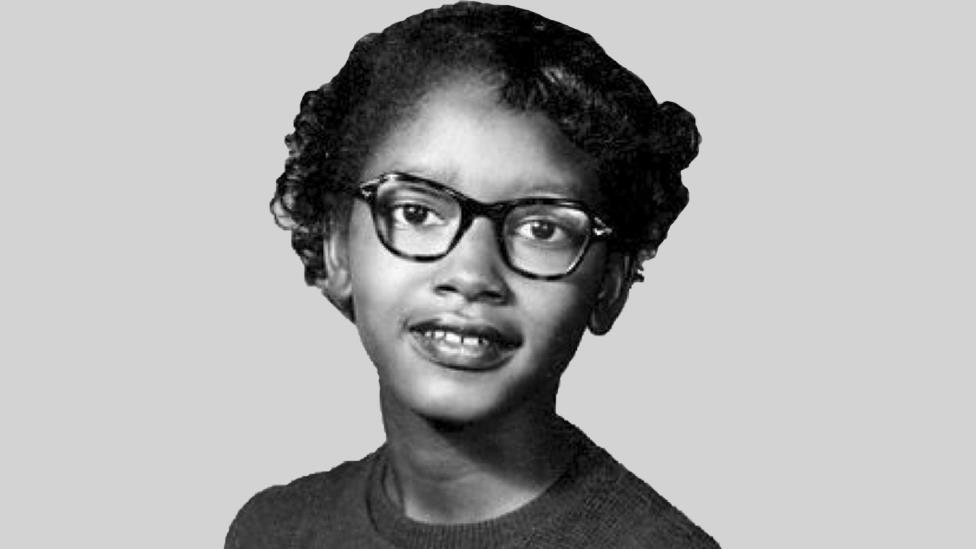
Claudette Colvin was 15 years old when the police arrested her.
It was March 2, 1955.
She was travelling home from school on a bus in Montgomery, Alabama. When she was ordered to give up her seat, she refused.
The reason was simple.
She was Black.
The passenger expected to take her seat was white.
Nine months later, another Black woman would make a similar decision on another Montgomery bus.
Her name was Rosa Parks.
The world would remember her.
Far fewer people would remember Claudette Colvin.
But her story did not end with her arrest.
A year later, Colvin became one of the plaintiffs in a landmark federal case that challenged segregation on Montgomery's buses. The case helped bring the system to an end.
So why does almost everyone know Rosa Parks' name while far fewer know Claudette Colvin's?
The answer tells us something important about history.
History does not always remember everyone who helped change it.
The world Claudette Colvin was born into
In 1955, racial segregation was part of daily life across much of the American South.
Black and white people were separated in schools, restaurants, public spaces and transportation.
In Montgomery, bus segregation was supported by local and state laws.
Black passengers could sit in designated areas. But if the bus became crowded, they could be ordered to give up their seats for white passengers.
This was not unusual.
It was the system.
And that is what makes social change difficult to understand.
The hardest thing to question is often the thing everyone accepts.
Today, racial segregation is widely recognised as unjust.
In 1955, it was enforced by law.
A 15-year-old refused
On March 2, 1955, Claudette Colvin was riding home on a Montgomery bus when a white passenger needed a seat.
The driver told Colvin and other Black passengers to move.
The others moved.
Colvin did not.
Police were called.
She was arrested and taken from the bus.
Colvin was 15 years old.
Her arrest came months before Rosa Parks' more famous arrest on December 1, 1955.
Her decision was not the beginning of the struggle against segregation.
Many people had challenged the system before her.
But Colvin became an important part of a movement that was about to change American history.
Nine months before Rosa Parks
On December 1, 1955, Rosa Parks refused to give up her seat to a white passenger on a segregated Montgomery bus.
She was arrested.
Her arrest sparked the Montgomery Bus Boycott.
For 381 days, Black residents of Montgomery stopped using the city's buses in protest. Many walked, carpooled or found other ways to travel.
The boycott became one of the defining events of the American civil rights movement.
But there is an important detail that is often lost when history is simplified.
Rosa Parks was not simply a tired woman who suddenly decided not to move.
She was already an experienced civil rights activist and a member of the NAACP.
Her decision was part of a much larger struggle.
And so was Claudette Colvin's.
The civil rights movement was not created by one person on one day.
It was built by thousands of people.
Some became famous.
Many did not.
Why wasn't Claudette Colvin the face of the movement?
This is where the story becomes more complicated.
Colvin was young.
She was only 15.
Civil rights leaders also had to think strategically about which cases could attract public support in a deeply racist society.
According to historical accounts, movement leaders believed they needed a person who could rally the wider community around a major boycott. Colvin later said her age and, later, her pregnancy affected how some leaders viewed her as a potential public symbol.
This does not make Rosa Parks' contribution less important.
It explains something else.
Social change needs more than courage.
It also needs:
- Organisation
- Leadership
- Timing
- Strategy
- Public support
Rosa Parks became the symbol of a movement ready to act.
Claudette Colvin became part of another fight.
A legal one.
The case that helped change the law
In February 1956, civil rights lawyer Fred Gray filed a federal lawsuit challenging bus segregation in Montgomery.
The case was called Browder v. Gayle.
Claudette Colvin was one of the plaintiffs.
So were Aurelia Browder, Susie McDonald and Mary Louise Smith. Jeanetta Reese was initially included but later withdrew from the case.
Rosa Parks was not included.
The federal court ruled that the laws requiring segregation on Montgomery buses violated the U.S. Constitution.
The U.S. Supreme Court later affirmed the decision.
By December 1956, the legal battle had helped end bus segregation in Montgomery and brought the 381-day boycott to a close.
Claudette Colvin was not just a teenager who refused to move.
She helped challenge the system in court.
Rosa Parks changed history. So did Claudette Colvin.
This is not a competition between two women.
History does not need to replace one with the other.
Rosa Parks deserves her place in history.
But Claudette Colvin deserves to be remembered too.
Their stories reveal something important about how social change really happens.
We often want history to have one hero.
One face.
One moment.
One person who changed everything.
Real life is rarely that simple.
Behind every famous moment are often people whose names are barely known.
They organised.
They protested.
They went to court.
They took risks.
They made the famous moment possible.
Who gets remembered?
This may be the most important question in Claudette Colvin's story.
Who decides who becomes history?
History is not only about what happened.
It is also about what we choose to remember.
Who appears in school textbooks?
Who gets a statue?
Whose photograph becomes famous?
Whose name becomes a symbol?
And whose story disappears?
Claudette Colvin's story reminds us that the people who change history are not always the people history makes famous.
Sometimes they are too early.
Sometimes they do not fit the story society wants to tell.
Sometimes their contribution is simply forgotten.
Until someone remembers.
The Social Rethink
THE OLD NORMAL
Racial segregation was enforced by law.
Black Americans were expected to follow rules designed to treat them as unequal.
THE CHALLENGE
A 15-year-old girl refused to accept one of those rules.
THE CHANGE
People organised.
They protested.
They boycotted.
They went to court.
THE NEW NORMAL
The system that once seemed permanent was dismantled.
Today, many people look back and ask:
How could anyone have accepted this?
That may be the most important lesson
Every generation has its own idea of what is normal.
And every generation believes, at least for a while, that its normal is permanent.
History tells us otherwise.
There was a time when racial segregation was normal.
There was a time when women could not vote.
There was a time when being gay was a crime in many countries.
There was a time when people with HIV were treated with fear and stigma.
Society changes when people begin to question what others have accepted.
Sometimes that person is a famous leader.
Sometimes it is a scientist.
Sometimes it is an artist.
And sometimes it is a 15-year-old girl sitting on a bus.
The Rethink
Claudette Colvin was not famous when she refused to move.
She did not know how history would remember her.
She could not know that she would later help challenge segregation in a federal court.
She simply refused to accept something she believed was wrong.
Her story leaves us with a question.
A question every generation should ask itself:
What are we accepting today that future generations will struggle to understand?
Because history has shown us something again and again:
What feels normal today may not feel normal forever.
ABOUT THIS STORY
Claudette Colvin was one of the plaintiffs in Browder v. Gayle, the landmark federal case that successfully challenged bus segregation in Montgomery, Alabama.
Her story is part of a larger history that includes Rosa Parks, Aurelia Browder, Mary Louise Smith, Susie McDonald, civil rights organisations, lawyers and thousands of ordinary people who helped challenge racial segregation.
History remembers movements through famous names.
But movements are always bigger than the names we remember.