People · Social Rethinks
The Doctor Who Asked His Colleagues to Wash Their Hands
In 1847, Ignaz Semmelweis found a simple way to save lives. The problem was convincing other people to believe him.
- Share “The Doctor Who Asked His Colleagues to Wash Their Hands” on X
- Share “The Doctor Who Asked His Colleagues to Wash Their Hands” on Facebook
- Share “The Doctor Who Asked His Colleagues to Wash Their Hands” on LinkedIn
- Share “The Doctor Who Asked His Colleagues to Wash Their Hands” on WhatsApp
- Share “The Doctor Who Asked His Colleagues to Wash Their Hands” on Telegram
- Share “The Doctor Who Asked His Colleagues to Wash Their Hands” on Reddit
- Share “The Doctor Who Asked His Colleagues to Wash Their Hands” on Email
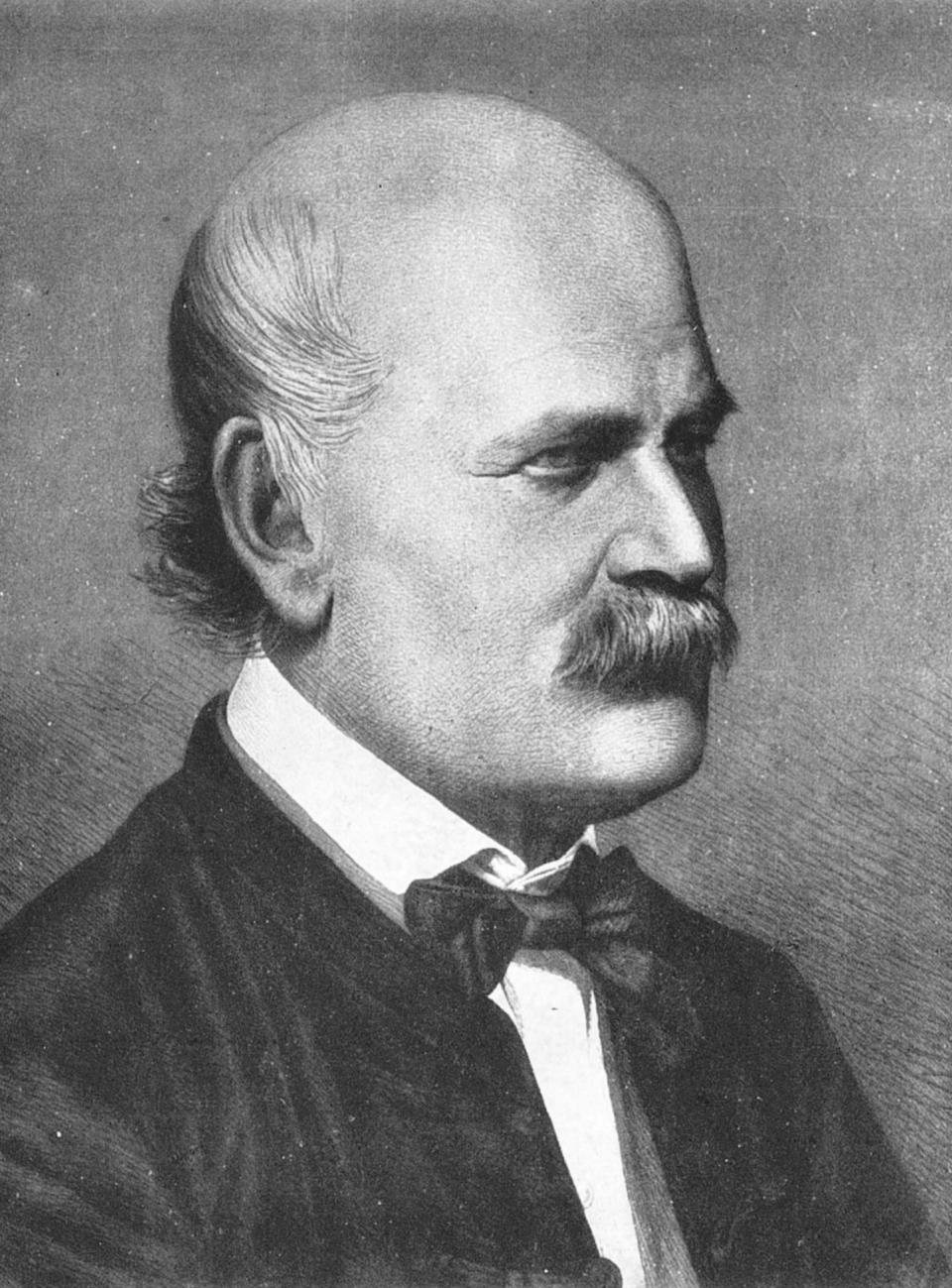
In the 1840s, giving birth in a hospital could be deadly.
At Vienna General Hospital, one maternity clinic had a terrifying problem.
Too many new mothers were dying.
They developed a severe illness known at the time as childbed fever. Many died within days.
The strange part was that another maternity clinic in the same hospital had far fewer deaths.
Ignaz Semmelweis wanted to know why.
The answer he found was simple.
And deeply uncomfortable.
The doctors themselves may have been carrying the danger.
Two clinics. Very different outcomes.
Vienna General Hospital had two maternity clinics.
In one, doctors and medical students trained.
In the other, midwives trained.
Women knew there was a difference.
Many feared being admitted to the clinic run by doctors because deaths from childbed fever were much higher there.
Semmelweis began looking for an explanation.
The women came from similar backgrounds.
The clinics were in the same hospital.
So what was different?
One important difference stood out.
Doctors and medical students often performed autopsies.
Then they examined women giving birth.
The midwives did not perform autopsies.
A death changed everything
In 1847, one of Semmelweis' colleagues, Jakob Kolletschka, injured his hand during an autopsy.
He became seriously ill and died.
When Semmelweis examined the circumstances of his death, he saw similarities between Kolletschka's illness and the illness killing women in the maternity clinic.
Semmelweis reached a conclusion.
Doctors and students could be carrying dangerous material from autopsies on their hands.
Then they could be bringing it into the maternity ward.
Today, this may sound obvious.
In 1847, it was a radical idea.
Scientists had not yet developed modern germ theory.
Semmelweis did not know about bacteria in the way we understand them today.
But he understood something important:
Something invisible was being carried from one body to another.
His solution was simple
Semmelweis introduced a new rule.
Doctors and medical students had to clean their hands with a chlorinated lime solution before examining patients.
Later, he expanded the practice to include cleaning between examinations when contamination was possible.
The solution was unpleasant.
It took time.
The chemicals could damage the skin.
And many doctors did not like being told that their own hands could be spreading disease.
But the results were difficult to ignore.
Deaths in Semmelweis' clinic fell sharply after the new cleaning rules were introduced. Historical records and later research confirm a major decline, although the exact percentages vary depending on the period being measured.
The simple act of cleaning hands was helping save lives.
The difficult question
Semmelweis' discovery created a problem that was bigger than medicine.
It asked doctors to accept something deeply uncomfortable.
What if we are part of the problem?
Doctors were supposed to save lives.
Semmelweis was suggesting that their normal work could also spread deadly disease.
That was not easy to accept.
His ideas also arrived before scientists fully understood how microorganisms caused infection.
He had evidence that his method worked.
But he could not explain the process using the scientific language that would later become available through germ theory.
His ideas faced resistance.
His policies were unpopular.
And the wider medical world did not quickly adopt his approach.
But the story is more complicated than the myth
Ignaz Semmelweis is often presented as a lonely genius who discovered the truth while every other doctor laughed at him.
The real story is more complicated.
Some doctors and scientists supported his findings.
Others questioned them.
Some objected to his methods or his explanation.
And Semmelweis himself struggled to communicate his ideas effectively and published his major work years after his original discovery.
But one fact remained.
His results showed that changing medical practice could dramatically reduce deaths.
And eventually, medicine caught up with the idea.
Semmelweis was right about the most important thing
He was not right about everything.
He did not discover modern germ theory.
He did not know the exact microorganisms responsible for infection.
And his explanation of "cadaverous particles" was not the same as our modern understanding of bacteria and disease.
But he was right about something that mattered enormously.
Healthcare workers could carry disease from one patient to another.
And cleaning their hands could help stop it.
That idea became one of the foundations of modern infection prevention.
Today, hand hygiene is one of the most basic practices in healthcare.
Hospitals train staff to do it.
Public health organisations promote it.
Patients expect it.
But there was a time when this was not normal.
There was a time when asking doctors to disinfect their hands was controversial.
That is how a Social Rethink happens
At first, something seems unnecessary.
Then someone produces evidence.
People resist.
The idea is questioned.
Arguments begin.
And eventually, something changes.
What once seemed strange becomes normal.
The old question disappears.
A new one takes its place.
Today, nobody seriously asks:
Why should healthcare workers clean their hands?
Instead, we ask:
Why wouldn't they?
That is what a Social Rethink looks like.
The old normal
Doctors could move between autopsies and patients without modern hand disinfection.
The risks were not fully understood.
Childbed fever killed large numbers of women.
And nobody had a clear answer.
The challenge
Ignaz Semmelweis studied the difference.
He looked at the numbers.
He observed what doctors and midwives were doing differently.
Then he asked an uncomfortable question.
Could the people trying to save lives also be spreading the disease?
The evidence
He introduced hand disinfection.
Deaths fell sharply.
The practice worked.
But evidence alone did not immediately change people's minds.
The new normal
Today, hand hygiene is a basic part of healthcare.
It is so common that it is difficult to imagine a time when it was controversial.
That is precisely why Semmelweis' story matters.
The Semmelweis Reflex
Today, Semmelweis' name is sometimes connected to the phrase "Semmelweis reflex."
It describes the instinct to reject a new idea because it challenges an established belief.
The term itself is a modern expression rather than a medical diagnosis.
But the idea behind it is powerful.
Sometimes people reject information not because it has been proven wrong.
But because accepting it would mean admitting that something they believed was wrong.
This happens in science.
It happens in politics.
It happens in business.
It happens in everyday life.
Being an expert does not make us immune to being wrong.
Sometimes it makes it harder to admit it.
What Semmelweis can teach us today
Semmelweis' story is not simply about washing hands.
It is about evidence.
It is about institutions.
And it is about the difficulty of changing our minds.
His story asks a question that remains relevant almost two centuries later:
What happens when the evidence tells us something we do not want to hear?
History is full of ideas that were initially rejected because they challenged what people thought they already knew.
Some were wrong.
Some were right.
That is why questioning established ideas is not enough.
New ideas need evidence.
And evidence needs to be tested.
Semmelweis' greatest strength was not that he was different.
It was that he observed a problem, looked for patterns and tested a solution.
The results mattered.
The Rethink
THE OLD NORMAL
Doctors did not understand that their hands could transmit deadly infections between patients.
THE QUESTION
Why were so many more women dying in one clinic than another?
THE DISCOVERY
Semmelweis found an important difference.
Doctors and students were moving between autopsies and maternity patients.
THE CHANGE
He introduced hand disinfection.
Deaths fell sharply.
THE NEW NORMAL
Hand hygiene became a basic part of modern healthcare.
The question for today
Ignaz Semmelweis spent years asking people to consider a possibility they did not want to accept.
Not because it was complicated.
Because it was uncomfortable.
The idea was simple.
Your actions may be causing harm.
Change them.
Sometimes the hardest ideas to accept are not the most difficult to understand.
They are the ones that force us to look at ourselves.
So what are we refusing to question today because we do not want to admit that we might be wrong?
Ignaz Semmelweis did not ask the world to believe in something magical.
He asked people to look at the evidence.
Then he asked them to change.
That may be one of the hardest things anyone can ask society to do.