People · Social Rethinks
Malala: The Girl They Tried to Silence
She was a schoolgirl who wanted to learn. Then someone tried to kill her for it. What happened next changed a global conversation about education, freedom and the power of one voice.
- Share “Malala: The Girl They Tried to Silence” on X
- Share “Malala: The Girl They Tried to Silence” on Facebook
- Share “Malala: The Girl They Tried to Silence” on LinkedIn
- Share “Malala: The Girl They Tried to Silence” on WhatsApp
- Share “Malala: The Girl They Tried to Silence” on Telegram
- Share “Malala: The Girl They Tried to Silence” on Reddit
- Share “Malala: The Girl They Tried to Silence” on Email
Imagine being told you cannot go to school.
Not because you are sick.
Not because the school is closed.
Not because you cannot afford it.
But because you are a girl.
For millions of people around the world, access to education has never been guaranteed.
And in some places, going to school can still be dangerous.
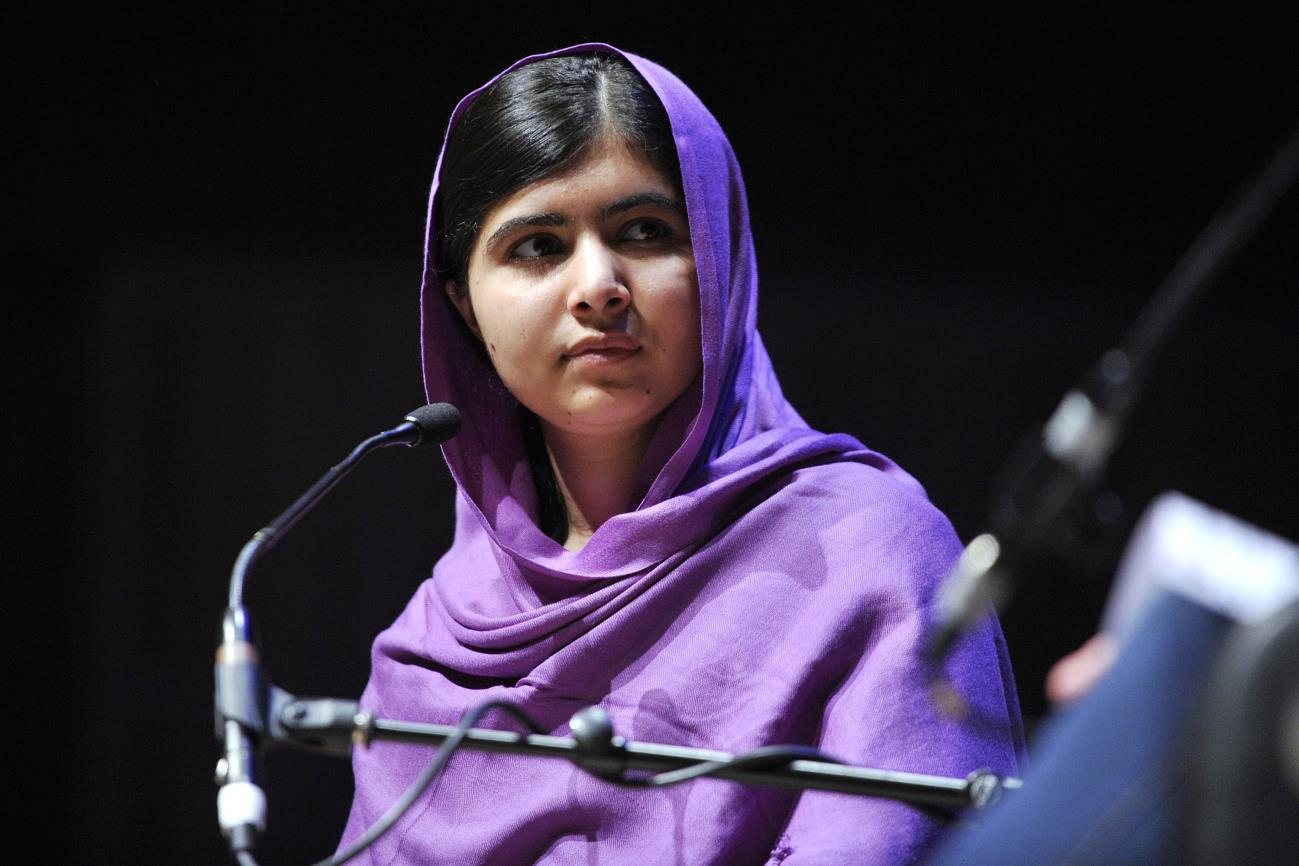
Malala Yousafzai understood this before the world knew her name.
She grew up in Pakistan's Swat Valley.
As a child, she loved school.
She wanted to learn.
But as the Taliban gained influence in the region, girls' education came under threat.
Schools were attacked.
Girls were told they could no longer attend.
Fear entered everyday life.
Malala began speaking about what was happening.
She was still a child.
But she had already understood something important.
Education is not something you should have to earn the right to receive.
Before the world knew her name
In 2009, Malala began writing anonymously for BBC Urdu.
She used a pseudonym.
She wrote about life in the Swat Valley.
She wrote about fear.
About the growing restrictions on girls.
And about the possibility that her school could be attacked.
She was around 11 years old.
Eventually, her identity became known.
Malala and her father, Ziauddin Yousafzai, continued speaking publicly about girls' right to education.
That made her increasingly visible.
And visibility can be powerful.
But it can also be dangerous.
The question was bigger than school
At first, the issue may seem simple.
Should girls be allowed to go to school?
For Malala, the answer was obvious.
Yes.
But the question was about much more than education.
Education affects:
- Independence
- Employment
- Economic opportunity
- Political participation
- Personal freedom
- Health
- The ability to make decisions about your own life
To control education is also to control the future.
If you decide who can learn, you influence who gets to participate in society.
That is why education has always been about more than classrooms.
The right to learn is also the right to imagine a different life.
Then they tried to stop her
On October 9, 2012, Malala was travelling home from school with other students.
A Taliban gunman boarded the school bus and asked for her.
Malala was shot.
She was seriously injured.
The attack shocked Pakistan.
Then it shocked the world.
The people who attacked her had tried to silence a girl speaking about education.
Instead, they made millions of people hear her name for the first time.
Malala was taken to the United Kingdom for medical treatment.
She survived.
And eventually, she made a decision.
She would continue speaking.
They expected silence
This is where Malala's story became something bigger.
Violence is often designed to send a message.
Stay quiet.
Stop.
Be afraid.
Do not challenge us.
The attack on Malala was supposed to achieve exactly that.
Instead, her voice became global.
But Malala's response was important for another reason.
She did not turn her story into a message only about herself.
She repeatedly returned to the same issue.
Education.
Especially for girls.
She used the attention around her name to talk about people the world did not know.
Girls who could not go to school.
Children whose schools had been destroyed.
Students living in conflict.
Young people whose futures were being decided without them.
Her personal story became a door into a much larger problem.
A teenager at the United Nations
On July 12, 2013, Malala's 16th birthday, she spoke at the United Nations.
It was her first major public speech after the attack.
The audience included young people from around the world.
She spoke about education.
She spoke about peace.
And she spoke about the people who still did not have access to school.
The message was not revenge.
She did not ask the world to focus only on the people who had attacked her.
She returned to the bigger question.
Why are children still being denied something as basic as the chance to learn?
The United Nations later designated Malala as a Messenger of Peace, with a special focus on girls' education.
She became the youngest Nobel Peace Prize laureate
In 2014, Malala Yousafzai was awarded the Nobel Peace Prize jointly with Indian children's rights activist Kailash Satyarthi.
She was 17.
She became the youngest Nobel Peace Prize laureate in history.
The award recognised their struggle against the suppression of children and young people and for the right of children to education.
But Malala's story was still unusual for another reason.
She had become a global symbol while she was still growing up.
She was not a historical figure looking back on a completed life.
She was still going to school.
Still studying.
Still deciding what she wanted her future to be.
The world had turned a teenager into a symbol.
Malala had to remain a person.
She did not do it alone
This matters.
Stories about famous people can create a dangerous myth.
One person against the world.
One hero.
One voice.
One victory.
Reality is rarely that simple.
Malala had a family.
Teachers.
Activists.
Organisations.
Supporters.
And millions of girls and women who had been fighting for education long before she became known internationally.
Her father, Ziauddin, was also a prominent education advocate.
The movement was already there.
Malala became one of its most visible voices.
That visibility mattered enormously.
But she did not create the struggle alone.
Social change is rarely created by one person. But sometimes, one person helps the world finally see what millions have been saying.
The Malala Fund
In 2013, Malala and her father co-founded the Malala Fund.
The organisation works to support girls' education and local education advocates.
The goal was not simply to create a charity around one famous name.
The larger idea was to support people working inside their own communities.
Because people closest to a problem often understand it best.
This is an important part of Malala's story.
She became internationally famous.
But the movement needed to remain connected to local people.
Teachers.
Students.
Activists.
Communities.
A global voice can bring attention. Local people create lasting change.
What Malala really changed
Malala did not invent the idea that girls deserve an education.
But she helped change the way the world talked about it.
She made a simple truth impossible to ignore.
A girl sitting in a classroom is not a political threat.
But denying her education can be a way of controlling her future.
Her story challenged the idea that education was simply a personal privilege.
Something for lucky people.
Something for wealthy families.
Something available only where society allows it.
Instead, education became part of a larger conversation about rights.
If you believe in equality, who should have the right to learn?
The old normal
For generations, many societies accepted that boys and girls could have different futures.
Boys would learn.
Girls would stay home.
Boys would work.
Girls would be expected to serve others.
Of course, this was never true everywhere.
And women and girls have challenged these expectations throughout history.
But in many societies, unequal access to education was treated as normal.
The idea itself was rarely questioned.
That is how social norms work.
They do not always need to be defended.
Sometimes, people simply accept them because they have always been there.
Then came the question
Malala asked something simple.
Why?
Why should a girl not go to school?
Why should her future be decided by someone else?
Why should violence decide whether a child can learn?
These questions sound obvious.
But history shows that obvious questions can be powerful.
Because they force people to explain something they have never had to explain before.
And sometimes, there is no good explanation.
The Social Rethink
THE OLD NORMAL
In many societies, unequal access to education was accepted.
Girls were often given fewer opportunities.
THE QUESTION
Who gets to decide whether a child has the right to learn?
THE CHALLENGE
Malala spoke publicly about girls' education while restrictions were growing around her.
THE ATTEMPT TO SILENCE HER
In 2012, she was shot on her way home from school.
The attack was intended to stop her.
THE CHANGE
Her story brought global attention to the wider struggle for girls' education.
She continued her advocacy.
Governments.
International organisations.
Activists.
And young people continued pushing the issue forward.
THE NEW NORMAL
Today, denying girls access to education is widely recognised internationally as a human rights issue.
But recognition is not the same as reality.
Millions of girls around the world still face barriers to education.
The rethink is not finished.
Courage is often misunderstood
People often describe Malala as fearless.
But courage does not necessarily mean having no fear.
It can mean continuing despite it.
Malala was a child living in an increasingly dangerous situation.
She knew what was happening around her.
She knew schools were under threat.
She knew people were being silenced.
And she spoke anyway.
That is why her story became so powerful.
Not because she was born different.
But because she made a choice.
Fear would not make her stop believing she deserved an education.
But should children have to be courageous?
This may be the most uncomfortable question in Malala's story.
We celebrate her courage.
We should.
But why did she need that courage in the first place?
Why should a child have to risk her life to go to school?
Why should a girl become an international symbol simply because she wants the same opportunity others take for granted?
Sometimes, celebrating extraordinary people allows society to avoid asking harder questions.
We say:
What an incredible child.
But perhaps we should also ask:
What kind of world requires a child to be extraordinary just to have ordinary rights?
That question changes everything.
Malala's story is not only about girls
Girls' education is at the centre of Malala's work.
But her story asks a wider question about all children.
How much of a person's future is decided before they are old enough to make their own choices?
Where they are born.
Their gender.
Their family's income.
Whether there is a school nearby.
Whether they live in peace or conflict.
Whether society considers their education important.
These factors can decide a future before a child has even had the opportunity to imagine one.
Malala challenged that.
A child's potential should not depend entirely on the circumstances of their birth.
The Rethink
THE OLD NORMAL
Some children were expected to have fewer opportunities because of who they were.
THE QUESTION
Who decided that was normal?
THE VOICE
A young girl began speaking about her right to go to school.
THE ATTACK
Someone tried to silence her with violence.
THE CHANGE
Her voice became global.
The wider issue of girls' education gained new international attention.
THE NEW NORMAL
Education is increasingly recognised as a fundamental right.
But millions of children are still waiting for that right to become reality.
The question for today
Malala's story began with something simple.
A girl wanted to go to school.
That should not have been extraordinary.
It should have been normal.
Perhaps that is the real lesson behind every Social Rethink.
We often celebrate the people who challenge injustice.
But eventually, we must ask why the injustice was accepted in the first place.
Malala forced the world to look at something many people already knew.
Education changes lives.
But not everyone is given access to it.
So what opportunities do we consider normal for ourselves—but optional for someone else?
Malala Yousafzai did not ask for fame.
She asked to go to school.
The fact that this became a global fight says as much about the world as it does about her courage.
Sometimes, the most powerful social change begins when someone asks for what should have been normal all along.