People · Social Rethinks
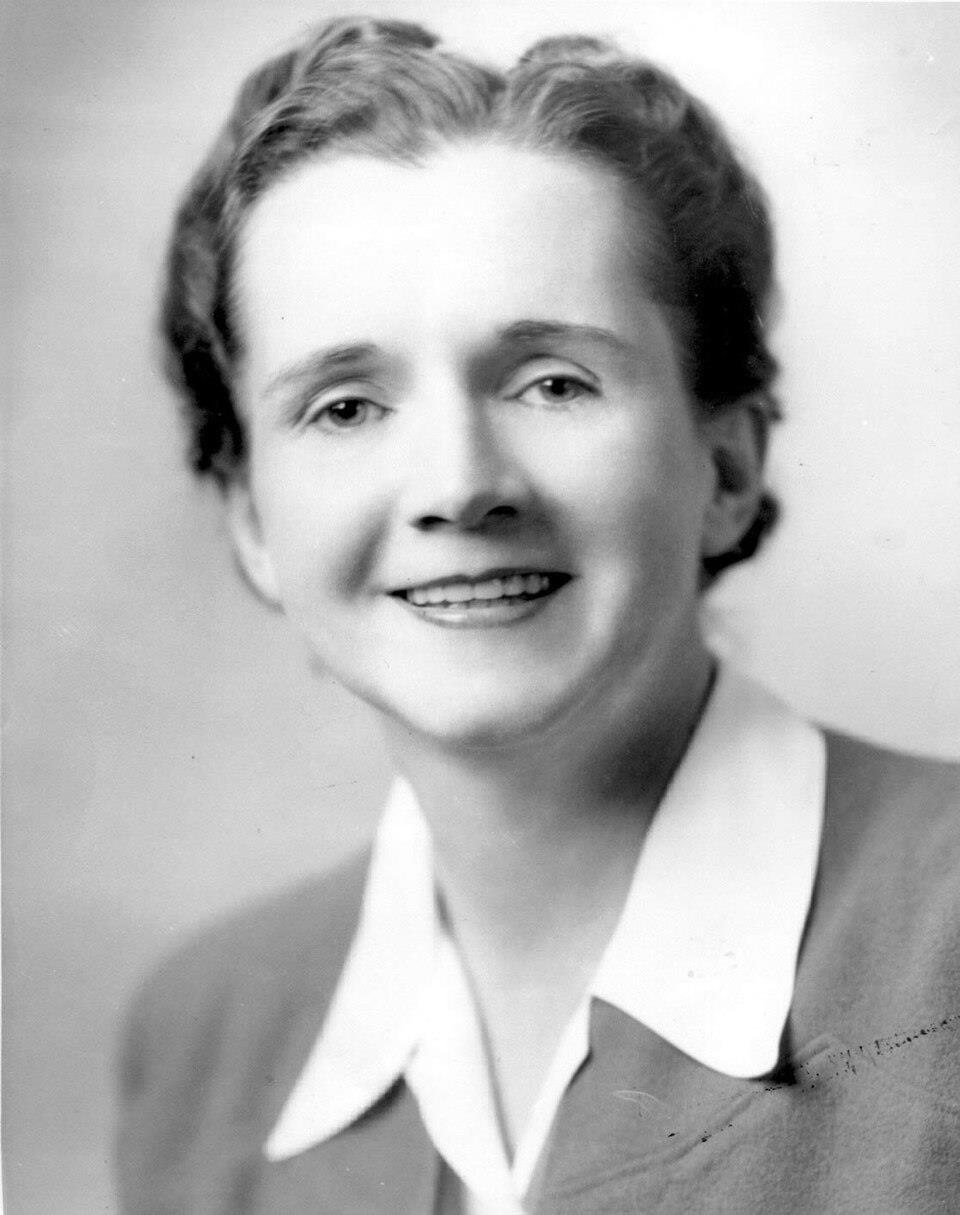
Rachel Carson: The Woman Who Made the World Question Progress
Her warning about pesticides changed the way millions of people saw nature, science and progress. But Rachel Carson was not against technology. She wanted society to ask a harder question.
- Share “Rachel Carson: The Woman Who Made the World Question Progress” on X
- Share “Rachel Carson: The Woman Who Made the World Question Progress” on Facebook
- Share “Rachel Carson: The Woman Who Made the World Question Progress” on LinkedIn
- Share “Rachel Carson: The Woman Who Made the World Question Progress” on WhatsApp
- Share “Rachel Carson: The Woman Who Made the World Question Progress” on Telegram
- Share “Rachel Carson: The Woman Who Made the World Question Progress” on Reddit
- Share “Rachel Carson: The Woman Who Made the World Question Progress” on Email
For much of the 20th century, progress had a simple meaning.
More technology.
More chemicals.
More production.
More control over nature.
Then Rachel Carson asked a question that changed everything.
What if progress is causing damage we cannot yet see?
In 1962, Carson published Silent Spring.
The book examined the widespread use of chemical pesticides and their effects on birds, wildlife and the wider environment.
It caused a national controversy.
Chemical companies attacked her.
Scientists debated her findings.
Politicians took notice.
The public began asking questions it had not asked before.
What happens after a chemical is released into the environment?
Where does it go?
What does it affect?
And who is responsible if something goes wrong?
Silent Spring did not create environmental concern from nothing.
But it helped turn that concern into a powerful public movement.
Today, Rachel Carson is widely recognised as one of the most influential figures in the history of modern environmentalism.
Before Rachel Carson, chemicals looked like progress
After the Second World War, new chemical products entered everyday life.
Among the most famous was DDT.
The pesticide had been used during the war to help control insects that could spread disease.
After the war, its use expanded.
It was used in agriculture.
It was sprayed in forests.
It was used in gardens.
For many people, chemicals represented a new kind of power.
Humans could control insects.
Increase agricultural production.
Fight disease.
Change nature.
The benefits were real.
But Rachel Carson became concerned about something else.
What were the costs?
She had spent years working as a marine biologist and writer.
She understood science.
But she also understood how to explain complex ideas to ordinary people.
And she saw a problem that many others were ignoring.
A chemical designed to kill one species could affect many others.
Nature was connected.
Nothing happened in complete isolation.
The warning
Carson spent years researching pesticides and their effects.
She examined scientific studies.
Government reports.
Medical evidence.
Wildlife research.
And the growing evidence that some pesticides were harming far more than the insects they were designed to kill.
Her concern was especially focused on persistent chemicals.
These substances could remain in the environment.
Move through food chains.
And affect animals far from the place where they were originally used.
In September 1962, Silent Spring was published.
Its title came from a disturbing idea.
What if the birds disappeared?
What if spring arrived—but there was no birdsong?
The image was powerful.
But the book was based on extensive scientific research.
Carson included a long list of sources and wrote for years before publication.
She did not say "ban everything"
This is one of the most misunderstood parts of Rachel Carson's story.
She was not arguing that all pesticides should disappear.
She did not believe science or technology should be abandoned.
Her argument was more difficult.
Powerful technology requires responsibility.
Carson warned against the careless and widespread use of persistent chemical pesticides.
She called for stronger regulation.
More research.
Greater public awareness.
And alternative methods of controlling pests, including biological approaches.
Her critics often presented her as someone who wanted to take society backwards.
But that was not her argument.
Rachel Carson was asking society to move forward more carefully.
The backlash
The response was immediate.
Silent Spring became a bestseller.
It also became a target.
Chemical companies and their supporters challenged Carson's conclusions.
Some of the criticism focused on science.
Some became deeply personal.
Carson was described by critics as emotional and irrational.
Her private life and identity as an unmarried woman were also used against her.
But Carson did not respond by making the debate personal.
She returned to the evidence.
That became one of her greatest strengths.
The argument was not:
Trust me because I care about nature.
It was:
Look at what the evidence is telling us.
That distinction mattered.
The government started paying attention
Silent Spring reached the highest levels of government.
President John F. Kennedy's administration asked the President's Science Advisory Committee to examine the issue.
The committee's report supported many of Carson's concerns about pesticide misuse and called for stronger controls and further research.
The conversation had changed.
Pesticides were no longer seen only as products that solved problems.
People were also asking:
What are the risks?
Who studies them?
How long do they last?
What happens after they enter the environment?
These questions now seem normal.
At the time, they represented a major change in public thinking.
A new way of seeing nature
Rachel Carson's biggest contribution may have been changing how people saw the environment.
Before, many people thought about nature in separate pieces.
A forest.
A river.
A bird.
An insect.
A farm.
A chemical.
Carson showed that these things were connected.
A chemical sprayed to kill insects could affect birds.
It could enter soil.
It could move through water.
It could travel through food chains.
The environment was not a collection of separate parts.
It was a system.
And humans were part of it.
We were not standing outside nature.
We were living inside it.
That idea helped change environmental thinking around the world.
The birth of a movement
The 1960s became a turning point.
Concern about pollution grew.
People became increasingly worried about:
- Air pollution
- Water pollution
- Chemical contamination
- Wildlife loss
- Industrial waste
In 1970, the first Earth Day brought millions of Americans into public demonstrations and events focused on environmental issues.
That same year, the United States established the Environmental Protection Agency.
Rachel Carson had died in 1964 and did not live to see either event.
But her work had helped change the public conversation that made this new environmental era possible.
The DDT debate
DDT became one of the most important symbols of the environmental movement.
Rachel Carson warned about its persistence and its effects on wildlife.
The debate continued for years.
By the early 1970s, several states had already restricted its use.
In 1972, the newly established EPA issued an order ending most uses of DDT in the United States, after a lengthy review and public hearings.
The story did not end there.
DDT continued to be used in some parts of the world for public health purposes, particularly in efforts to control malaria.
This is important.
Rachel Carson's legacy is not that every chemical is dangerous.
It is not that nature should never be changed.
It is not that science is the enemy.
Her legacy is more complicated.
And more useful.
Ask what happens next.
Before we introduce something powerful into the world, ask:
What else could it affect?
What don't we know yet?
Who is studying the risks?
Who benefits?
Who pays the price?
Progress changed its meaning
Before Rachel Carson, the word "progress" was often connected to control.
Humans had more power than ever before.
More machines.
More chemicals.
More industry.
More production.
The assumption was simple.
If humans could do something, doing it was progress.
Carson challenged that idea.
She asked:
Is everything we can do something we should do?
That question has become even more important today.
We now face new forms of powerful technology.
Artificial intelligence.
Genetic engineering.
Automation.
Advanced surveillance.
Biotechnology.
Technology is moving faster than ever.
And the same question keeps returning.
What happens when our ability to create something grows faster than our ability to understand its consequences?
Rachel Carson was not against the future
This is what makes her story so relevant.
Rachel Carson was not asking people to reject science.
She was asking science to become more responsible.
She was not against progress.
She was asking us to define progress more carefully.
She understood that human beings could solve extraordinary problems.
But she also understood something else.
Every solution can create a new problem.
That does not mean we should stop trying.
It means we should pay attention.
The Social Rethink
THE OLD NORMAL
New technology was seen mainly as progress.
The focus was on what chemicals could do.
Less attention was paid to what they might damage.
THE QUESTION
What happens after a powerful chemical enters the environment?
THE CHALLENGE
Rachel Carson showed that pesticides could affect far more than their intended targets.
She asked society to look at the whole system.
THE RESISTANCE
Industries and critics challenged her work.
Some attacked her science.
Others attacked her personally.
THE CHANGE
The public began demanding answers.
Governments introduced stronger environmental protections.
Environmentalism became a major public movement.
THE NEW NORMAL
Today, environmental impact is part of many debates about new products, chemicals and technologies.
We now expect questions about safety and consequences.
Rachel Carson helped make those questions normal.
Her real legacy
Rachel Carson changed more than environmental policy.
She changed a way of thinking.
Before Silent Spring, the question was often:
What can this technology do?
After Silent Spring, another question became harder to ignore:
What could it do to everything else?
That may sound simple.
But it changed the world.
The question for today
Rachel Carson wrote about chemicals.
But her question belongs to every generation.
Today, we have technologies she could never have imagined.
Artificial intelligence can influence what people see and believe.
Algorithms can make decisions about people's lives.
Genetic technology can change living organisms.
Companies collect enormous amounts of personal data.
We are surrounded by powerful systems.
And often, we celebrate what they can do before asking what they might change.
Rachel Carson would probably recognise that pattern.
Progress is not simply about creating something new.
It is also about understanding what happens after we create it.
The Rethink
Rachel Carson asked society to stop seeing nature as something outside human life.
She showed that our actions return to us.
The air.
The water.
The food chain.
The animals.
The soil.
The people.
Everything is connected.
Her message was not:
Stop progress.
It was:
Understand it.
And perhaps that is the harder task.
The question for today
What are we calling progress today without fully understanding what it may cost tomorrow?
Rachel Carson did not ask the world to fear the future.
She asked us to look at it more carefully.
And sometimes, the most important change begins with a simple question:
What happens next?