People · Social Rethinks
Harvey Milk: The Power of Being Seen
At a time when many LGBTQ+ people were expected to hide, Harvey Milk built a political movement around a simple idea: visibility can change society.
- Share “Harvey Milk: The Power of Being Seen” on X
- Share “Harvey Milk: The Power of Being Seen” on Facebook
- Share “Harvey Milk: The Power of Being Seen” on LinkedIn
- Share “Harvey Milk: The Power of Being Seen” on WhatsApp
- Share “Harvey Milk: The Power of Being Seen” on Telegram
- Share “Harvey Milk: The Power of Being Seen” on Reddit
- Share “Harvey Milk: The Power of Being Seen” on Email
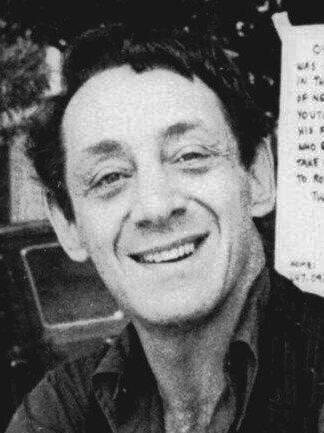
For most of his life, Harvey Milk did not look like someone who would become a symbol.
He worked in finance.
He served in the U.S. Navy.
He moved between cities.
He changed careers.
He ran businesses.
And for years, he lived at a time when being openly gay could cost someone their job, their family or their safety.
Then Harvey Milk decided to stop hiding.
More importantly, he began asking others to do the same.
Not because coming out was easy.
Not because it was safe for everyone.
But because he believed society could not understand LGBTQ+ people if it believed it did not know any.
His message was simple.
You cannot remain invisible and expect the world to see you.
In 1977, Harvey Milk was elected to the San Francisco Board of Supervisors.
He became one of the most visible openly gay elected officials in the United States.
Less than a year later, he was assassinated.
He was 48 years old.
But one idea survived him.
Visibility can be a form of social change.
Before Harvey Milk, hiding was often survival
To understand Harvey Milk's importance, it is necessary to understand the world he lived in.
For much of the 20th century, LGBTQ+ people faced criminal laws, discrimination and social rejection.
In the United States, gay people could lose their jobs.
They could be rejected by their families.
They could face police harassment.
In many places, same-sex relationships were illegal.
Being openly gay was not simply a personal decision.
For many people, it carried serious consequences.
So people learned to hide.
They used coded language.
They avoided talking about their relationships.
They created private communities.
They lived different lives in public and in private.
For many, secrecy was not a choice.
It was protection.
Harvey Milk understood that.
But he also believed that secrecy had a cost.
If LGBTQ+ people remained invisible, others could continue believing the stereotypes.
They could imagine gay people as strangers.
As criminals.
As threats.
As people who existed somewhere else.
Milk wanted to change that.
A camera shop became a political centre
In the early 1970s, Harvey Milk moved to San Francisco's Castro District.
The neighbourhood was becoming an important centre for the city's growing gay community.
Milk opened a camera shop on Castro Street.
The store became more than a business.
People came to talk.
To organise.
To discuss local problems.
Milk began getting involved in neighbourhood politics.
He spoke about issues affecting gay residents.
But he also spoke about everyday concerns.
Small businesses.
Housing.
Jobs.
Public services.
He understood something important about politics.
People do not build movements only around identity.
They build them around the problems they share.
Milk ran for office several times.
He lost.
Then he ran again.
And lost again.
But each campaign made him more visible.
Each loss built a larger network.
And each attempt helped create something bigger than one election.
A political movement.
In 1977, he won
On November 8, 1977, Harvey Milk was elected to the San Francisco Board of Supervisors.
His victory was historic.
Milk became the first openly gay man elected to public office in California.
He was also one of the most prominent openly gay elected officials in the United States.
His election mattered because representation changes what people think is possible.
Before Milk, many LGBTQ+ people had rarely seen someone openly gay holding political power.
Now there was someone.
In City Hall.
On television.
In newspapers.
Making decisions.
Speaking publicly.
Being openly gay was no longer something that existed only behind closed doors.
Someone could be gay and still lead.
That idea may sound obvious today.
It was not obvious to everyone in 1977.
Milk's most powerful message: Come out
Harvey Milk believed that personal visibility could challenge prejudice.
He encouraged gay people to come out to the people in their lives.
Family members.
Friends.
Neighbours.
Colleagues.
His argument was straightforward.
People may fear an abstract group.
But it becomes harder to hate someone you know.
Milk believed that many people already knew someone who was gay.
They simply did not realise it.
Because that person was hiding.
He famously encouraged LGBTQ+ people to come out.
But there is an important distinction to make today.
Coming out is a personal decision.
For some people, it can be liberating.
For others, it can be dangerous.
Milk's broader idea was not that every person should expose themselves to risk.
It was that invisibility should not be the only option society allows.
People should not have to hide in order to be safe.
The fight over Proposition 6
In 1978, California faced a major political battle.
Proposition 6, also known as the Briggs Initiative, proposed banning gay and lesbian people from working in public schools.
The measure also raised the possibility of dismissing teachers who supported gay rights.
Harvey Milk became one of the leading voices against it.
He travelled across California.
He gave speeches.
He argued that the law was based on fear and stereotypes.
The campaign became one of the most important political battles of the LGBTQ+ rights movement.
In November 1978, California voters rejected Proposition 6.
The victory was significant.
But it was also bigger than one law.
The debate forced the country to confront a question:
Should someone lose their job simply because of who they are?
California voters answered no.
Milk understood the power of a story
Harvey Milk was not only a politician.
He was a communicator.
He knew how to turn complex political issues into simple ideas.
Hope.
Visibility.
Equality.
Community.
He understood that politics is not only about laws.
It is also about imagination.
Before society changes a law, people often need to imagine a different world first.
Milk gave people language to do that.
He spoke to people who felt isolated.
He spoke to young people.
He spoke to people living in communities where they believed they were alone.
And he offered something simple.
Hope.
Not the vague idea that everything would magically improve.
But the belief that change was possible.
Then everything stopped
On November 27, 1978, Harvey Milk was assassinated at San Francisco City Hall.
Mayor George Moscone was also killed.
The gunman was Dan White, a former San Francisco supervisor.
Milk was 48 years old.
He had served less than a year in office.
His political career had been short.
His influence would not be.
That night, thousands of people marched through San Francisco carrying candles.
The image became one of the defining moments in LGBTQ+ history.
A man who had spent his political life asking people to be visible had become impossible to ignore.
"You gotta give them hope"
Harvey Milk's words have been repeated for decades.
One message appears again and again in his speeches.
Hope matters.
People who feel isolated need to know they are not alone.
People who believe change is impossible need to see someone prove otherwise.
This was Milk's deeper political idea.
Representation is not only about who gets elected.
It is about what becomes imaginable.
When someone sees a person like themselves in public life, something changes.
The question:
Can someone like me do that?
Becomes:
Why not?
The Social Rethink
THE OLD NORMAL
LGBTQ+ people were often expected to hide.
Being openly gay could bring discrimination, rejection or violence.
THE QUESTION
How can society understand people it is taught not to see?
THE CHALLENGE
Harvey Milk built a movement around visibility.
He encouraged people to challenge stereotypes by showing the world who they really were.
THE CHANGE
More LGBTQ+ people entered public life.
Politicians.
Teachers.
Artists.
Athletes.
Business leaders.
Neighbours.
Family members.
Visibility changed the conversation.
THE NEW NORMAL
Today, openly LGBTQ+ people hold public office, lead major organisations and appear across public life.
Equality is still not universal.
Discrimination still exists.
But the idea that LGBTQ+ people should remain invisible has been fundamentally challenged.
Why being seen matters
Harvey Milk understood something that remains true today.
Prejudice often depends on distance.
It becomes easier to believe stereotypes about people you never meet.
It becomes easier to fear a group when that group remains abstract.
Visibility changes that.
Suddenly, the group has a face.
A voice.
A family.
A story.
The person you were told to fear may be:
Your colleague.
Your neighbour.
Your brother.
Your daughter.
Your friend.
Your teacher.
Or someone you already love.
Visibility makes stereotypes harder to maintain.
But visibility is not the same as safety
This is an important lesson for today.
Harvey Milk's story should not become a simple message telling everyone to come out.
Many LGBTQ+ people still live in places where being open can be dangerous.
Some face family rejection.
Some face violence.
Some face criminal laws.
Some face discrimination at work.
The responsibility should not be on individuals to risk their safety in order to change society.
The bigger challenge is this:
Why should anyone have to hide to be safe?
That is the Social Rethink.
Not simply:
Everyone should come out.
But:
Society should become safe enough that no one is forced to hide.
Harvey Milk changed what was possible
Milk did not create the LGBTQ+ rights movement.
He was part of a much larger struggle.
Before him, activists had already challenged discrimination.
After him, millions of people continued the work.
But Harvey Milk gave the movement something powerful.
A public face.
A political voice.
And a simple message people could understand.
You exist.
You matter.
You are not alone.
Those words became political because, for many people, simply existing openly had become an act of resistance.
The Rethink
THE OLD NORMAL
Hide who you are.
THE FEAR
If people know the truth, they may reject you.
THE CHALLENGE
Harvey Milk asked society to see LGBTQ+ people as they really were.
THE CHANGE
Visibility challenged stereotypes.
Representation created possibility.
THE NEW NORMAL
Millions of LGBTQ+ people now live openly around the world.
But the work continues wherever people are still forced to hide.
The question for today
Harvey Milk understood that representation can change more than politics.
It can change someone's idea of themselves.
A child sees someone like them succeed.
A teenager realises they are not alone.
An adult stops believing they have to hide forever.
That is the power of being seen.
So who is still missing from the picture?
Who do we still rarely see?
Whose stories are still told by other people?
Who is expected to remain invisible so that everyone else can remain comfortable?
Harvey Milk spent his life challenging that idea.
His message was simple.
A society cannot claim to understand people while refusing to see them.
Harvey Milk understood something powerful:
Sometimes, the first step towards changing how society sees you is making sure society can no longer pretend you do not exist.