People · Social Rethinks
Muhammad Ali: When an Athlete Refused to Stay Silent
He was one of the most famous athletes in the world. Then Muhammad Ali risked his career by refusing to go to war.
- Share “Muhammad Ali: When an Athlete Refused to Stay Silent” on X
- Share “Muhammad Ali: When an Athlete Refused to Stay Silent” on Facebook
- Share “Muhammad Ali: When an Athlete Refused to Stay Silent” on LinkedIn
- Share “Muhammad Ali: When an Athlete Refused to Stay Silent” on WhatsApp
- Share “Muhammad Ali: When an Athlete Refused to Stay Silent” on Telegram
- Share “Muhammad Ali: When an Athlete Refused to Stay Silent” on Reddit
- Share “Muhammad Ali: When an Athlete Refused to Stay Silent” on Email
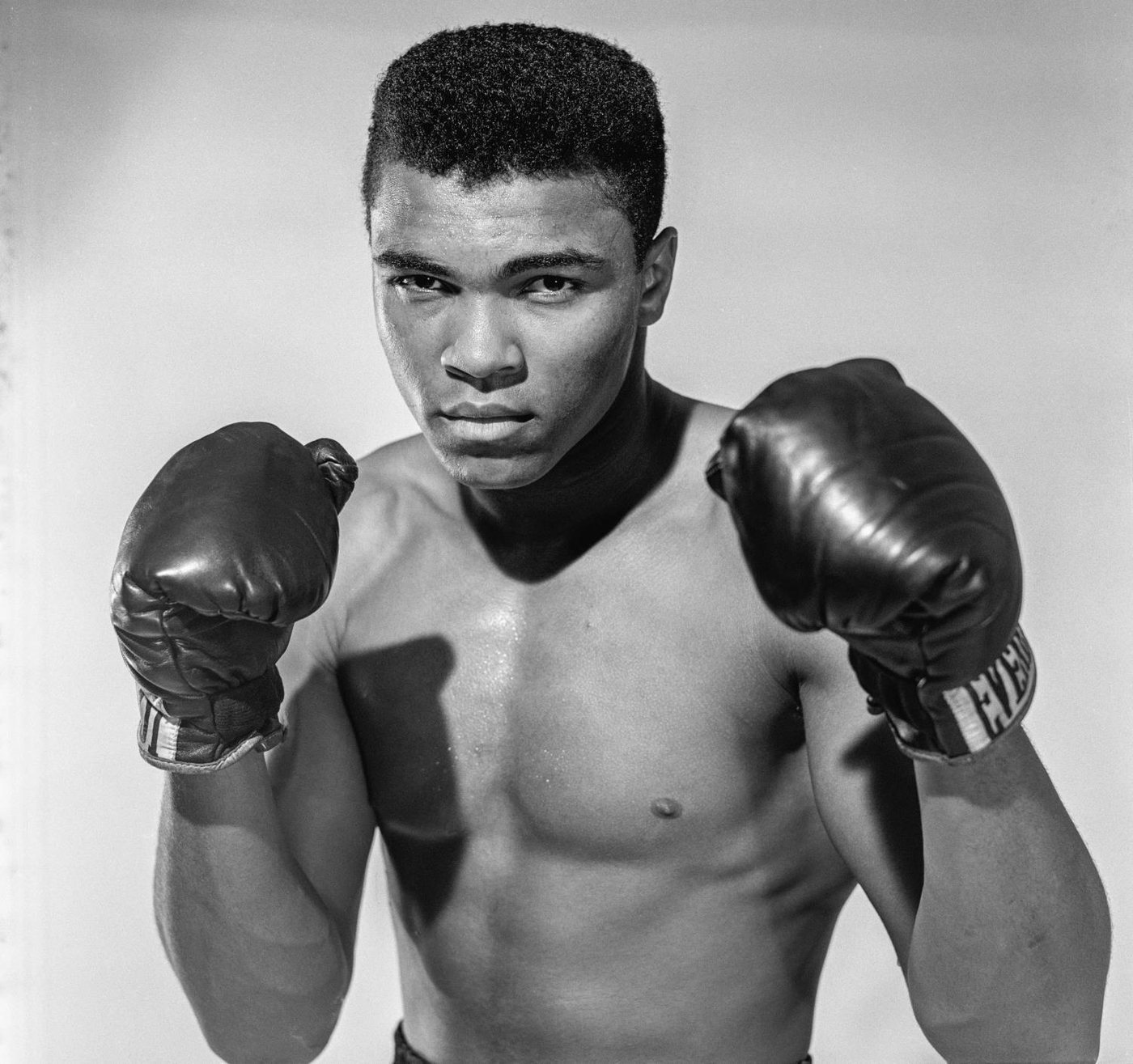
Muhammad Ali was at the top of the world.
He was young.
He was undefeated.
He was the heavyweight boxing champion.
Millions of people knew his name.
Then, in 1967, Ali made a decision that could destroy everything he had built.
He refused to be inducted into the U.S. Army during the Vietnam War.
The consequences were immediate.
He was convicted of draft evasion.
His boxing licence was suspended in several jurisdictions.
He was stripped of his heavyweight title.
For years, during what should have been some of the best years of his athletic career, he could not fight professionally.
Ali knew this could happen.
He refused anyway.
His decision raised a question that would follow athletes for generations:
Does fame come with a responsibility to speak?
Before he was Muhammad Ali
He was born Cassius Marcellus Clay Jr. in Louisville, Kentucky, in 1942.
He began boxing as a teenager.
By 18, he had won a gold medal at the 1960 Olympic Games in Rome.
His professional career moved quickly.
Clay was talented.
Fast.
Confident.
And unlike many athletes of his time, he was not interested in being quiet.
He predicted the rounds in which he would defeat opponents.
He wrote poems.
He gave himself nicknames.
He talked directly to the press.
Some people loved him.
Others found him arrogant.
But everyone was paying attention.
In 1964, he defeated Sonny Liston to become the heavyweight champion of the world.
Then, shortly after the fight, his life changed in a much bigger way.
"Cassius Clay" was no longer his name
After winning the heavyweight title, Ali publicly announced his connection to the Nation of Islam.
He rejected the name Cassius Clay.
He said it was a name connected to a history he did not want to carry.
He adopted the name Muhammad Ali.
Many journalists and opponents refused to use it.
Some continued calling him Cassius Clay for years.
Ali did not change his name to create a marketing campaign.
He was making a statement about identity.
Who gets to decide what someone should be called?
At the time, that question carried political weight.
Ali was not only changing a name.
He was rejecting the expectation that he should make others comfortable with who he was.
America wanted a champion
But not necessarily this champion.
Ali was Black.
Muslim.
Politically outspoken.
And increasingly critical of American society.
He challenged racism.
He challenged the Vietnam War.
He challenged the media.
He challenged people who expected athletes to entertain without having opinions.
For many Americans, especially during the 1960s, this was difficult to accept.
The country was already divided.
The civil rights movement was demanding change.
Protests against the Vietnam War were growing.
Young people were questioning authority.
Ali became part of all of it.
Whether he wanted to be or not.
Then came Vietnam
In 1967, Muhammad Ali was called for induction into the U.S. Army.
The Vietnam War was underway.
Ali refused.
His opposition was based on his religious beliefs and his political views.
He had been recognised as a conscientious objector on religious grounds by some officials, but the government ultimately rejected his exemption claim.
Ali refused to take the symbolic step required for induction.
He was arrested and charged.
His position became one of the most famous statements of opposition to the war.
Ali objected to fighting people overseas while Black Americans continued to face discrimination at home.
He later became associated with one of the most widely quoted anti-war statements of the era:
"I ain't got no quarrel with them Viet Cong."
The phrase became part of American history.
But Ali's position was more complex than one sentence.
He believed his religious convictions prevented him from participating in the war.
And he believed the United States had not treated Black Americans as full equals.
For Ali, these issues were connected.
The cost of saying no
Ali's decision was not symbolic at first.
It had real consequences.
He was convicted in 1967 of violating U.S. Selective Service laws.
He was sentenced to five years in prison and fined $10,000, though he remained free while appealing the conviction.
His heavyweight title was stripped.
His ability to box professionally was severely restricted.
Ali was one of the most famous athletes in the world.
And suddenly, he could not do the thing that had made him famous.
He was 25 years old.
For more than three years, Ali was largely kept out of professional boxing.
Those were critical years for an athlete.
He lost money.
He lost time.
And he faced enormous public criticism.
Some people called him a traitor.
Others called him a coward.
Ali continued defending his decision.
He was willing to lose his career rather than do something he believed was wrong.
The country began to change
While Ali was unable to fight, public opinion about the Vietnam War was changing.
The war became increasingly unpopular.
Protests grew.
More Americans began questioning the government's decisions.
Ali's position, once considered deeply controversial, began to look different.
He had not changed his position.
The country was changing around him.
This is one of the most interesting parts of a Social Rethink.
Sometimes the person who looks extreme is not moving.
Society is.
The Supreme Court changed his case
In 1971, the United States Supreme Court overturned Ali's conviction.
The decision was based on the government's failure to properly justify the rejection of his conscientious objector claim.
Ali could continue his career.
But the years were gone.
He returned to boxing.
And he returned to winning.
In 1974, he defeated George Foreman in Zaire in one of the most famous fights in sporting history.
The world had changed.
Muhammad Ali had changed too.
Or perhaps the world had finally begun to understand him differently.
Ali changed what an athlete could be
Before Muhammad Ali, many people expected athletes to focus on sport.
Train.
Compete.
Win.
Say thank you.
Go home.
Politics was for politicians.
Ali rejected that idea.
He believed an athlete was still a citizen.
Still a human being.
Still someone with beliefs.
His fame did not remove his right to speak.
In fact, it gave his voice a larger audience.
That did not mean everyone agreed with him.
Many did not.
But Ali changed something important.
He made it harder to argue that athletes should automatically remain silent.
Today, athletes speak publicly about:
- Racism
- War
- Mental health
- Human rights
- Climate change
- LGBTQ+ rights
- Gender equality
- Politics
Not every athlete chooses to speak.
They should not be required to.
But Muhammad Ali helped establish a different possibility.
Fame does not have to mean silence.
He was not always right
This is important.
Muhammad Ali's legacy is powerful.
But powerful people do not become less complicated because we admire them.
Ali held views that many people strongly disagreed with.
His association with the Nation of Islam was controversial.
Some of his public statements and behaviour throughout his life have also been criticised.
He could be cruel to opponents.
He could be provocative.
He could be deeply divisive.
That complexity matters.
A Social Rethink is not about finding perfect heroes.
There are no perfect people.
It is about identifying moments when someone helped society question something it had accepted.
Ali did that.
Repeatedly.
The Social Rethink
THE OLD NORMAL
Athletes were expected to entertain.
Not challenge the government.
Not challenge the public.
Not challenge the country.
THE QUESTION
Does becoming famous mean giving up your right to disagree?
THE CHALLENGE
Muhammad Ali used his voice.
Even when it cost him his title.
His income.
And years of his career.
THE RESISTANCE
He was criticised.
Punished.
Called unpatriotic.
And removed from the sport he loved.
THE CHANGE
Over time, public opinion shifted.
Ali's conviction was overturned.
He returned to boxing.
And he became one of the most admired athletes in history.
THE NEW NORMAL
Today, athletes speaking about social issues is no longer unusual.
It can still be controversial.
But it is no longer unthinkable.
Muhammad Ali helped change that.
The difference between influence and courage
Ali's story teaches us something important about influence.
It is easy to speak when people agree with you.
It is easy to take a position when nothing is at risk.
The difficult moment comes when speaking has a cost.
Ali had something to lose.
He lost it.
That is why his decision became bigger than boxing.
What Ali really challenged
Muhammad Ali did not simply challenge the Vietnam War.
He challenged a social expectation.
Famous people should be grateful and quiet.
He rejected it.
And today, that argument continues.
When a singer speaks about politics, people ask:
Why can't they just sing?
When an athlete speaks about racism, people ask:
Why can't they just play?
When an actor speaks about human rights, people ask:
Why can't they just act?
The question behind these questions is always similar.
Why should someone with influence use it?
Muhammad Ali gave one possible answer.
Because influence does not make someone less human.
The question for today
We live in a world where millions of people have platforms.
Athletes.
Musicians.
Actors.
Influencers.
Business leaders.
Scientists.
Ordinary people.
Social media has made public speech available to more people than ever before.
But that has created another question.
Not everyone should speak about everything.
Not every famous person is an expert.
Influence is not the same as knowledge.
But silence is also a choice.
Muhammad Ali's story does not tell us that every public figure must become an activist.
It asks something more difficult.
What do we do when our values conflict with what the world expects from us?
Ali chose to accept the consequences.
Not everyone would make the same decision.
That is what makes his story powerful.
The Rethink
THE OLD NORMAL
Be famous.
Be successful.
Be grateful.
Stay quiet.
THE QUESTION
What if success does not make you free to ignore your conscience?
THE DECISION
Muhammad Ali refused military induction during the Vietnam War.
THE COST
He lost his title and years of his boxing career.
THE CHANGE
His conviction was overturned.
His reputation changed.
His voice became part of his legacy.
THE NEW NORMAL
Athletes can now be athletes and citizens at the same time.
They can compete.
And they can speak.
The question for today
Muhammad Ali understood something that remains uncomfortable.
A platform is easy to enjoy.
It is harder to use when doing so creates consequences.
He did not ask whether speaking would help his career.
He asked what he believed was right.
So what would we say if we knew it might cost us something?
Muhammad Ali changed boxing.
But his biggest fight happened outside the ring.
He showed the world that sometimes the bravest decision is not to fight.
Sometimes, it is to refuse.