People · Social Rethinks
Nelson Mandela: The Man Who Refused to Let Revenge Build the Future
For 27 years, Nelson Mandela was imprisoned by a system built on racial oppression. When he finally walked free, the world expected anger. What came next changed South Africa—and challenged the world.
- Share “Nelson Mandela: The Man Who Refused to Let Revenge Build the Future” on X
- Share “Nelson Mandela: The Man Who Refused to Let Revenge Build the Future” on Facebook
- Share “Nelson Mandela: The Man Who Refused to Let Revenge Build the Future” on LinkedIn
- Share “Nelson Mandela: The Man Who Refused to Let Revenge Build the Future” on WhatsApp
- Share “Nelson Mandela: The Man Who Refused to Let Revenge Build the Future” on Telegram
- Share “Nelson Mandela: The Man Who Refused to Let Revenge Build the Future” on Reddit
- Share “Nelson Mandela: The Man Who Refused to Let Revenge Build the Future” on Email
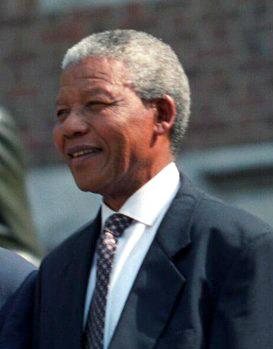
On February 11, 1990, Nelson Mandela walked out of Victor Verster Prison.
He had been imprisoned for 27 years.
Outside, thousands of people waited.
Around the world, millions watched.
Mandela had become one of the most famous prisoners in history.
He had spent decades behind bars under South Africa's apartheid system.
A system built on racial segregation and white minority rule.
For many people, his release represented the beginning of a new chapter.
But there was also a question.
A difficult one.
What happens when someone who has every reason to hate is finally given power?
Nelson Mandela's answer surprised the world.
He did not ask South Africa to forget the past.
He did not pretend apartheid had not happened.
He did not say that justice no longer mattered.
Instead, he helped lead a country through one of the most difficult transitions in modern history.
His message was not simple forgiveness.
It was something harder.
How do you build a future with people who helped create your past?
A country divided by law
For decades, South Africa was governed by apartheid.
The word means "apartness" in Afrikaans.
Under apartheid, the government separated people according to race.
But this was not simply social separation.
The system controlled almost every part of life.
Where people could live.
Where they could work.
Where they could go to school.
Which public spaces they could use.
Who they could vote for.
Black South Africans faced systematic discrimination and political exclusion.
The white minority government held political power.
Apartheid was not an accident.
It was law.
And for millions of people, it shaped everyday life.
Mandela did not begin as a symbol
Nelson Mandela was born in 1918.
He studied law and became involved in politics.
He joined the African National Congress, known as the ANC.
The organisation opposed racial discrimination and fought for political rights for Black South Africans.
At first, Mandela supported non-violent resistance.
Protests.
Strikes.
Civil disobedience.
But South Africa's political situation became increasingly violent.
After the Sharpeville massacre in 1960 and the government's growing repression, Mandela became involved in the ANC's armed struggle.
This part of his story matters.
Nelson Mandela was not simply a peaceful symbol standing outside politics.
He was part of a long and complicated struggle.
He made decisions.
Some remain debated today.
But the central reality was clear.
South Africa's government had created a system where millions of people had no meaningful political power.
Mandela believed that system had to end.
Then came prison
In 1964, Nelson Mandela and several other anti-apartheid leaders were sentenced to life imprisonment during the Rivonia Trial.
Mandela was sent to prison.
For years, he was held on Robben Island.
He later spent time in Pollsmoor Prison and Victor Verster Prison.
His life changed completely.
He was separated from his family.
He was restricted.
He lived under prison rules designed to control him.
But something else happened.
While Mandela was physically removed from society, his name became increasingly powerful outside prison.
Around the world, people began asking:
Why is this man still in prison?
Campaigns calling for Mandela's release grew.
Musicians wrote songs.
Students protested.
Governments faced pressure.
"Free Nelson Mandela" became a global message.
The prisoner became more famous than many of the people keeping him imprisoned.
The world wanted him to become angry
And perhaps he was.
Mandela himself spoke openly about the anger and pain created by apartheid.
He had lost 27 years of his life.
He had been separated from his children and family.
He had lived under a system that considered him politically dangerous because he demanded equality.
But Mandela understood something important.
Anger can help people resist.
It does not always help them rebuild.
South Africa was approaching a dangerous moment.
The apartheid system was weakening.
But the future was uncertain.
The country could move towards democracy.
Or towards large-scale violence.
Mandela would help shape what came next.
He walked out and changed the conversation
When Mandela was released in 1990, he did not walk into an easy victory.
South Africa remained deeply divided.
Apartheid had not yet ended.
Political violence continued.
Negotiations were difficult.
There was distrust everywhere.
And there were people who believed that violence was inevitable.
Mandela chose another path.
He entered negotiations.
He met political opponents.
He worked with people who had represented the government that imprisoned him.
This was not because he suddenly agreed with them.
It was because he believed South Africa could not survive without a political settlement.
He was willing to speak to people he had spent decades fighting.
That decision became one of the defining moments of his life.
The old idea of victory
For much of human history, victory has had a simple meaning.
One side wins.
The other side loses.
The winners take power.
The losers are removed.
Punished.
Humiliated.
Or forgotten.
Mandela challenged that idea.
He understood that South Africa was not simply changing governments.
It was trying to become a different country.
And that required something more difficult than winning an election.
It required people who had been enemies to imagine living in the same future.
In 1994, South Africa voted
In April 1994, South Africa held its first democratic election in which citizens of all races could vote.
Millions of people participated.
For many Black South Africans, it was the first time they had been able to vote in a national election.
The African National Congress won.
Nelson Mandela became South Africa's first democratically elected Black president.
The image travelled around the world.
A man who had spent 27 years in prison was now president.
But Mandela's next decision was just as important.
What would he do with power?
He did not build a government around revenge
Mandela's presidency focused heavily on national reconciliation.
He encouraged South Africans to build a country that belonged to everyone.
He worked alongside former political opponents.
He supported a new national identity.
And he became closely associated with the idea that reconciliation was necessary for South Africa's future.
But reconciliation did not mean pretending nothing happened.
This is an important distinction.
Forgiveness is not the same as forgetting.
The new South Africa needed to confront the crimes of apartheid.
The country created the Truth and Reconciliation Commission.
Led by Archbishop Desmond Tutu, the commission investigated serious human rights violations connected to the apartheid era.
Victims were invited to tell their stories.
Perpetrators could apply for amnesty under specific conditions, including making full disclosure about politically motivated crimes.
The process was controversial.
Some believed it did not provide enough justice.
Some believed it allowed perpetrators to escape punishment.
Others believed it helped prevent a cycle of revenge.
The process was not perfect.
Mandela never claimed it would be.
But it represented a different question.
Can a country face its worst history without creating another generation of violence?
The rugby match that became a symbol
In 1995, South Africa hosted the Rugby World Cup.
For many Black South Africans, rugby had long been associated with white minority rule.
The South African national team, the Springboks, was a powerful symbol.
Mandela understood that symbols could change.
When South Africa reached the final, Mandela publicly supported the team.
He wore a Springbok jersey.
The moment became internationally famous.
When South Africa won the World Cup, Mandela presented the trophy to captain François Pienaar.
The image became a symbol of the new South Africa.
Again, Mandela was doing something simple.
But the message was much larger.
A symbol that once divided people could become something shared.
That did not erase history.
But it changed what the future might look like.
Mandela was not asking people to be naive
This is where many versions of his story become too simple.
Nelson Mandela did not believe racism would disappear overnight.
He did not believe one election could repair centuries of inequality.
He knew South Africa faced enormous problems.
Poverty.
Economic inequality.
Racial division.
Crime.
Unemployment.
These problems did not disappear when apartheid ended.
Many still exist today.
Mandela's achievement was not creating a perfect country.
No one could honestly claim that.
His achievement was helping South Africa make a transition that many people once believed was impossible.
He helped move a country away from a system of racial rule towards democracy without allowing revenge to become the foundation of the new state.
The Social Rethink
THE OLD NORMAL
When one group gains power, the other side should lose everything.
Victory means punishment.
Power means revenge.
THE QUESTION
Can people build a future with those they once considered enemies?
THE CHALLENGE
Nelson Mandela negotiated with the people and political system that had imprisoned him.
THE RISK
Reconciliation could look like weakness.
Negotiation could look like betrayal.
Forgiveness could look like forgetting.
THE CHANGE
South Africa created a democratic system.
The country confronted parts of its past through the Truth and Reconciliation Commission.
Former enemies entered the same political future.
THE NEW NORMAL
Today, reconciliation is recognised as an important part of many discussions about conflict, political transition and national healing.
The process remains difficult.
But Mandela helped make one idea impossible to ignore.
Peace is not always created when one side destroys the other.
Sometimes, it begins when both sides agree to stop destroying each other.
Why Mandela's story still matters
We live in a world that often rewards division.
Politics becomes:
Us versus them.
Right versus wrong.
Winner versus loser.
Friend versus enemy.
Social media can make this even stronger.
The more extreme the disagreement, the more attention it receives.
Apologies can look weak.
Changing your mind can look weak.
Speaking to an opponent can look like betrayal.
Mandela challenged that thinking.
He did not believe disagreement should disappear.
He believed people had to find ways to live with disagreement.
That is much harder.
Reconciliation does not mean everyone deserves the same response
This is also important.
Mandela's story should not become a message that victims must always forgive.
They do not.
No individual owes forgiveness to someone who harmed them.
And reconciliation cannot simply be demanded by those responsible for injustice.
Real reconciliation requires something else.
Truth.
Responsibility.
Acknowledgment.
Change.
Mandela's approach was not:
Forget what happened.
It was:
We have to decide what happens next.
The power of refusing revenge
Revenge can feel simple.
Someone hurts you.
You hurt them back.
A country harms your people.
Your people take power and harm them.
The cycle continues.
Mandela understood the danger.
South Africa had enough weapons.
Enough anger.
Enough history.
Enough reasons for revenge.
But he believed a country built on revenge would eventually become trapped by it.
He chose to build something different.
Not because the past did not matter.
But because the future mattered too.
The Rethink
THE OLD NORMAL
The enemy must lose.
THE PAIN
Apartheid created decades of injustice, suffering and division.
THE QUESTION
What happens when the oppressed finally gain political power?
THE DECISION
Nelson Mandela chose negotiation and reconciliation alongside political transformation.
THE CHANGE
South Africa ended apartheid and held its first democratic election.
THE NEW NORMAL
Reconciliation became part of the global conversation about how divided societies recover from conflict.
The question for today
Nelson Mandela's story asks us to think differently about strength.
We often imagine strength as defeating someone.
Winning the argument.
Having the final word.
Making the other side lose.
Mandela offered another definition.
Sometimes strength is having the power to destroy your enemy—and choosing to build something instead.
That does not mean avoiding justice.
It does not mean forgetting history.
It does not mean pretending everyone is innocent.
It means asking a question that every divided society eventually faces.
How long can we keep fighting before we have to start building?
Nelson Mandela spent 27 years in prison.
When he walked free, he could have built his future around revenge.
Instead, he helped his country ask a different question.
Can we remember everything that happened—and still choose what happens next?