Filed under Stories · Social Rethinks
The Wright Brothers
The 12 Seconds That Changed How Humanity Saw Distance
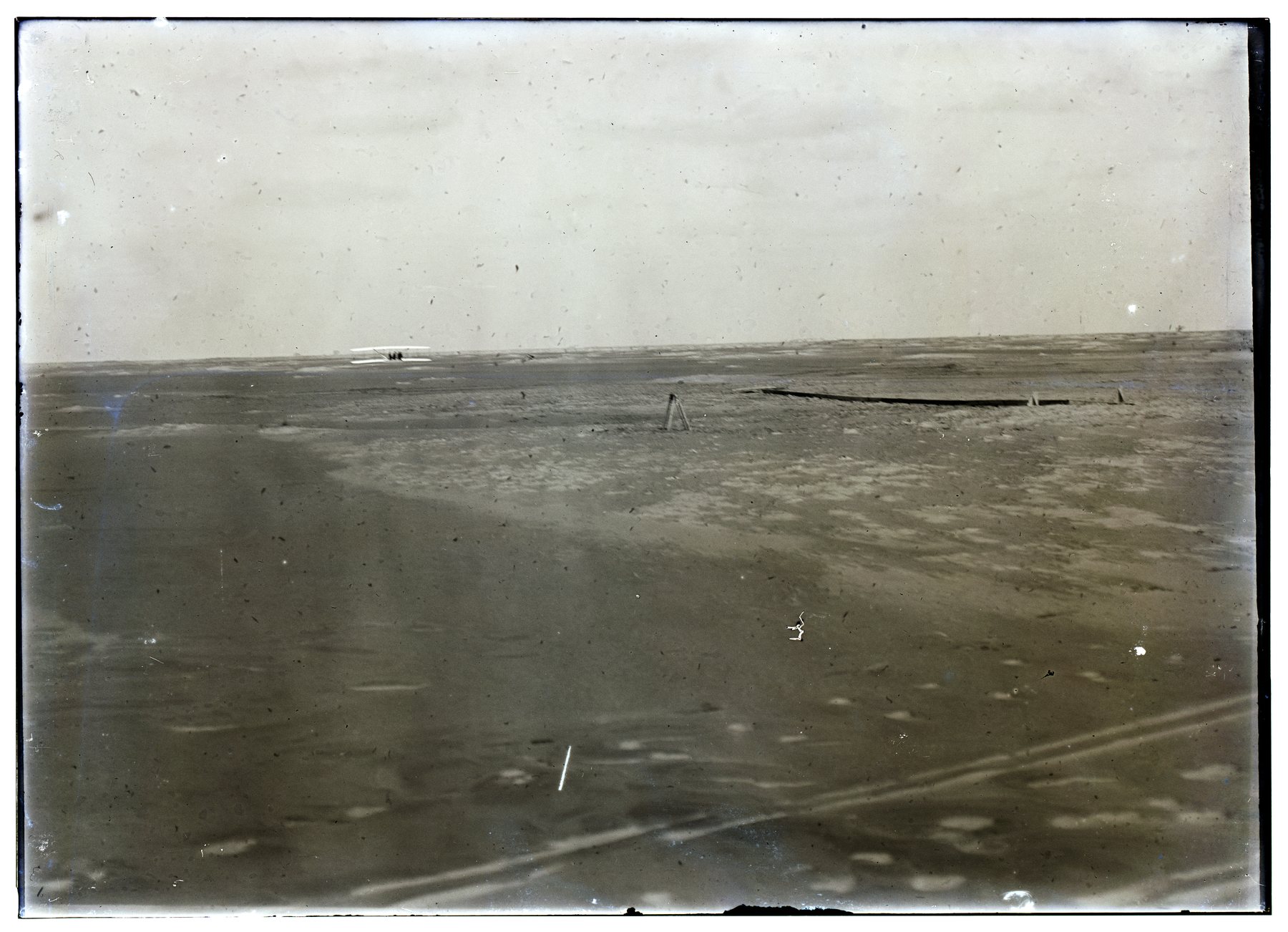
On 17 December 1903, near Kitty Hawk, North Carolina, Orville Wright flew a powered aircraft for 12 seconds over a distance of 120 feet. The number sounds almost insignificant today. A short walk lasts longer. A modern aircraft covers that distance before most passengers have settled into their seats.
But the first Wright flight mattered because of what it represented. Wilbur and Orville Wright had achieved powered, sustained and controlled flight. Their work was not simply about getting a machine into the air. It was about controlling it once it was there.
That distinction explains their importance. Other inventors had flown gliders or experimented with powered machines. The Wright brothers focused intensely on the problem of control. Their system of roll, pitch and yaw became fundamental to practical aviation. They also built and tested their own equipment, including a wind tunnel, because existing aerodynamic data was often unreliable.
The first flight was followed by three more flights that day. The longest, by Wilbur Wright, lasted 59 seconds and travelled 852 feet. The experiments were modest by modern standards, but they demonstrated that flight could be repeated and improved.
Aviation did not instantly shrink the world. Early aircraft were fragile, expensive and dangerous. It took decades of engineering, regulation and infrastructure before commercial aviation became a mass form of transport.
Yet the direction had changed. Human geography was no longer limited to roads, railways and oceans. Aircraft connected places according to time rather than terrain. Remote locations became reachable. International business changed. Tourism changed. Families migrated and remained connected across continents. Aviation also transformed warfare, surveillance and political power.
The Wright brothers therefore created a complicated legacy. Flight made the world more connected, but no technology arrives without consequences. Air power changed conflict. Aviation contributed to environmental pressures. The ability to move quickly became an economic advantage unevenly distributed around the world.
Still, the deeper Social Rethink began in the dunes of North Carolina. For centuries, human flight had belonged to myth, religion and imagination. The Wright brothers turned it into engineering.
Their achievement also challenges a common myth about innovation. They were not simply two men who woke up with a brilliant idea. Their success came from years of testing, crashes, calculations and revision. They treated failure as data.
The Social Rethink
THE OLD NORMAL: Human beings could travel across land and water, but not control powered flight.
THE QUESTION: Could a machine be made stable and controllable in the air?
THE BREAKTHROUGH: The Wright brothers combined propulsion with effective three-axis control.
THE CHANGE: Aviation slowly became part of transport, commerce and everyday life.
THE NEW NORMAL: Distance is increasingly measured in hours, not obstacles.
Today, flying across continents can feel ordinary. That is precisely why the Wright brothers matter. Great technological changes eventually become invisible inside everyday life.
The first flight lasted 12 seconds. The rethink lasted forever.
What impossible idea are we dismissing today because its first version still looks small?
The Longer Legacy
The Wright brothers also changed how innovation was understood. They did not rely only on dramatic prototypes. They measured, compared and redesigned. Their wind-tunnel experiments helped them challenge inaccurate aerodynamic assumptions.
Within decades, aviation developed at extraordinary speed. Aircraft crossed oceans. Commercial routes connected cities. By the twentieth century's end, global aviation had become part of everyday economic life.
What We Still Misunderstand
The Wright brothers did not make every other aviation experiment irrelevant. Flight developed through international work by inventors and engineers. Their distinctive contribution was the successful integration of power, lift and control in a practical flying machine and the research methods that supported it.
The Modern Connection
Today, we often see the finished technology and forget the invisible process behind it. The first smartphone, electric vehicle or medical device is the visible end of years of testing. The Wright story remains a defence of patient experimentation in a culture that often celebrates instant success.