Filed under Stories · Social Rethinks
The Printing Press
The Machine That Made Knowledge Harder to Control
For most of human history, information moved at the speed of a human hand. Books were copied by scribes, one page at a time. A manuscript could take months or years to reproduce. Knowledge existed, but access to it was limited by cost, geography and power.
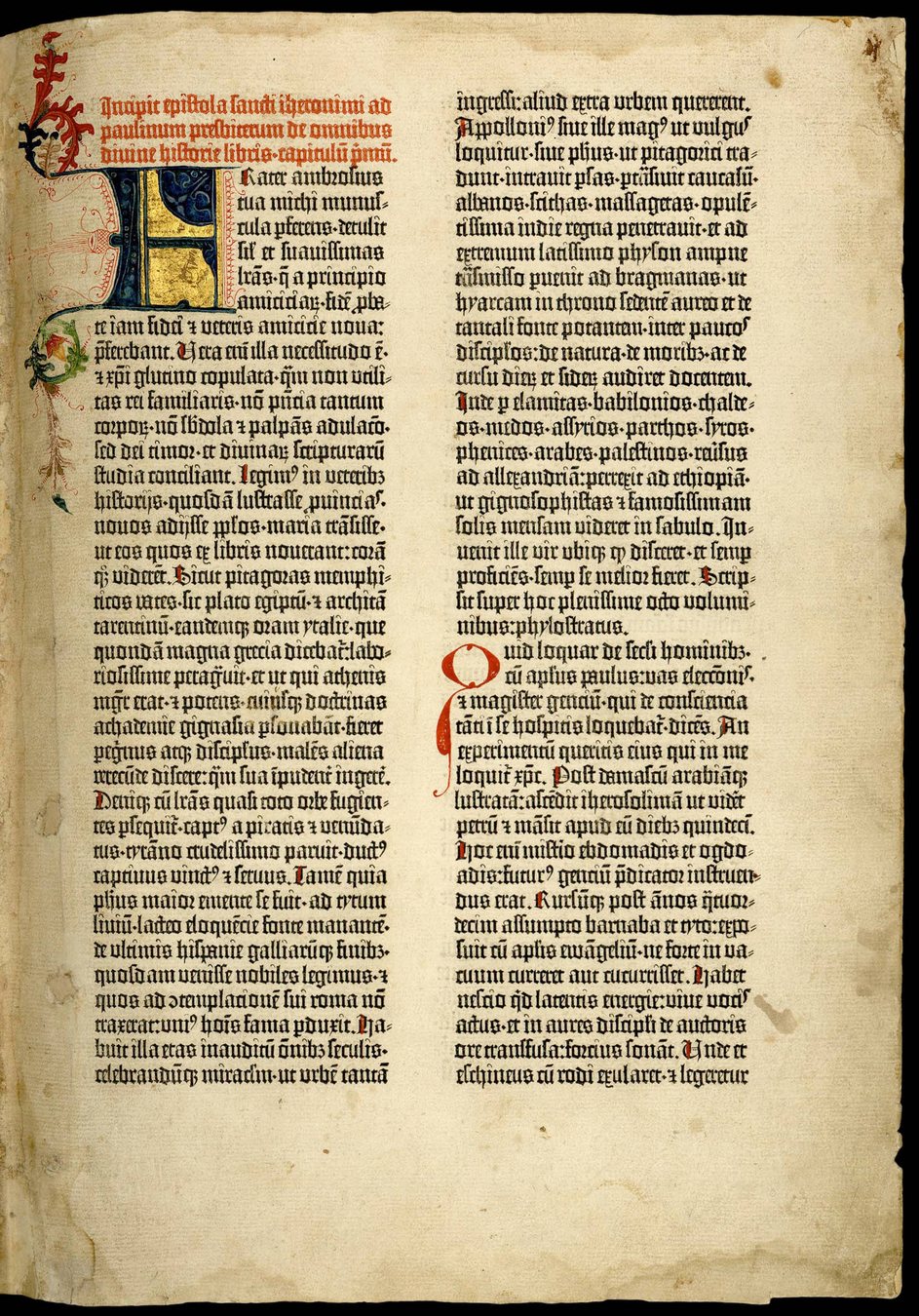
Around the middle of the fifteenth century, Johannes Gutenberg helped change that equation in Mainz. He did not invent printing from nothing. Printing technologies already existed in East Asia, and Europeans had experimented with woodblock printing. Gutenberg's achievement was the development of a highly effective European system combining movable metal type, a press and oil-based ink. The result made repeated printing faster, more consistent and more scalable.
The change was profound, but not instant. The printing press did not suddenly make everyone literate, nor did books become cheap overnight. Early printed books could still be expensive. What changed was the economics of copying. A text no longer had to be recreated by hand every time a new copy was needed.
That shift weakened the old monopoly on reproduction. Religious authorities, universities, courts and wealthy patrons remained powerful, but ideas could now circulate through a growing network of printers, booksellers and readers. The technology became one of the conditions that made the Reformation, the Scientific Revolution and the growth of public debate possible.
Martin Luther's movement showed the political force of print. Pamphlets, sermons and translations travelled quickly through German-speaking territories. Print did not create disagreement, but it multiplied its audience. The same technology that helped spread reform also helped authorities publish laws, propaganda and religious arguments. The press did not automatically produce freedom. It redistributed the tools of persuasion.
Science changed as well. Printed diagrams, tables and observations could be copied more reliably than handwritten manuscripts. Scholars could compare editions, correct mistakes and build on each other's work across borders. Knowledge became easier to preserve and easier to challenge.
There was a darker side. Faster communication also accelerated rumours, polemics and false claims. Governments and churches responded with censorship and licensing. The history of printing is therefore not a simple story about liberation. It is the beginning of a modern struggle that still exists: who controls information, who decides what is trustworthy and what happens when technology allows ideas to travel faster than institutions can respond?
That is why Gutenberg's legacy feels modern. The internet did not create the first information revolution. It created another one. The printing press forced societies to rethink authority because readers could increasingly encounter ideas without a gatekeeper standing beside them.
The deeper lesson is not that technology automatically makes societies wiser. Technology changes the conditions under which people make decisions. It can expand education and also spread manipulation. It can challenge monopolies and create new ones.
The printing press made one old assumption increasingly difficult to defend: that knowledge could remain permanently controlled by the people who possessed it.
The Social Rethink
THE OLD NORMAL: Knowledge was expensive to reproduce and difficult to circulate.
THE BREAKTHROUGH: Movable type and mechanical printing made large-scale reproduction practical.
THE RESISTANCE: Authorities responded with censorship, licensing and attempts to control printers.
THE CHANGE: Books, pamphlets and ideas moved through society in new ways.
THE NEW QUESTION: When information becomes easier to copy, who controls the truth?
Today, as artificial intelligence, social media and digital publishing reshape information again, Gutenberg's revolution offers a warning as much as an inspiration. The technology changed the world. What people did with it determined the consequences.
Normal is not permanent. Sometimes it is only a limitation waiting for a new technology to expose it.
The Longer Legacy
The printing revolution also changed the meaning of disagreement. Before print, a controversial argument could remain geographically limited because copying was slow. Printed pamphlets could travel, be answered and be reprinted. A public argument could develop across cities and generations.
This did not create a perfectly informed society. It created a society in which information itself became a field of competition. Printers made editorial decisions. Authors developed reputations. Readers learned to compare claims. Institutions attempted to regulate publication. The modern struggle over trusted information was already taking shape.
That history matters because every new communication technology produces exaggerated predictions. Printing did not automatically create democracy. The internet did not automatically create equality. Technology expands possibilities; institutions and people decide which possibilities become normal.
The deeper revolution was cultural. Once a society experiences faster access to ideas, returning to the previous information order becomes difficult. The printing press changed expectations. More people began to expect books, arguments and knowledge to be available beyond a narrow circle.
What We Still Misunderstand
Gutenberg did not invent printing itself, and Europe was not the first place where movable type existed. The historical achievement was the creation and successful use of a powerful European system at a particular moment when paper, trade, literacy and urban networks could help it spread. That more accurate story does not make the achievement smaller. It makes the history more global.
The Modern Connection
Today's debates about AI-generated content, platform power and misinformation are not identical to the fifteenth century. But the pattern is familiar. A technology changes the cost of creating or distributing information. Old gatekeepers lose some control. New gatekeepers appear. Society then has to develop new standards of trust.