Filed under Stories · Social Rethinks
The Fall of the Berlin Wall
The Night Something That Looked Permanent Suddenly Wasn’t
- Share “The Fall of the Berlin Wall” on X
- Share “The Fall of the Berlin Wall” on Facebook
- Share “The Fall of the Berlin Wall” on LinkedIn
- Share “The Fall of the Berlin Wall” on WhatsApp
- Share “The Fall of the Berlin Wall” on Telegram
- Share “The Fall of the Berlin Wall” on Reddit
- Share “The Fall of the Berlin Wall” on Email
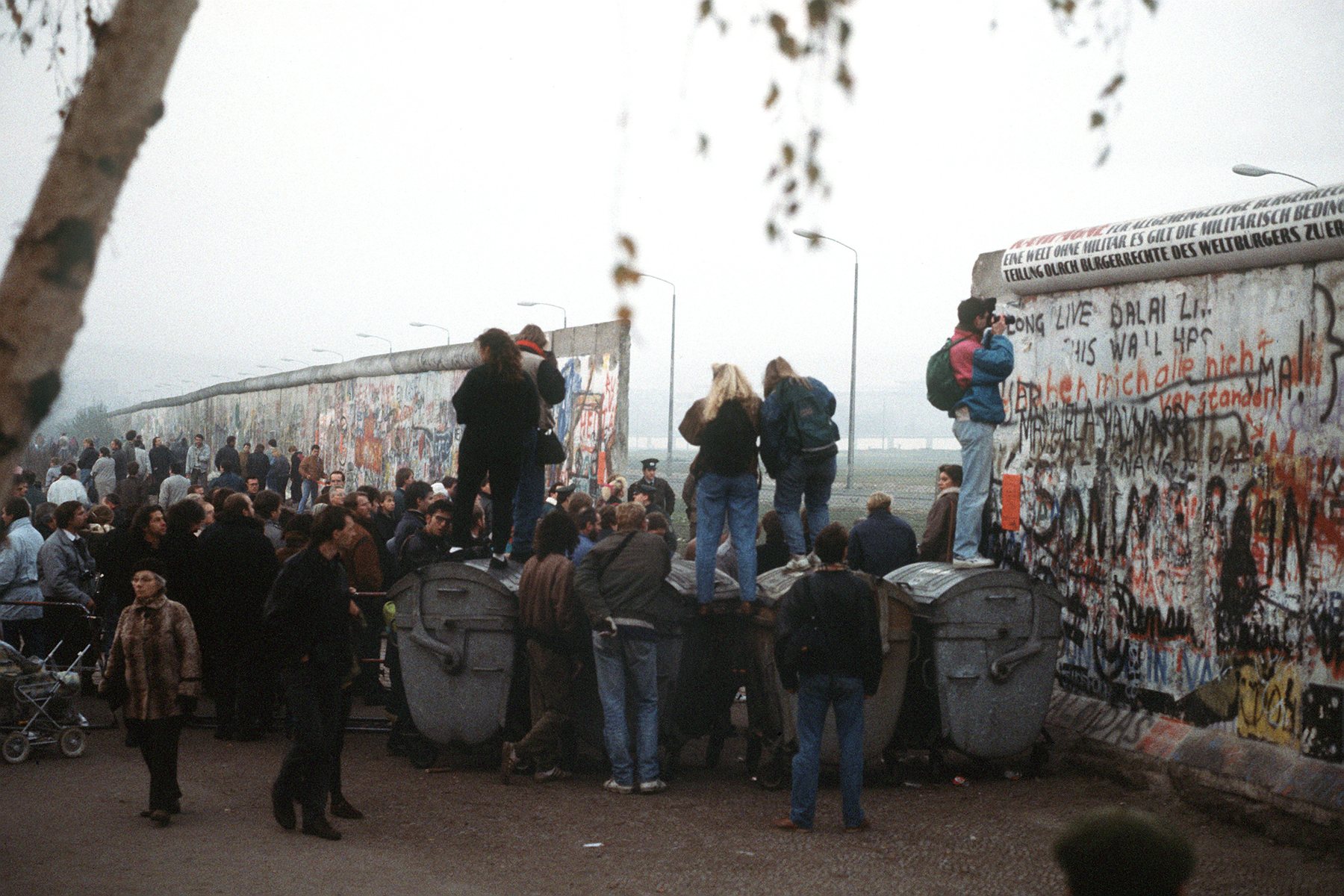
For almost three decades, the Berlin Wall stood as one of the most visible symbols of a divided world. Built by East German authorities in 1961, the barrier was part of a wider border system designed to restrict movement from East Germany to West Berlin.
Its concrete, fences, guards and checkpoints represented more than a local boundary. Berlin became a physical symbol of the Cold War and of the political division between Eastern and Western blocs.
Then, on 9 November 1989, the situation changed with astonishing speed.
The Wall did not fall because of a single mistake. Months of pressure had already transformed Eastern Europe. Reform movements were growing. Large demonstrations were taking place in East Germany. Hungary had opened its border with Austria, creating a new route for East Germans to leave. The political authority of the East German government was weakening.
That evening, an East German official, Günter Schabowski, announced new travel regulations at a press conference. Confusion over when the rules would take effect contributed to crowds gathering at border crossings. Faced with increasing pressure and unclear instructions, guards eventually opened checkpoints.
Berliners crossed.
People climbed the Wall.
Families and strangers embraced.
In the days and months that followed, sections of the barrier were dismantled. Germany was formally reunified in 1990.
The images became iconic because they challenged an assumption that had shaped an entire generation: that the division of Europe was permanent.
But the aftermath was complex. German reunification brought economic and social difficulties. Eastern and Western experiences did not instantly merge. The collapse of communist governments across Eastern Europe also produced different outcomes in different countries.
The lesson is therefore not that history changes overnight because people simply wish it to. The Wall opened after years of political pressure, civic action, international change and institutional weakness.
The Social Rethink
THE OLD NORMAL: The division of Berlin seemed permanent.
THE PRESSURE: Citizens, reform movements and wider geopolitical change weakened the old order.
THE MOMENT: Confusion and public pressure opened border crossings on 9 November 1989.
THE CHANGE: A physical symbol of division lost its power.
THE NEW QUESTION: What else do we mistake for permanent?
The Berlin Wall remains important because societies often confuse durability with inevitability. A system can exist for decades and still contain weaknesses invisible to those living inside it.
The Wall also reminds us that symbols matter. Concrete alone did not make it powerful. It represented a political order. When that order lost legitimacy and control, the barrier could no longer mean what it once meant.
Today, walls still exist, both physical and psychological. Political divisions can feel equally permanent.
History offers no guarantee that every barrier will disappear peacefully. But Berlin shows that even powerful structures depend on something less visible: the continued ability of institutions to persuade people that the structure must remain.
The question for today is simple: what system do we call permanent only because we have never seen it change?
The Longer Legacy
The fall of the Wall also demonstrated the power and limits of symbolism. Images of celebration travelled around the world and became shorthand for freedom and change. Yet the political and economic work that followed was much slower.
What We Still Misunderstand
The popular story that the Wall fell only because an official made a mistake is incomplete. Schabowski's confusing announcement mattered, but it occurred after months of protests, migration, reforms and institutional crisis.
The Modern Connection
Modern political systems can also look stable until legitimacy weakens. Social change rarely has one cause. A visible turning point is often the final moment in a much longer process.