Filed under Stories · Social Rethinks
The Green Belt Movement When Planting a Tree Became an Act of Resistance
Wangari Maathai's movement connected environmental restoration with women's empowerment, livelihoods and democratic participation.
- Share “The Green Belt Movement: When Planting a Tree Became an Act of Resistance” on X
- Share “The Green Belt Movement: When Planting a Tree Became an Act of Resistance” on Facebook
- Share “The Green Belt Movement: When Planting a Tree Became an Act of Resistance” on LinkedIn
- Share “The Green Belt Movement: When Planting a Tree Became an Act of Resistance” on WhatsApp
- Share “The Green Belt Movement: When Planting a Tree Became an Act of Resistance” on Telegram
- Share “The Green Belt Movement: When Planting a Tree Became an Act of Resistance” on Reddit
- Share “The Green Belt Movement: When Planting a Tree Became an Act of Resistance” on Email
THE OLD NORMAL
Environmental degradation can seem abstract when discussed only through national policy. For rural communities, however, disappearing trees can mean less firewood, poorer soils, reduced water security and greater pressure on household life.
THE QUESTION
Can environmental restoration begin with ordinary people addressing problems they experience every day?
THE ACTION
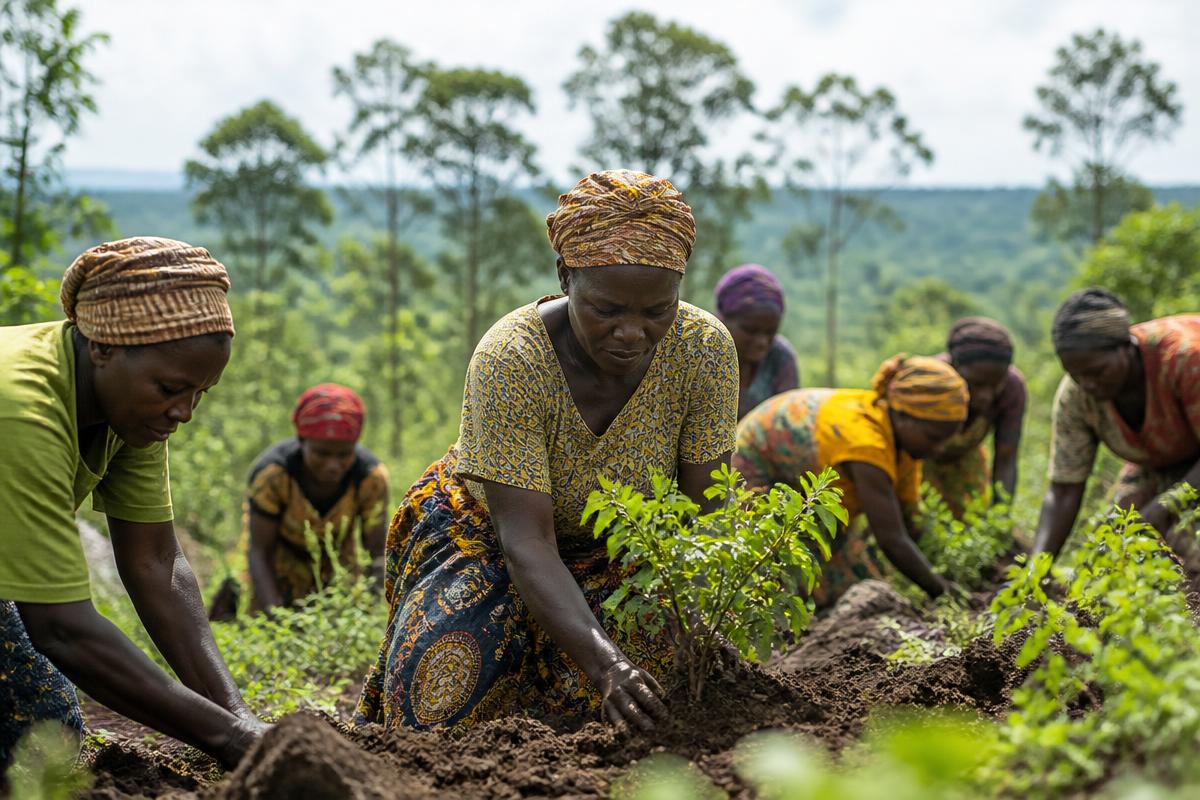
Wangari Maathai founded the Green Belt Movement in Kenya in 1977. Women were central participants in planting trees and addressing environmental conditions affecting their communities. The movement linked ecological restoration with practical needs and wider questions about civic participation.
THE BREAKTHROUGH
The movement demonstrated that environmental action could be decentralised. People did not have to wait for a national environmental programme before acting locally.
THE CHANGE
Tree planting became connected to women's empowerment, livelihoods and democratic engagement. The Nobel Committee recognised Wangari Maathai in 2004 for her contribution to sustainable development, democracy and peace.
THE NEW NORMAL
The Green Belt Movement became an international example of grassroots environmental organising. Its approach influenced how environmental problems could be understood as social and political problems as well as ecological ones.
WHAT WE STILL MISUNDERSTAND
Tree planting alone does not solve environmental destruction. The movement's significance lies in the network of participation and the connection between ecological health and community power.
THE MODERN CONNECTION
Community-led environmental action remains important in climate adaptation, restoration and local resilience. The movement also anticipates a broader modern principle: people protect systems more effectively when they have agency within them.
THE RETHINK
The movement changed the scale at which environmental action could begin.
A global environmental problem could have a local starting point: a person, a community and a tree.