Filed under Ideas · Social Rethinks
The Mind That Wasn't Fully in Charge
The Enlightenment had built its worldview on the rational, self-aware individual. Sigmund Freud proposed that most of what drives human behavior happens somewhere the conscious mind can't see.
- Share “The Mind That Wasn't Fully in Charge” on X
- Share “The Mind That Wasn't Fully in Charge” on Facebook
- Share “The Mind That Wasn't Fully in Charge” on LinkedIn
- Share “The Mind That Wasn't Fully in Charge” on WhatsApp
- Share “The Mind That Wasn't Fully in Charge” on Telegram
- Share “The Mind That Wasn't Fully in Charge” on Reddit
- Share “The Mind That Wasn't Fully in Charge” on Email
OPENING
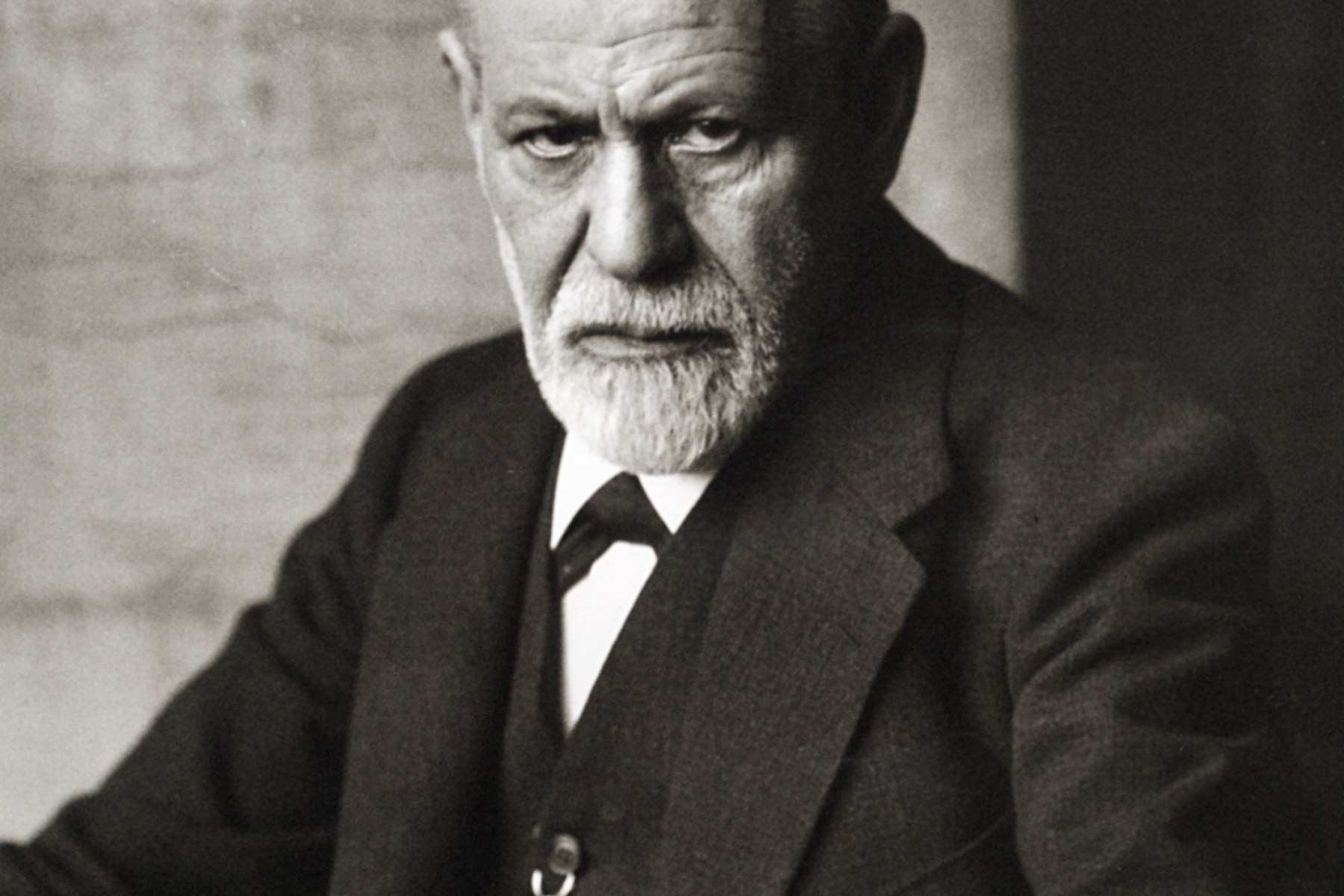
By the late 19th century, Western thought had spent roughly two hundred years building its intellectual and political foundations on a confident assumption: that human beings are, at bottom, rational actors, capable of knowing their own minds and acting according to reasoned self-interest. Sigmund Freud, a Viennese neurologist, spent much of his career quietly dismantling that assumption. His claim — that much of human behavior is driven by unconscious forces largely inaccessible to conscious reasoning — unsettled medicine, philosophy, art, and eventually ordinary conversation, giving the modern world a vocabulary for the parts of the mind it could no longer pretend weren't there.
HISTORICAL CONTEXT
Enlightenment philosophy and 19th-century medicine largely treated the mind as transparent to itself: people acted according to reasons they could, in principle, identify and explain. Mental illness, where it was addressed at all, was frequently attributed to physical degeneration, moral weakness, or hereditary defect, and treated with methods ranging from rest cures to institutionalization, with little attention paid to a patient's inner psychological history. The idea that ordinary, "sane" people might be driven by desires, memories, or conflicts they could not consciously access or articulate had little standing in mainstream medical or philosophical thought.
THE TURNING POINT
Freud's clinical work with patients experiencing what was then called hysteria led him to develop psychoanalysis: a theory and clinical method built on the premise that unconscious drives, repressed memories, and early childhood experiences shape adult thought and behavior in ways the conscious mind cannot directly perceive. In works including The Interpretation of Dreams (1900), Freud argued that dreams, slips of the tongue, and neurotic symptoms were not random noise but meaningful expressions of unconscious material seeking release.
His broader model of the mind — dividing it into conflicting structures he termed the id, ego, and superego — proposed that human behavior emerges from an ongoing negotiation between instinctual drives, conscious reasoning, and internalized social and moral constraints, rather than from straightforward rational deliberation. Freud's emphasis on early childhood experience as formative for adult personality, and his development of therapeutic techniques such as free association, established psychoanalysis as both a theory of mind and a clinical practice.
THE LONGER LEGACY
Freud's influence extended far beyond clinical psychology. Surrealist artists and writers drew directly on his theories of dreams and the unconscious to inform their work; his ideas shaped mid-20th-century approaches to child-rearing, education, and criminal justice, introducing the notion that behavior — including harmful behavior — could stem from psychological history rather than simple moral failing. Psychoanalysis itself became a dominant clinical framework in psychiatry for much of the 20th century, training generations of practitioners and shaping how mental illness was diagnosed and treated.
WHAT WE STILL MISUNDERSTAND
Much of Freud's specific theoretical apparatus — including concepts such as the Oedipus complex and many of his claims about female psychology — has been substantially revised, contested, or discarded by modern psychology and neuroscience, and psychoanalysis as a clinical practice has been largely supplanted by approaches with stronger empirical support, including cognitive-behavioral therapy and pharmacological treatment. It is a mistake to treat Freud's specific theories as settled scientific fact; much of his methodology, drawn from a small number of case studies, would not meet the evidentiary standards of modern clinical psychology. What has proven far more durable is the broader, less specific claim underneath his theories: that human behavior is shaped by psychological processes not fully accessible to conscious awareness — a claim modern cognitive science, through research on implicit bias and automatic cognitive processing, has approached from an entirely different methodological direction and substantially supported in general form, if not in Freud's specific mechanisms.
THE MODERN CONNECTION
Contemporary discussions of trauma, implicit bias, and the psychological roots of behavior all rest on a premise Freud helped popularize a century earlier: that people are not always fully transparent to themselves, and that understanding behavior sometimes requires looking beneath the reasons a person consciously offers for it. Modern neuroscience and cognitive psychology have developed far more rigorous tools than Freud had available, but the underlying cultural shift — away from treating people purely as rational, self-aware agents — remains one of his most lasting legacies.
The Social Rethink
Before Freud, the dominant cultural model of the human mind was one of conscious, rational transparency: people did things for reasons, and those reasons were generally available to introspection. Afterward, it became culturally normal — even expected — to look for hidden motivations, unresolved history, and unconscious conflict beneath a person's stated reasons for their own behavior. That shift in how society interprets human motivation, independent of the specific scientific fate of Freud's theories, fundamentally changed how the modern world talks about the self.
If so much of behavior operates below conscious awareness, how much of what we confidently call "a choice" is really something closer to a consequence?