Filed under Stories · Social Rethinks
Penicillin
The Discovery That Changed Humanity’s Relationship With Infection
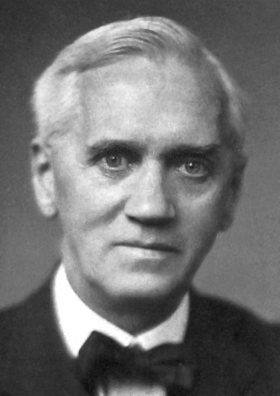
In 1928, Alexander Fleming returned to his laboratory at St Mary's Hospital in London and noticed something unusual on a culture plate. A mould had contaminated bacteria, and around the mould the bacteria had been inhibited.
Fleming identified the substance produced by the mould as penicillin. His observation was important, but it was not yet a usable medicine. This is where one of science's most popular myths begins. Penicillin was not transformed into a life-saving treatment by Fleming alone.
During the late 1930s and early 1940s, Howard Florey, Ernst Boris Chain and a wider research team at Oxford developed methods to isolate, test and produce penicillin. During the Second World War, scientists, governments and pharmaceutical companies worked to scale production. By the mid-1940s, penicillin was reaching patients in large quantities.
The impact was extraordinary. Before antibiotics, bacterial infections could turn minor injuries into life-threatening emergencies. Pneumonia, wound infections and sepsis were far more dangerous. Penicillin did not make disease disappear, but it changed the odds.
It also changed medical expectations. Death from infection had often been accepted as a tragic fact of life. Antibiotics created a new possibility: bacteria could be attacked with targeted drugs.
That possibility transformed medicine, but it also created a new problem. Bacteria evolve. Antibiotic resistance emerged and became a major global health challenge. The same scientific revolution that gave humanity powerful tools also created pressure to use them responsibly.
Penicillin's history is therefore not only a story about accidental discovery. It is a story about the difference between discovery and innovation. Fleming observed something important. Other scientists developed it. Industry manufactured it. Doctors tested it. Patients benefited from a long chain of work.
The collaboration matters because society often prefers the story of the lone genius. It is easier to remember one name. Reality is more interesting. Modern breakthroughs often emerge when observation, experimentation, institutions and manufacturing connect.
The Social Rethink
THE OLD NORMAL: Serious bacterial infections were often accepted as unavoidable threats.
THE DISCOVERY: A mould produced a substance capable of inhibiting certain bacteria.
THE DEVELOPMENT: Teams of scientists turned an observation into a practical medicine.
THE CHANGE: Antibiotics transformed the treatment of bacterial disease.
THE WARNING: Their success created antibiotic resistance when use and evolution collide.
Penicillin changed more than survival rates. It changed what medicine believed was possible. It helped make surgery safer and created the foundation for much of modern infectious-disease treatment.
But its greatest lesson may be about progress itself. A breakthrough is rarely the end of a story. It creates new responsibilities.
The question for today is simple: when science solves a problem, are we prepared to protect the solution from the consequences of our own success?
The Longer Legacy
The mass production of penicillin during the Second World War demonstrated another modern reality: scientific discoveries require systems. Laboratories need funding. Promising substances need testing. Manufacturing needs engineering. Distribution needs institutions.
Antibiotics also helped make other forms of medicine safer. Their history is connected to modern surgery and treatment, although no single drug explains every medical advance.
What We Still Misunderstand
Penicillin does not treat viral infections such as influenza. Antibiotics target bacteria, and different drugs work against different organisms. Their power is therefore specific, not magical.
The Modern Connection
Antimicrobial resistance shows why scientific success can create a new collective responsibility. The more valuable a shared resource becomes, the more carefully societies may need to protect it. Penicillin changed the meaning of infection. Resistance reminds us that progress must be maintained.