Filed under Society
Why Does Inflation Happen?
An ordinary feature of modern life has a history worth questioning: Why Does Inflation Happen.
- Share “Why Does Inflation Happen?” on X
- Share “Why Does Inflation Happen?” on Facebook
- Share “Why Does Inflation Happen?” on LinkedIn
- Share “Why Does Inflation Happen?” on WhatsApp
- Share “Why Does Inflation Happen?” on Telegram
- Share “Why Does Inflation Happen?” on Reddit
- Share “Why Does Inflation Happen?” on Email
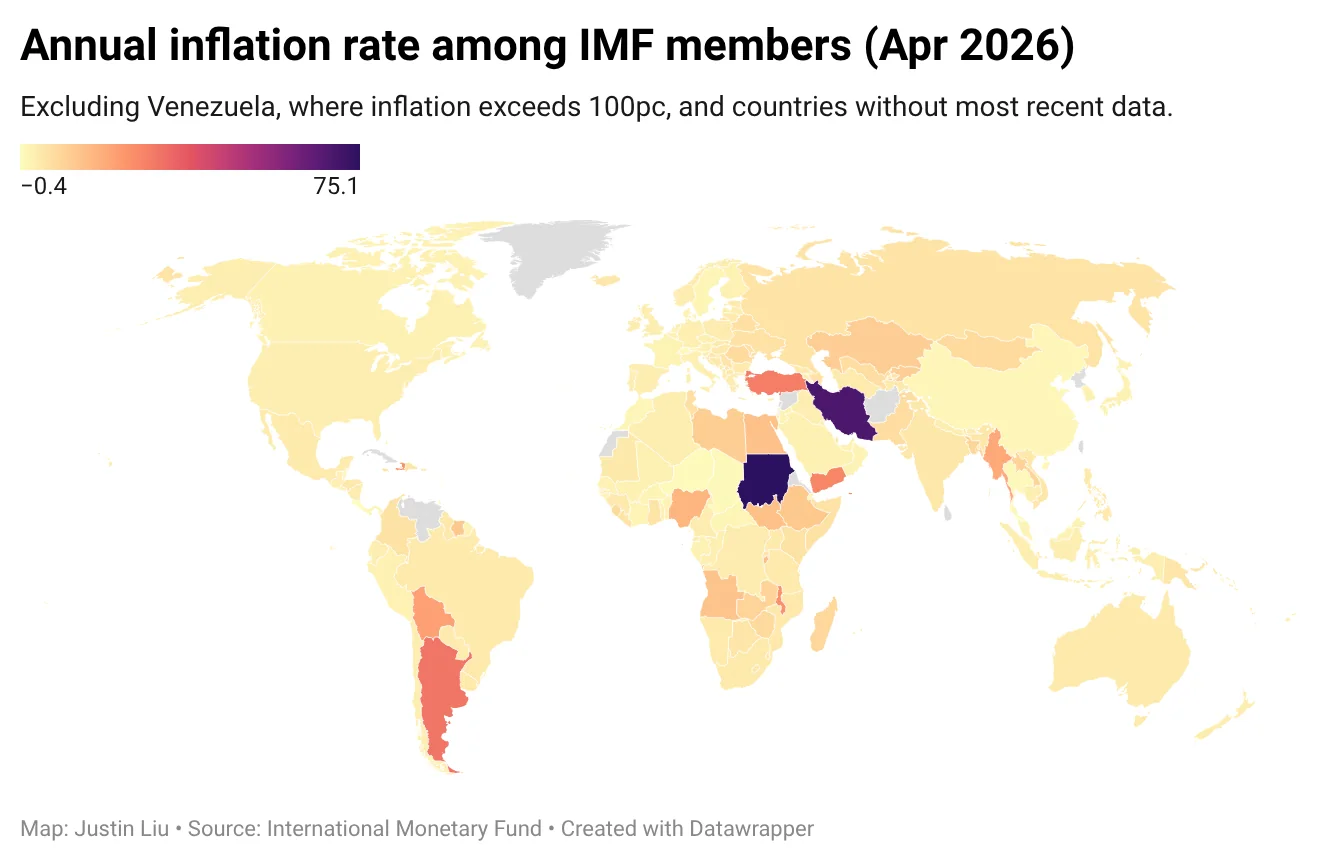
THE OLD NORMAL
Before why does inflation happen became familiar, people lived with a different arrangement. What now feels obvious was once contested, inconvenient, expensive, unfamiliar or unavailable. The past was not simply a rough draft of the present. People worked with the technologies, institutions, beliefs and limits available to them, and they often solved problems in ways that made sense in their own circumstances. That is why an ordinary question can reveal a surprisingly large history.
THE QUESTION
The question is straightforward: Why Does Inflation Happen? The answer, however, is rarely one date, one inventor or one dramatic event. Major changes usually emerge from several forces meeting: a problem that needs solving, an idea that makes a solution possible, institutions that can adopt it, and people willing to change their habits. Looking at those connections produces a more accurate story than a single heroic explanation.
THE BREAKTHROUGH
An ordinary feature of modern life has a history worth questioning: Why Does Inflation Happen. Rethink Why Does Inflation Happen: the history behind what we now take for granted. A breakthrough becomes socially important when an idea moves beyond a small circle and becomes practical enough to repeat, share, regulate, finance or challenge. That is the point at which an invention can become infrastructure, an argument can become an institution, or a behaviour can become a social norm. The transition may take years or centuries, but its consequences can still be profound.
THE CHANGE
Once the new arrangement becomes useful, it changes behaviour. People can coordinate differently, communicate differently, organise institutions differently or imagine possibilities that were previously difficult to see. But change is rarely evenly distributed. Some people benefit first; others resist; some are excluded; and many experience gains and losses at the same time. A responsible history therefore asks not only what changed, but who experienced the change, who shaped it and who was left outside it.
THE NEW NORMAL
Eventually the new system becomes so familiar that its origins disappear from view. A calendar looks natural. A border looks permanent. A traffic light feels inevitable. A university seems like an institution that has always existed. A scientific idea becomes a school textbook fact. This is the moment when the history becomes most interesting, because the new normal can hide the decisions and compromises that created it.
WHAT WE STILL MISUNDERSTAND
The simplest version of a story is often the least accurate. Historical and scientific change is distributed across people, institutions, accidents, incentives and long-term pressures. Evidence can be strong in one part of a story and uncertain in another. Rethink Society should make that distinction visible rather than smoothing every disagreement into a confident sentence. Where a popular myth survives, the useful question is not simply whether it is wrong, but why the myth became persuasive in the first place.
THE MODERN CONNECTION
The subject still matters because it continues to shape ordinary decisions. Rethink Why Does Inflation Happen: the history behind what we now take for granted. Understanding where an arrangement came from gives us a way to ask whether it still serves the purpose for which it evolved. It also helps us recognise when an apparently technical issue is actually social, political, cultural or ethical. The past is therefore not a museum behind us. It is part of the operating system of the present.
THE RETHINK
Rethink Why Does Inflation Happen: the history behind what we now take for granted. The deeper lesson is not that the past was wrong and the present is right. It is that the present is also a human construction. Things that feel permanent often have histories. Things with histories can be questioned, improved and sometimes redesigned. Rethinking does not mean rejecting what came before. It means understanding it well enough to decide what deserves to continue—and what no longer does.
Read next: Why Do Banks Exist? · What Is Inflation? · What Is Debt?